Topic 1: Theories of Land Forms and Formation – Advanced Physical Geography
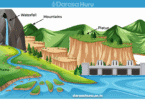
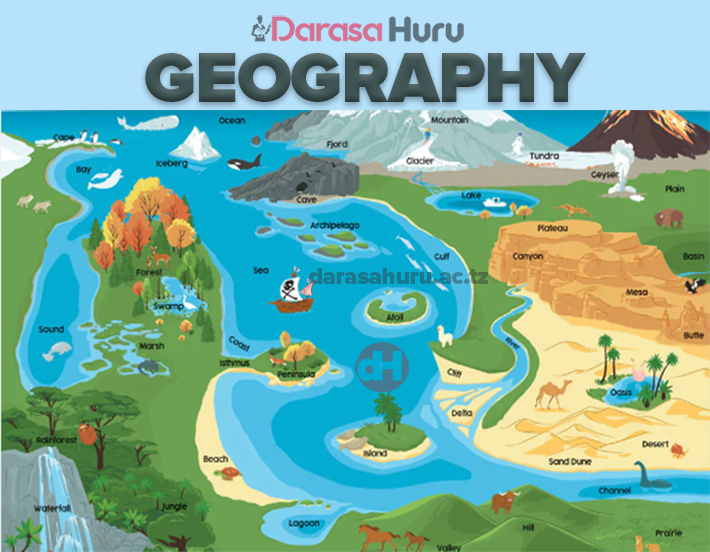
The Earth has various landforms such as hills, mountains, and valleys which are created and shaped by one or a combination of processes. Understanding how different landforms come into existence is complex.
However, theories such as continental drift, plate tectonics and isostacy provide crucial insights into landforms formation.
SUBTOPIC I
THEORIES GUIDING FORMATION OF LANDFORMS FORMATION
SUBTOPIC II
SUBTOPIC III
SUBTOPIC IV
READ FULL NOTES PDF
CLICK HERE TO GET PDF
REVISION QUESTIONS:
1. In spite of the fact that Alfred Lother Wegner up to 1900 was purely German Geophysist and Meteorologist, played a great role to open up the puzzled minds of different people on the distribution of the present earth’s continents and oceans. With vivid physical and biological evidences, justify this statement. (limit your response to six points)
2. At your school there is a hot debate that plate tectonic theory is not real at all. By using the knowledge you got in geography convince your fellow students that plate tectonics theory is real. (give six points)
3. Describe six environmental settings associated with plate tectonics boundaries.
4. How does constructive and destructive plate margins responsible for formation of landforms in the World? (give six points)
a) Continental drifting theory is a pseudo-science. Justify
b) Argue for or against the statement that, “Continental drifting theory is a pseudo-science”
4. Plate tectonic theory is a new version of continental drifting hypothesis. Verify
5. Evaluate five causes and four evidences of plate tectonics theory
6. Despite the objections tossed against plate tectonic theory, the theory has been regarded as a unifying theory in understanding landforms found on the earth’s surface. Substantiate this statement with six points.
7. Evaluate strength and weakness of plate tectonic theory
8. Explain the effects, importance and weakness of continental drifting theory.
9. Describe strength and limitations of Sea floor spreading theory.
10. Relate the theory of plate tectonics with landforms formation in Africa.
11. Show how the seafloor spreading theory explain the formation of landforms.
12. Elaborate the contention that “Continents are restless”
13. With example from Africa, support the continental drift theory.
14. Explain the forces and effects of continental drift theory.
15. As a Geographer student, why do you think it is necessary to learn about theories of landform formation?
16. Examine the interrelationship between erosion and deposition in the context of isostatic balance.
17. Using examples, explain the observations made by Alfred Wegners to support his continental drift theory.
18. Isostacy theory has never been the realistic geographical concept rather a theoretical. Argue for or against with five points.
19. Describe the effects and evidences of isostacy theory
20. To what extent does the theory of equal standing a beneficial to human and environment?
21. Examine evidences and significance of isostatic adjustments
22. Substantiate the contention that ‘Isostacy is Isostatic adjustments’
23. Despite of continuous erosions on the mountain Kilimanjaro; mountain has maintained its height. Prove this statement using five evidences of that scientific assumption. 26. To what extent the theory of equal standing is beneficial in understanding landforms of the planet earth. Appraise the statement by using five arguments.
24. Denudation has been going on the continents where tones and tones of materials are removed from mountains and hills and get deposited in ocean, but still the hills and mountains are not reduced to the sea level. Why is this so? Then show five pieces of evidences that justify the theory.
25. How does sea floor spreading theory relate to the plate tectonic theory?