CHAPTER 1 STANDARD PRONUNCIATION – ENGLISH FORM FIVE
STANDARD PRONUNCIATION
Standard pronunciation refers to the generally accepted way of pronouncing words in a language, which is recognized as correct, formal, and widely understood within a speech community.
It is the pronunciation used in:
- Formal education
- News broadcasting
- Official communication
- Dictionaries
In English Language
In English, standard pronunciation often refers to:
- Received Pronunciation (RP) in Britain (also called “BBC English”)
- General American (GA) in the United States
These accents are considered “standard” not because they are superior, but because they are widely accepted and understood.
Standard pronunciation of “water” in
British English (RP): /ˈwɔːtə/
In American English (GA): /ˈwɑːtər/
Both are considered standard within their varieties.
Standard pronunciation is the accepted and commonly used way of pronouncing words in a language, especially in formal and official contexts.
Articulating Words and Sentences
Articulation is the clear and correct pronunciation of speech sounds when speaking. It involves the proper movement and coordination of the tongue, lips, teeth, jaw, and vocal cords to produce understandable speech.
In simple terms:
Articulating words and sentences means speaking clearly so that others can understand you easily.
1. Articulating Words
Articulating words means pronouncing each word correctly and clearly.
Key Aspects:
1. Correct Pronunciation
- Saying sounds correctly (vowels and consonants).
- Avoiding mispronunciation.
Example:
- Correct: education → /ˌedʒuˈkeɪʃən/
- Incorrect: ejukashon
2. Clear Consonant Sounds
Consonants at the beginning and end of words should be clearly pronounced.
Example:
- “cat” (the t sound should be heard clearly)
- “worked” (the -ed should be pronounced correctly)
3. Proper Vowel Sounds
Vowels must be pronounced accurately because they change meaning.
Example:
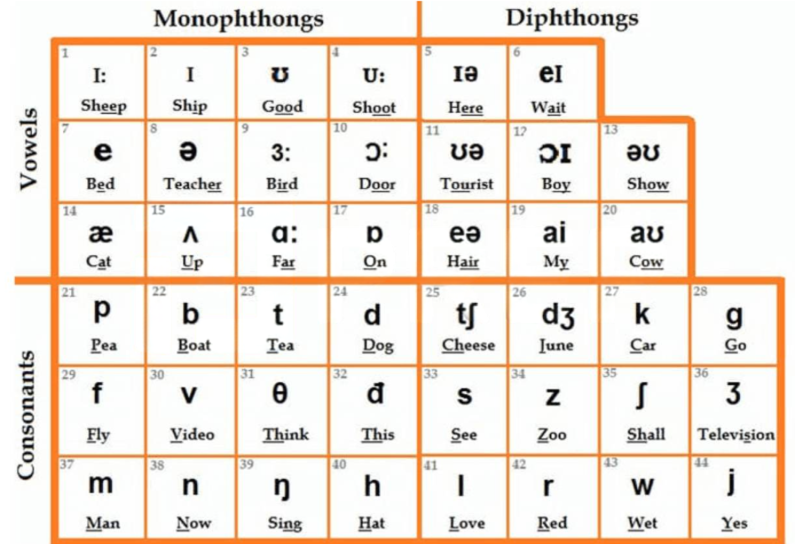
- “ship” /ɪ/
- “sheep” /iː/
A small vowel change can change meaning completely.
4 Word Stress
Certain syllables in words are stressed more than others.
Example:
- PREsent (noun)
- preSENT (verb)
Correct stress improves clarity and meaning.
2. Articulating Sentences
When speaking sentences, articulation involves more than just individual words.
Sentence Stress
Important words (nouns, verbs, adjectives) are stressed.
Example:
“I WANT to go to SCHOOL.”
Function words (to, the, and, of) are usually less stressed.
Intonation
Intonation is the rise and fall of the voice.
Rising tone → used in questions
“Are you coming?”
Falling tone → used in statements
“I am coming.”
Correct intonation helps express meaning and emotion.
Pausing
Good speakers pause at the right places.
Example:
“After the meeting, / we went home.”
Pauses help listeners understand the message clearly.
Linking Words Smoothly
In natural speech, words connect smoothly.
Example:
- “Go on” sounds like “Go-won”
- “Next day” sounds like “Nex day”
This makes speech sound fluent and natural.
Articulating Words with Appropriate Syllable Divisions
Articulating words with appropriate syllable divisions means pronouncing words clearly by breaking them into their correct syllables and stressing the right part of the word.
A syllable is a unit of sound in a word that contains one vowel sound.
In simple terms:
It means dividing words correctly into parts (syllables) and pronouncing each part clearly.
1. What is a Syllable?
A syllable:
- Has one vowel sound
- May have consonants before or after it Examples:
Word Syllable Division Number of Syllables
Cat Cat 1
Teacher Teach-er 2
Important Im-por-tant 3
Education Ed-u-ca-tion 4
Importance of Correct Syllable Division
Proper syllable division helps:
- Improve pronunciation
- Place correct word stress
- Avoid mispronunciation
- Improve reading fluency
- Enhance communication clarity
Rules for Syllable Division
- Every syllable must have a vowel sound Example:
- Pa-per
- Mo-ther
- Divide between double consonants Example:
- Let-ter
- Hop-ping
- Divide before a single consonant between two vowels Example:
- Mu-sic
- La-bel
- Compound words are divided between the two words Example:
- Foot-ball
- Class-room
- Prefixes and suffixes form separate syllables
Example:
- Un-hap-py
- Care-less
- Re-turn
Word Stress and Syllable Division
Correct syllable division helps in identifying stressed syllables.
Examples:
- TA-ble (stress on first syllable)
- be-GIN (stress on second syllable)
- ed-u-CA-tion (stress on third syllable) Wrong stress can change meaning:
- PRE-sent (noun)
- pre-SENT (verb)
Examples of Proper Articulation with Syllables
-
- Com-pu-ter
- De-vel-op-ment
- In-for-ma-tion
- Com-mu-ni-ca-tion
- Re-spon-si-bi-li-ty
Each syllable should be pronounced clearly without swallowing sounds.
Common Mistakes
Swallowing syllables
“Feb-ru-ary” incorrectly as “Feb-yu-ary”
Wrong stress placement
Saying “im-POR-tant” instead of “IM-por-tant”
Combining syllables wrongly
APPLYING WORD STRESS IN SPEAKING AND READING SENTENCES ALOUD
Word stress is the emphasis placed on a particular syllable in a word. When a syllable is stressed, it is pronounced:
- Louder
- Longer
- Clearer
- With a higher pitch
Applying word stress correctly makes speech natural, clear, and easy to understand.
Applying Word Stress in Speaking
When speaking, you must:
Identify the stressed syllable
Every multi-syllable word has one main stressed syllable.
Examples:
- TA-ble
- be-GIN
- im-POR-tant
- ed-u-CA-tion
- re-spon-si-BI-li-ty
If stress is placed incorrectly, meaning may change or speech may sound unnatural.
Example:
- PRE-sent (noun)
- pre-SENT (verb)
Make the stressed syllable stronger
When speaking, the stressed syllable should be:
- Louder
- Longer
- Clearer
Example:
- I want to buy a new com-PU-ter.
- This is very im-POR-tant.
Reduce unstressed syllables
Unstressed syllables are shorter and softer.
Example:
- a-BOUT
- to-DAY
- a-GAIN
This rhythm makes English sound natural.
2. Applying Word Stress When Reading Sentences Aloud
When reading aloud, stress works at two levels:
Word-Level Stress
Each word has its own stressed syllable.
Example sentence:
The stu-dents are pre-PA-ring for the ex-AM-i-na-tion.
Correct pronunciation makes the sentence clear and professional.
Sentence-Level Stress
In sentences, not all words are stressed equally.
Content words are stressed:
- Nouns
- Main verbs
- Adjectives
- Adverbs
- Question words
Function words are usually not stressed:
- a, an, the
- is, are, was • to, of, and
Example 1:
Sentence:
I bought a new book yesterday. Stressed words:
bought, new, book, yesterday
Example 2:
She is going to the market tomorrow. Stressed words:
going, market, tomorrow
Importance of Applying Word Stress
- Prevents misunderstanding
- Improves pronunciation
- Makes speech natural
- Shows confidence in speaking
- Helps listeners understand key ideas
Wrong stress may confuse listeners.
Example:
- I didn’t SAY he stole the money.
- I didn’t say HE stole the money.
- I didn’t say he STOLE the money.
Each stress changes meaning.
Techniques to Improve Word Stress
Use a Dictionary
Dictionaries show stress marks ( ˈ ).
Example: education
/ˌedʒuˈkeɪʃən/
Clap for Each Syllable
Say: e-du-CA-tion
Clap on the stressed syllable.
Practice Reading Aloud Daily
Focus on stressing important words.
Listen to Native Speakers
Notice how they stress key words.
Record Yourself
Check if your stress sounds natural.
Example Practice Sentences
Try reading aloud and stress the bold words:
- This is a very important meeting.
- She finished her work early.
- They are planning to travel abroad.
- The teacher explained the lesson clearly.
✅ Simple Exam Definition
Applying word stress in speaking and reading sentences aloud means emphasizing the correct syllable in words and stressing important words in sentences to ensure clear and effective communication.
If you want, I can give you:
- 20 practice sentences
- A short passage for reading aloud practice
- Exercises with answers for exams
Describing Objects, Events, and Situations
Describing means explaining clearly what something is like so that the listener or reader can imagine or understand it well. Good description uses clear vocabulary, correct grammar, and appropriate details.
1. Describing Objects
An object is a thing that can be seen or touched (e.g., book, car, phone, table).
When describing an object, consider:
Size
Big, small, large, tiny, huge Example:
The house is large and spacious.
Shape
Round, square, rectangular, oval
Example:
The table is round.
Colour
Red, blue, green, black, white Example:
She wore a beautiful red dress.
Material
Wood, plastic, metal, glass, cotton
Example:
The chair is made of wood.
Purpose/Function
What it is used for Example:
A computer is used for typing, browsing, and storing information.
Example of Full Object Description:
The bag is small and black. It is made of leather and has two silver zips. It is used for carrying books and personal items.
2. Describing Events
An event is something that happens (e.g., wedding, accident, meeting, sports match).
When describing an event, include:
Time
When it happened
Place
Where it happened
People involved
Who participated
What happened
Activities or actions
Feelings/Outcome
How people felt or what resulted
Example:
The graduation ceremony took place last Saturday at the university hall. Many students and parents attended the event. The principal gave a speech, and certificates were awarded. Everyone felt happy and proud.
3. Describing Situations
A situation refers to a condition or state of affairs at a particular time.
When describing a situation, explain:
Background
What caused the situation?
Current condition
What is happening now?
Effects
What are the results?
Possible solutions
How can it be improved?
Example:
There is a water shortage in the village due to low rainfall. Many people walk long distances to fetch water. This situation affects health and farming. The government plans to drill new boreholes to solve the problem.
4. Language Features Used in Description
(i) Adjectives
• Beautiful, large, interesting, crowded
(ii) Adverbs
• Quickly, slowly, carefully
(iii) Sensory Language
Describing what we see, hear, smell, taste, or feel.
Example:
The room was bright and smelled of fresh flowers.
CHAPTER 1 STANDARD PRONUNCIATION – ENGLISH FORM FIVE