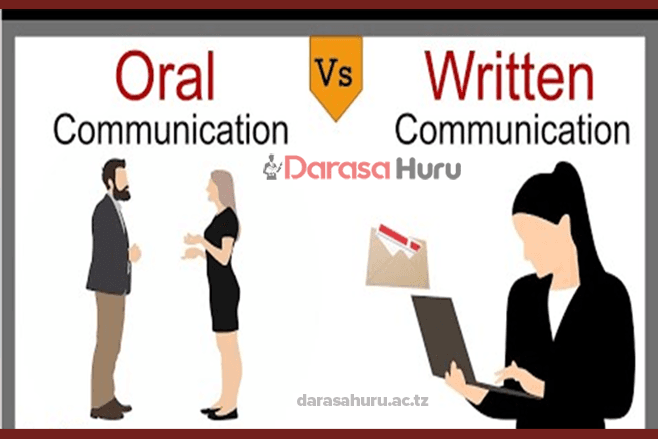
TOPIC 7: CREATING A VARIETY OF COMPLEX ORAL AND WRITTEN TEXTS
Creating a Variety of Complex Oral and Written Texts
Meaning
Creating complex texts means producing spoken or written content that goes beyond simple sentences.
These texts are detailed, structured, and include advanced language features, such as:
- Clear organization of ideas
- Use of advanced vocabulary and grammar
- Inclusion of stylistic or rhetorical devices
- Expression of opinions, arguments, or detailed explanations
In simple terms: It’s about making your speaking and writing more advanced, clear, and meaningful.
Types of Complex Texts
I. Oral Texts
- Speeches
- Debates
- Discussions and dialogues
- Presentations
Features:
- Clear introduction, body, and conclusion
- Cohesive and coherent ideas
- Appropriate tone and intonation
- Use of rhetorical devices (questions, metaphors, repetition)
Example:
Speech on climate change:
“Ladies and gentlemen, climate change is the greatest challenge of our time. Rising temperatures, melting glaciers, and extreme weather events threaten our future.
It is our duty to act now—reduce emissions, plant trees, and embrace renewable energy—to safeguard the planet for generations to come.”
II. Written Texts
- Essays and articles
- Reports
- Stories and narratives
- Reviews and journals
Features:
- Logical structure (introduction, main ideas, conclusion)
- Cohesive devices (linking words, transitions)
- Use of complex sentences and advanced vocabulary
- Stylistic elements (imagery, figurative language, persuasive techniques)
Example: Article on social media impact:
“Social media has revolutionized communication, connecting people globally in real time. However, excessive use can lead to addiction, reduced attention span, and exposure to misinformation. It is essential to strike a balance to enjoy its benefits responsibly.”
Steps to Create Complex Oral Texts
- Plan your ideas – Identify main points and supporting details.
- Organize your structure – Introduction, body, and conclusion.
- Use appropriate vocabulary and grammar – Employ advanced words and varied sentence structures.
- Include stylistic devices – Rhetorical questions, metaphors, repetition, or emphasis.
- Practice delivery – Pay attention to tone, pace, and clarity.
- Engage the audience – Ask questions or use examples.
Steps to Create Complex Written Texts
- Brainstorm ideas – Gather relevant information or arguments.
- Outline structure – Introduction, main paragraphs, and conclusion.
- Use cohesive devices – Linking words: “Furthermore,” “In addition,” “Consequently.”
- Apply advanced vocabulary and sentence structures – Complex sentences, relative clauses, passive voice where needed.
- Use stylistic features – Figurative language, persuasive techniques, or descriptive imagery.
- Edit and revise – Check grammar, spelling, punctuation, and clarity.
Comparing a Variety of Complex Oral Texts from Different Contexts Using Prosodic Features and Grammar
Meaning
When we compare complex oral texts, we examine how different speakers express ideas in various contexts, focusing on:
- Prosodic features – rhythm, stress, intonation, pitch, and pauses used in speech
- Grammar – sentence structures, verb tenses, agreement, and cohesion
In simple terms: It’s about analyzing and contrasting how people speak differently in formal or informal situations, using tone, rhythm, and correct grammar.
Types of Complex Oral Texts
A. Formal Oral Texts
Speeches, presentations, debates, lectures
Features:
- Clear structure: introduction, body, conclusion
- Precise grammar and advanced sentence structures
- Slow, deliberate pace, formal tone
- Prosodic features used to emphasize important points
Example:
“Ladies and gentlemen, climate change is our greatest challenge. We must act now to protect our environment.”
- Prosody: Stress on “greatest challenge” and “act now”
- Grammar: Correct use of modal verbs and formal structures
B. Informal Oral Texts
Conversations, casual discussions, interviews
Features:
- Flexible and spontaneous
- Simple or conversational grammar
- Varied pitch, intonation, and rhythm to express emotions
- Colloquial vocabulary and contractions
Example:
“Hey, did you watch the match yesterday? That last goal was crazy!”
- Prosody: Rising intonation for excitement
- Grammar: Use of contractions “did you watch,” informal tone
2. Prosodic Features to Compare
Feature Formal Context Informal Context
Steady, controlled, emphasizes key Varies, expresses emotions,
Intonation
points excitement
Emphasizes important words or Emphasizes personal feelings or
Stress
phrases reactions
Pitch Moderate, professional Wide range for emotions or humor Feature
Formal Context Informal Context
Natural, sometimes hesitations or Pauses Strategic, to separate ideas fillers
Rhythm Smooth, organized Irregular, natural speech pattern
| 3. Grammar Features to Compare | ||
| Feature | Formal Context | Informal Context |
| Sentence structure | Complex, complete sentences | Simple or incomplete sentences |
| Tense usage | Accurate and consistent | Flexible, sometimes casual |
| Vocabulary | Advanced, precise | Conversational, colloquial |
| Cohesion | Logical connectors: “therefore,” “however” | Limited connectors, more casual |
| Agreement | Subject-verb and pronoun agreement
Sometimes relaxed strictly followed |
|
Steps to Compare Complex Oral Texts
- Select the texts – For example, a speech and a casual interview.
- Identify prosodic features – Listen for stress, intonation, rhythm, pauses, and pitch.
- Analyze grammar – Note sentence structure, tenses, vocabulary, and cohesion.
- Note the context – Formality, purpose, and audience influence style.
- Compare differences and similarities – How prosody and grammar affect clarity, tone, and meaning.
Example of Comparison
Text 1 – Formal Speech:
“Education is the key to national development. Governments must invest in schools and teacher training.”
- Prosody: Stress on “key” and “invest”
- Grammar: Complex sentences, formal vocabulary
Text 2 – Informal Conversation:
“Yeah, I think schools really need more funding. Teachers work so hard, you know?”
- Prosody: Rising intonation, natural rhythm
- Grammar: Simple sentences, contractions, informal vocabulary Comparison:
- Formal speech uses structured grammar and deliberate stress to persuade.
- Informal conversation uses casual grammar and expressive intonation to share personal opinion.
Writing an Investigative Report
Meaning
An investigative report is a formal, structured document that presents the findings of an inquiry or investigation into a specific issue, event, or situation. It is based on facts, evidence, and analysis, rather than opinions.
In simple terms: It’s a detailed report explaining what happened, why it happened, and what should be done, based on investigation.
Purpose of an Investigative Report
- To inform decision-makers about an incident or problem
- To present facts clearly and accurately
- To analyze causes and effects
- To provide recommendations for action or improvement
- To document evidence for accountability or legal purposes
Key Features of an Investigative Report
- Clarity – Clear and precise language
- Objectivity – Focus on facts, not personal opinions
- Evidence-based – Supported by documents, observations, or data
- Structure – Organized into sections for easy reading
- Formal Tone – Professional and neutral
- Analysis and Recommendations – Explains findings and suggests solutions
- Accuracy – Dates, names, and events must be correct
- Conciseness – Avoid unnecessary details
Structure of an Investigative Report
- Title
- Clearly state the subject of the investigation.
- Example: Investigation Report on the Water Shortage in Kilimanjaro District
- Introduction
- Explain the purpose and scope of the investigation.
- Example: “This report investigates the causes of the water shortage in Kilimanjaro District during January 2026.”
- Background Information
Provide context or history of the issue.
Example: Previous water supply challenges, rainfall patterns, or population growth.
- Methodology
- Explain how the investigation was conducted.
- Example: “Data were collected through interviews with local residents, water authorities, and field observations.”
- Findings / Results
- Present the facts discovered during the investigation.
- Example: “Several pipelines were damaged, and rainfall was below average.”
- Analysis
- Explain the significance of the findings.
- Example: “Pipeline damage and low rainfall together caused a severe water shortage.”
- Recommendations
- Suggest solutions or actions to prevent future problems.
- Example: “Repair damaged pipelines, install water storage tanks, and conduct community awareness programs.”
- Conclusion
- Summarize the main points and reinforce the report’s purpose.
- Example: “In conclusion, addressing pipeline damage and water conservation is crucial to prevent future shortages.”
- Appendices (if needed)
- Include supporting documents, tables, charts, or photographs
Tips for Writing an Effective Investigative Report
- Use formal, clear, and objective language
- Organize ideas logically and sequentially
- Avoid personal bias or unverified claims
- Support findings with evidence (statistics, observations, quotes)
- Use headings and subheadings for clarity
- Review and proofread for grammar, punctuation, and clarity
- Keep it concise and precise
Example of Investigative Report Summary
Title: Investigation Report on Classroom Bullying at Mwembe Secondary School
Introduction: This report investigates the increase in bullying incidents among students in the school.
Methodology: Interviews were conducted with teachers, students, and parents.
Findings: Bullying occurs mostly during break times; lack of supervision and poor enforcement of rules were identified as main causes.
Analysis: The absence of supervision and inadequate awareness campaigns contributed to a hostile environment.
Recommendations: Increase teacher supervision, implement anti-bullying campaigns, and establish a reporting system.
Conclusion: Effective supervision and student education are necessary to reduce bullying incidents.
Academic Writing
Meaning
Academic writing is a formal style of writing used in schools, colleges, universities, and scholarly publications. It focuses on clarity, evidence, logic, and structured presentation of ideas, rather than personal opinions or casual expressions.
In simple terms: It’s writing for study or research purposes, following rules, structure, and formal language.
Key Features of Academic Writing
- Formal Tone – Avoid slang, contractions, or casual expressions. Example: “It is essential to analyze the data” (formal) vs “We gotta check the data” (informal).
- Clarity and Precision – Ideas should be clear and easy to understand. Example: “The study shows a correlation between sleep and academic performance.”
- Objectivity – Focus on facts, evidence, and logical reasoning, not personal opinions.
- Structured Format – Organized into sections like introduction, body, and conclusion.
- Evidence-Based – Use facts, research findings, citations, and examples to support points.
- Complex Sentences and Advanced Vocabulary – Use precise language and varied sentence structures.
- Cohesion and Coherence – Use linking words and logical flow of ideas. Linking words: However, Therefore, In addition, Consequently, Moreover
- Referencing and Citation – Credit sources to avoid plagiarism.
Types of Academic Writing
- Essays – Present arguments or ideas on a specific topic.
- Reports – Provide information, analysis, and recommendations.
- Research Papers – Investigate a question using evidence and analysis.
- Dissertations / Theses – Extended research on a particular topic.
- Reviews – Summarize and evaluate research or literature.
- Journal Articles – Publish scholarly research for academic audiences.
Steps for Effective Academic Writing
- Understand the Task – Know the topic, audience, and purpose.
- Research and Gather Information – Use credible sources: books, journals, articles.
- Plan and Outline – Organize ideas logically before writing.
- Write Drafts – Introduction, main body, and conclusion.
Introduction: Present the topic and thesis statement.
Body:
Present arguments, evidence, examples, and analysis.
Conclusion: Summarize key points and restate the main argument.
Example of Academic Writing
Topic: Effects of social media on Teenagers
Introduction:
Social media has become a dominant mode of communication among teenagers. While it provides opportunities for social interaction, it also poses challenges to mental health and academic performance.
Body Paragraph:
Research indicates that excessive use of social media can lead to decreased attention span and sleep disruption among adolescents (Smith, 2020). Furthermore, online peer pressure may contribute to anxiety and depression. However, platforms can also foster creativity and collaboration if used responsibly. Conclusion:
In conclusion, social media has both positive and negative impacts on teenagers. Effective parental guidance and digital literacy education are crucial to maximize benefits while minimizing risks.
Importance of Academic Writing
- Improves critical thinking and analytical skills
- Enhances communication of ideas clearly and logically
- Supports research and evidence-based learning
- Prepares students for professional and academic success
- Prevents plagiarism through proper citation
Writing Contracts
Meaning
A contract is a formal, legally binding agreement between two or more parties that outlines their rights, responsibilities, and obligations.
Writing contracts means creating a document that clearly specifies:
- What each party agrees to do
- Terms and conditions
- Rights and duties of all parties
- Legal protections in case of disputes
In simple terms: It’s writing an agreement that can be enforced by law.
Key Features of a Contract
- Offer and Acceptance – One party offers something, and the other party agrees.
- Consideration – Something of value exchanged (money, goods, services).
- Mutual Consent – All parties agree willingly and understand the terms.
- Legal Purpose – The contract must be for a lawful purpose.
- Capacity – Parties must be legally capable (age, mental competence).
- Clarity – Terms should be clear and unambiguous.
- Formality – Often written and signed for legal validity.
- Enforceability – Should comply with law so it can be legally enforced.
Structure of a Contract
Title
Clearly state it’s a contract and the subject.
Example: Employment Contract between ABC Ltd. and John Doe
Parties Involved
Name all parties and their roles.
Example: “This contract is between ABC Ltd., herein referred to as
‘Employer,’ and John Doe, herein referred to as ‘Employee.’”
Recitals / Background
Explain the purpose and context of the agreement.
Example: “Whereas the Employee agrees to provide services as specified below…”
Terms and Conditions
- Duties and responsibilities of each party
- Payment terms or compensation
- Duration of the agreement
- Confidentiality clauses
- Termination conditions
Rights and Obligations
Clearly define what each party is entitled to and must do.
Example: “The Employee shall report to the manager daily and submit weekly progress reports.”
Dispute Resolution
Specify how disagreements will be resolved (mediation, arbitration, courts).
Signatures and Date
All parties sign and date the contract to confirm agreement.
Witnesses (if necessary)
Some contracts require witnesses or notarization.
Tips for Writing Effective Contracts
- Use clear and simple language – Avoid ambiguity.
- Specify all important details – Dates, amounts, obligations.
- Include legal terms carefully – Consult a lawyer if necessary.
- Use consistent terminology – Refer to parties in the same way throughout.
- Ensure mutual understanding – Both parties should read and agree.
- Include termination clauses – How the contract can end or be canceled.
- Avoid vague phrases – Be specific about duties and responsibilities.
- Keep a written copy for all parties.
Example of a Simple Contract Clause
Payment Clause:
“The Employer shall pay the Employee a monthly salary of $1,200, payable on the last working day of each month. Any delays in payment shall incur a 2% penalty per week.”
Confidentiality Clause:
“The Employee agrees not to disclose any company information to third parties during or after employment, except as required by law.”
Writing Instruction Manuals
Meaning
An instruction manual is a written guide that explains how to use, operate, or assemble a product, device, or system.
Writing an instruction manual means creating a document that clearly tells the user what to do step by step, often with illustrations or diagrams, so that the task can be completed safely, efficiently, and correctly.
In simple terms: It’s a guide that helps people understand how to use something properly.
Key Features of an Instruction Manual
- Clarity – Instructions must be easy to understand.
- Step-by-Step Structure – Tasks broken into numbered steps.
- Accuracy – Correct information about the product or process.
- Safety Instructions – Include warnings to prevent accidents.
- User-Friendly Language – Simple and concise words.
- Illustrations/Diagrams – Visual aids to help understanding.
- Consistency – Use uniform terms, symbols, and formatting.
- Purpose-Oriented – Focused on helping the user achieve the task.
Structure of an Instruction Manual
Title Page
Clearly state the product name and type of manual.
Example: User Manual for XYZ Coffee Maker
Table of Contents
Lists all sections and page numbers for easy navigation.
Introduction / Overview
Brief description of the product and its purpose.
Example: “This coffee maker allows you to brew fresh coffee quickly and safely at home.”
Safety Precautions
Include warnings and cautions to prevent misuse or accidents.
Example: “Do not immerse the coffee maker in water. Keep away from children.”
Parts and Components
List and describe parts of the product, often with diagrams.
Example: “1. Water Reservoir 2. Filter Basket 3. Control Panel”
Step-by-Step Instructions
Provide detailed steps to use or assemble the product.
Example:
- Fill the water reservoir with clean water.
- Insert the coffee filter into the basket.
- Add ground coffee and close the lid.
- Press the power button to start brewing.
Troubleshooting Section
Common problems and solutions.
Example: “If the coffee does not brew, check if the power cord is properly connected.”
Maintenance and Care
How to clean, store, or maintain the product.
Example: “Clean the filter basket weekly to avoid coffee residue buildup.”
Contact Information
Manufacturer’s contact for support or complaints.
Tips for Writing an Effective Instruction Manual
- Use simple, clear, and concise language.
- Write in the imperative form – direct commands: “Press,” “Insert,”“Turn.”
- Include visual aids – diagrams, images, or symbols.
- Number steps sequentially – avoid confusion.
- Highlight warnings or cautions – bold or with icons.
- Test your instructions – ensure they are easy to follow.
- Use consistent terminology – avoid synonyms that may confuse the reader.
- Keep user needs in mind – assume the reader may have no prior knowledge.
Example of a Short Instruction Manual
Product: Hand Blender Steps to Use:
- Plug in the blender.
- Attach the blending arm securely.
- Place ingredients in a suitable container.
- Press the power button to start blending.
- Release the button when done.
- Unplug the blender and clean the parts with water.
Safety Tips:
- Do not immerse the motor in water.
- Keep fingers away from the blade while blending.