CHAPTER 10: EDITING AND PROOFREADING
Introduction
Editing and proofreading are important stages in writing and publishing. They help improve the quality, accuracy, clarity, and effectiveness of a written document.
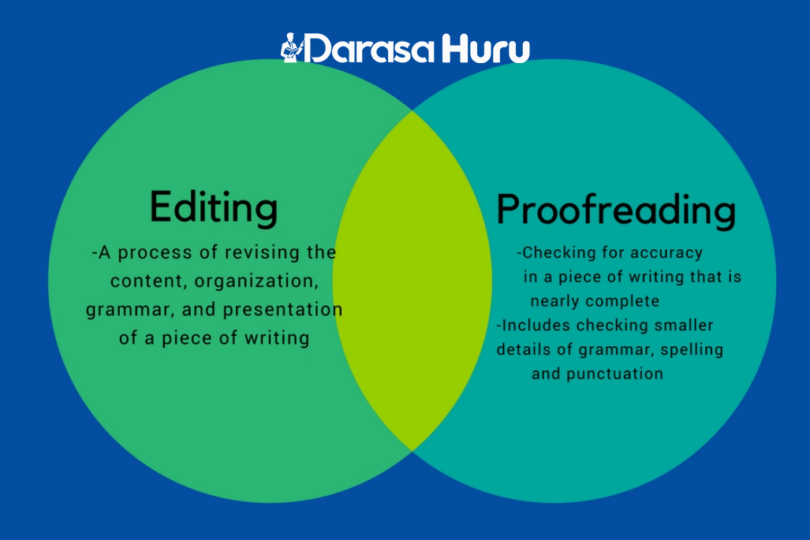
Although the two terms are related, they are different:
- Editing focuses on improving the content, structure, style, and overall quality of a text.
- Proofreading focuses on finding and correcting final errors in grammar, spelling, punctuation, and formatting before publication.
A good editor or proofreader ensures that a document communicates its message clearly and professionally.
Example: Difference Between Editing and Proofreading Original sentence:
The students was studying hard because they wants to pass there exams.
After editing:
The students were studying hard because they wanted to pass their examinations.
After proofreading:
The final version is checked for:
- Correct spelling
- Correct punctuation
- Proper formatting Final:
The students were studying hard because they wanted to pass their examinations.
Analysing the Theories and Principles of Editing and Proofreading
This activity examines the ideas and rules that guide editors and proofreaders.
1. Theory of Editing
Editing theory explains how a written text can be improved while maintaining the writer’s original meaning.
An editor examines:
- Organization of ideas
- Clarity of arguments
- Sentence structure
- Word choice
- Style and tone
Example:
Original:
Due to the fact that many students lack enough books, this situation creates problems in learning.
Edited:
Many students lack enough books, which creates learning problems.
The editor removes unnecessary words and improves clarity.
2. Theory of Reader-Centred Editing
This theory focuses on making a text suitable for its intended audience.
The editor asks:
- Who will read this text?
- What does the reader need to understand?
- Is the language appropriate?
Example:
A scientific article:
Photosynthesis is the biochemical process through which plants convert light energy into chemical energy.
For young learners:
Photosynthesis is the process where plants use sunlight to make their own food.
The information remains correct but is adjusted for the audience.
3. Theory of Text Coherence and Cohesion
This principle focuses on how ideas connect in a text.
Coherence means ideas make sense together.
Cohesion means sentences are connected through language.
Example:
Poor writing:
The company opened a new branch. The weather was good. Employees received training.
The ideas are not connected.
Improved:
The company opened a new branch. As part of the expansion, employees received training to improve their skills.
4. Proofreading Theory
Proofreading theory focuses on correcting surface-level mistakes after editing is complete.
A proofreader checks:
- Spelling
- Grammar
- Punctuation
- Capitalization
- Formatting errors
Example:
Incorrect:
The goverment announced new polices yesterday.
Correct:
The government announced new policies yesterday.
Principles of Editing
1. Accuracy
Editors must ensure that information is correct.
Example:
Incorrect:
Mount Kilimanjaro is located in Kenya.
Correct:
Mount Kilimanjaro is located in Tanzania.
2. Clarity
Writing should be easy to understand.
Example:
Unclear:
The implementation of the programme was done by the organization.
Clear:
The organization implemented the programme.
3. Conciseness
Editors remove unnecessary words.
Example:
Wordy:
At this point in time, the students are currently preparing.
Concise:
The students are preparing now.
4. Consistency
The same style, spelling, and formatting should be maintained.
Example:
Incorrect:
The program helps students.
The programme supports teachers.
Correct:
Choose one spelling style and use it consistently.
5. Preservation of Meaning
An editor should improve writing without changing the writer’s intended message.
Example:
Original:
The researcher argues that climate change is a serious problem.
The editor should not change it to:
The researcher proves that climate change is a serious problem.
The meaning has changed.
PRINCIPLES OF PROOFREADING
1. Careful Attention to Detail
Proofreaders look for small errors.
Example:
Incorrect:
Their are many reasons for the decision.
Correct:
There are many reasons for the decision.
2. Grammar Checking
Proofreaders correct sentence structures.
Example:
Incorrect:
She have completed the assignment.
Correct:
She has completed the assignment.
3. Punctuation Checking Example:
Incorrect:
However the students continued working.
Correct:
However, the students continued working.
4. Formatting Checking
Proofreaders ensure:
- Correct headings
- Correct spacing
- Proper page numbers
- Consistent fonts
Editing and Proofreading a Variety of Complex Texts
This activity involves practising editing and proofreading skills on different types of documents.
1. Editing Academic Texts
Academic texts include:
- Research papers
- Essays
- Theses
- Reports
Example:
Original:
This research is very important because it talks about many things which are related to education problems.
Edited:
This research is important because it examines challenges in education.
Improvements:
- Removed unnecessary words
- Made the sentence more formal
- Improved clarity
2. Editing Business Documents
Business documents include:
- Letters
- Reports
- Proposals
- Emails
Example:
Original:
We are writing this letter in order to inform you that your application has been successfully received by us.
Edited:
We are writing to confirm that we have received your application.
Improvements:
- More professional style
- Shorter and clearer sentence
3. Editing Legal Texts
Legal documents require accuracy because small changes can affect meaning.
Example:
Original:
The party shall make payment of the money that is required according to the agreement.
Edited:
The party shall make payment as required by the agreement. The legal meaning is preserved while improving readability.
4. Editing Technical Texts
Technical texts include:
- Manuals
- Instructions
- Scientific documents
Example:
Original:
The device should be utilized by the user in a manner that is safe and appropriate.
Edited:
Users should operate the device safely and correctly.
5. Proofreading Creative Texts
Creative writing includes:
- Novels
- Poems
- Short stories
A proofreader checks errors while protecting the writer’s style.
Example:
Original:
The moon shined brightley over the quiet villiage.
Corrected:
The moon shone brightly over the quiet village.
STEPS IN EDITING AND PROOFREADING
Step 1: Read the Entire Text
Understand the writer’s purpose before making changes.
Step 2: Check the Structure
Look at:
- Introduction
- Paragraph arrangement
- Conclusion
Step 3: Improve Language
Check:
- Word choice
- Sentence flow
- Formality
Step 4: Check Grammar and Spelling
Correct:
- Verb agreement
- Tenses
- Spelling mistakes
Step 5: Review Formatting
Check:
- Headings
- References
- Page layout
Difference Between Editing and Proofreading
Editing Proofreading
Improves content and organization Finds final errors
Happens before proofreading Happens after editing
Focuses on meaning and style Focuses on grammar and spelling
May involve rewriting sentences Usually involves small corrections
Summary of Chapter Ten
Concept Meaning Example
Editing Improving the quality of writing Making sentences clearer
Proofreading Correcting final mistakes Fixing spelling errors
Concept Meaning Example
Accuracy Ensuring information is correct Checking facts
Clarity Making ideas understandable Removing confusing sentences
Consistency Maintaining the same style Using the same spelling system Coherence Connecting ideas logically Improving paragraph flow
In conclusion, editing and proofreading are essential skills in communication.
Editing improves the structure, meaning, and style of a text, while proofreading ensures that the final document is free from errors. Both processes help produce clear, accurate, and professional written work.