ELECTROMAGNETISM
Electromagnetism is the branch of physics that deals with the relationship between electricity and magnetism.
The chapter covers three major areas:
- Magnetic fields and magnetic forces
- Sources of magnetic fields
- Electromagnetic induction
A basic principle to remember is:
ELECTRIC CURRENT → MAGNETIC FIELD
CHANGING MAGNETIC FIELD → INDUCED EMF AND CURRENT
PART A: MAGNETIC FIELDS AND FORCES
MAGNETIC FIELD
Definition of a Magnetic Field
A magnetic field is the region around a magnet, electric current or moving electric charge within which a magnetic force can be experienced.
A magnetic field is represented by magnetic field lines.
The SI unit of magnetic field strength or magnetic flux density is the tesla (T).
The symbol for magnetic flux density is:
B
Magnetic Field Lines
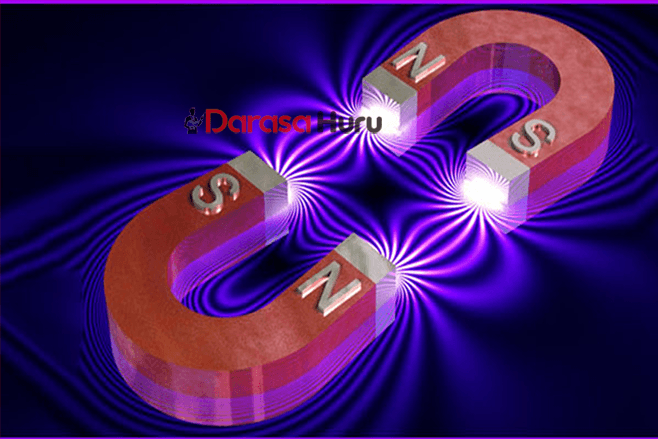
Magnetic field lines are imaginary lines used to represent the direction and strength of a magnetic field.
Properties of magnetic field lines
- Outside a bar magnet, field lines travel from the North pole to the South pole.
- Inside the magnet, they travel from South to North.
- Magnetic field lines form closed loops.
- Field lines never cross each other.
- Where field lines are close together, the magnetic field is strong.
- Where field lines are far apart, the magnetic field is weak.
- The direction of the magnetic field at a point is given by the tangent to the field line at that point.
Magnetic Field Around a Bar Magnet
A bar magnet has two poles:
- North pole
- South pole
The magnetic field is strongest near the poles because the field lines are concentrated in these regions.
Magnetic pole interaction
Like poles repel:
N → ← N
S → ← S
Unlike poles attract:
N → S
Therefore:
LIKE POLES REPEL.
UNLIKE POLES ATTRACT.
Chapter 2: Electromagnetism – Physics Form Six
READ FULL NOTES
DOWNLOAD PDF NOTES