Hydrology Revision Question by Paschal Endesh
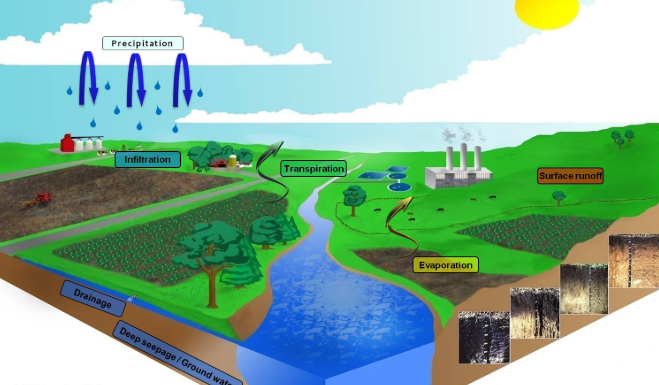
Hydrology is the scientific study of water’s movement, distribution, and quality on Earth, focusing on the entire water cycle (precipitation, evaporation, runoff, groundwater) and its interactions with the environment and living things.
Hydrologists study these processes to manage water resources, predict floods, design water systems, and address issues like pollution and water scarcity, applying knowledge to real-world challenges from small watersheds to global scales.
Key aspects of hydrology:
The Water Cycle (Hydrologic Cycle): Understanding how water moves between the atmosphere, land, and oceans (evaporation, condensation, precipitation, infiltration, runoff).
Water Movement: Studying surface water (rivers, lakes) and subsurface water (groundwater aquifers).
Water Resources: Managing supplies for cities, agriculture, and industry, including water quality and treatment.
Environmental Impact: Assessing how land use (development, farming) affects water flow and quality, and studying water’s role in ecosystems.
Applications: Flood control, drought prediction, irrigation, hydropower, pollution control, and navigation.
Hydrology Revision Question by Paschal Endesh
CLICK HERE TO DOWNLOAD FREE