Topic 4- Pollution – Chemistry Form Four
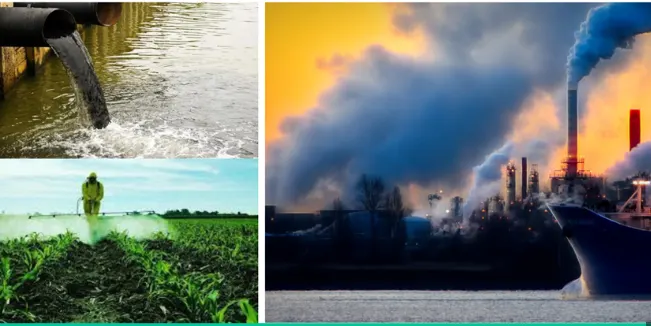
Pollution can be defined as the introduction by human (or animal) activities, directly or indirectly, of substances or energy into the environment resulting in harmful effects which may endanger human health and harm living resources and ecosystems.
Concept of Pollution
The Concept of Pollution
Explain the concept of pollution
Pollution can also be defined as the introduction of contaminants or pollutants into the natural environment. The environment comprises of living (biotic) and non-living (abiotic) things such as plants, animals, air, land and water.
Contaminants or pollutants are harmful substances introduced into the environment that disturb the balance of nature. Pollution can be in the form of chemical substances or energy such as noise, heat or light.
Human activities play a major role in the pollution of the environment. Humans engage in a myriad of activities such as agriculture, manufacturing, transport, waste disposal, mining etc. All of these activities contribute to environmental pollution in one way or a
nother.
There are three main types of pollution:
- Terrestrial (land) pollution
- Aquatic (water) pollution
- Aerial (air) pollution
Terrestrial Pollution
The Concept of Terrestrial Pollution
Explain the concept of terrestrial pollution
Terrestrial pollution is the degradation or destruction of the earth‟s surface and soil, directly or indirectly, as a result of human activities. The human activities refer to any activities performed by man that lessens the quality and or productivity of the land as an ideal resource for agriculture, forestation, construction, etc.
Human Activities which Cause Terrestrial Pollution
Identify human activities which cause terrestrial pollution
The human activities responsible for this kind of pollution include poor agricultural practices, mining, waste dumping and urban waste disposal. Below are some causes of terrestrial pollution.
Because of the ever-increasing human population, demand for food has increased rapidly. Farmers often use fertilizers to increase crop production and pesticides to get rid of pests, fungi and bacteria that destroy the crops or harm animals. The overuse of such agrochemicals results in the contamination and poisoning of the soil. Other causes of soil pollution from agricultural activities include:
- poor methods of irrigation which causes the leaching of cations down the soil surface;
- manure heaped on land, which may leach down the soil; and
- oil spillages that seep into the soil.
Mining activities
During mineral extraction, several land spaces are created beneath the soil surface. The underground holes dug during mining causes the land to sag or subside (caving in). This is nothing but the nature‟s way of filling the spaces left out after mining or extraction activities. This destroys the land and makes it unfit for use.
Mining involves the use of toxic chemicals used for mineral separation. When these chemicals drain into the soil, it gets polluted.
Rain water often leaches harmful substances from the exposed mining waste into the ground. These harmful substances are like heavy metals (e.g. arsenic) and sulphuric acid or chemicals used in processing the ores (e.g. cyanide. These chemicals are another cause of soil contamination.
Deforestation and soil erosion
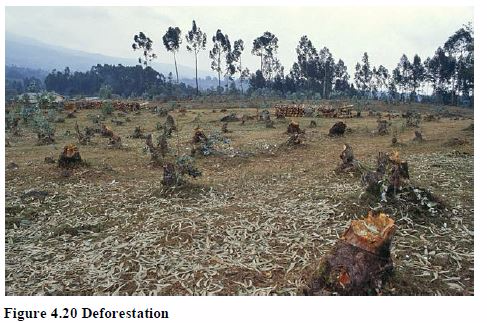
Deforestation refers to indiscrimate cutting of trees in search of land for agriculture, settlement, mining, industrialization etc. Trees have got a number of advantages which include attracting rainfall, checking soil erosion and breaking strong winds. The act of cutting down trees carelessly leaves the land bare and hence exposes it to agents of erosion.
Soil erosion causes land pollution. The eroded soil loses its nutrients and organic matter, as well as its ability to hold water. As such, soil erosion can render a fertile land as no longer suited for agriculture, or even turn originally fertile lands into barren deserts.
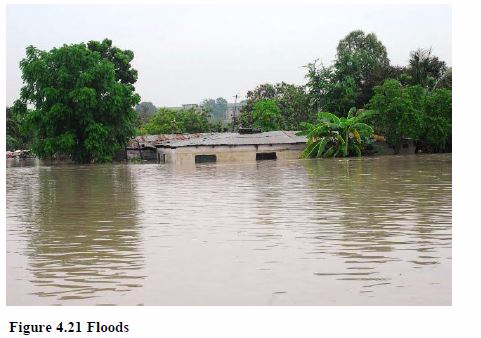
Other than causing soil erosion, deforestation has also been linked to floods which can, in turn, be seen as another cause of land and water pollution.
Sewage disposal
Sewage refers to a waste, in solution or suspension, carried off in sewers or drains with intention of removing it from the community.
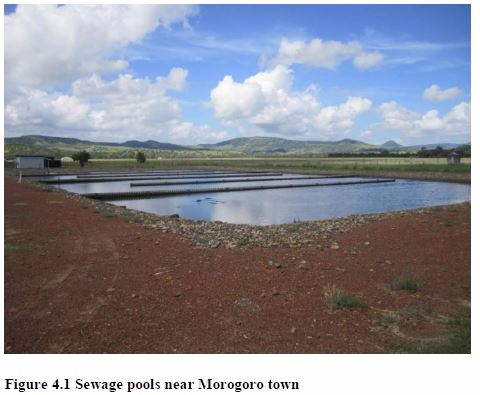
In areas where there are no water bodies into which to dump urban sewage directly, it is dumped into sewage pools that are usually dug far away from residential areas to avoid bad smell emitted by the deposited sewage.
The toxins and poisonous chemicals in the sewage gradually seep down into the ground, thus polluting the land and killing beneficial soil microorganism
s.
Garbage disposal
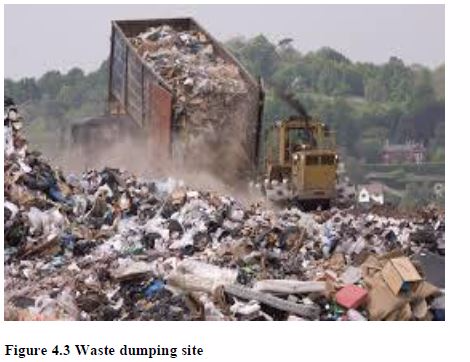
Tonnes of garbage are produced each year, especially in urban and industrial areas. Garbage is collected and moved to the dumping sites allocated for that purpose.
The garbage in dumping sites comprises of biodegradable and non-biodegradable wastes. The biodegradable wastes are those that can be broken down easily by the action of microorganisms,e.g. bacteria and fungi. The degradable waste matter may include materials such as rotten foods, kitchen wastes etc.
The non-biodegradable wastes are those that cannot be decomposed by microorganisms and thus remain on the ground for a long time. The non-biodegradable wastes are such as plastic, polythene bags, metal, some clothing and glass.
One of the common causes of land pollution in dumping sites is the contamination of the soil with toxic and even hazardous substances. Needless to say, the ability of this soil to support life is significantly affected.
Transfer of toxic wastes
Industries in developed countries produce much toxic wastes, including the deadly, reactive nuclear wastes. However, these countries have very strict laws which prohibit the dumping of such toxic wastes in their countries. The easiest and cheapest alternative is to dump them in the developing third-world countries. This is because of the greedy and selfish leaders in poor countries are easily that agree to sign contracts to allow the disposal of such dangerous wastes on their lands for their own economic gains.
Hazards Caused by Terrestrial Pollution
Identify hazards caused by terrestrial pollution
The extent of terrestrial pollution is often overlooked because its effects are not well evident to most people. However, land pollution has got a number of negative effects to soil, soil organisms, man, plants and animals.
The following are some effects of terrestrial pollution:
- Wastes dumped carelessly can endanger the health of man as well as other organisms. Broken glass, metal and other sharp objects may pierce one‟s skin and introduce disease germs into the body. Empty cans, glass and plastic containers are potential breeding grounds for mosquitoes which spread malaria and other diseases. Rotten organic matter may harbour many disease germs and they also produce noxious smell when they rot. The rotten wastes also attract flies which transmit a number of enteric diseases like dysentery, cholera, diarrhoea, etc.
- Land pollution causes chemical contamination to the ecosystem. This occurs when the chemicals in the waste matter poison the soil. Then plants growing on the poisoned soil, animals that eat these plants and even humans are all affected by these chemicals. This process is called biomagnifications and is a serious threat to the ecology. It can lead to the loss of some types of plants and animal life as well as create long-term health problems such as cancer and other deformities in humans. Radiation from nuclear wastes causes healthy problems such as cancers and other deformities.
- Piles of waste in urban areas keep growing due to increase in waste. When this waste is burned it produces a lot of smoke that leads to air pollution.
- Soil erosion (as a form of land pollution) leads to loss of land for agriculture, settlement, forest cover, fodder patches for grazing, etc.
- Land pollution leads to loss of ecosystem and hence directly or indirectly cause change in climatic patterns.
- Deforestation causes imbalance in the rain cycle. A disturbed rain cycle affects a lot of factors such as reduction in the green cover. Plants help absorb excess carbon dioxide from the air and release oxygen to the atmosphere. This process helps to balance the atmosphere. Without vegetation cover, excessive accumulation of carbon dioxide in the atmosphere causesconcerns like global warming, the greenhouse effect, irregular rainfall, and floods among other imbalances.
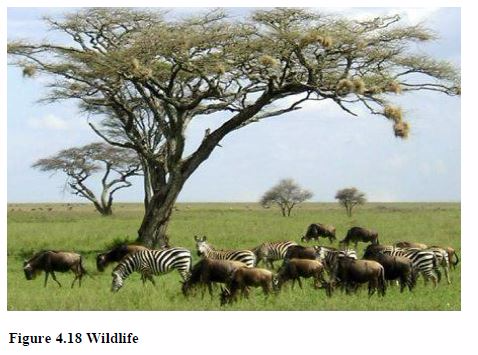
- Land pollution damages terrestrial life, especially plants. This greatly affects wildlife and other animal species which are forced to move further away and adapt to new regions or die trying to adjust.
- Heaps of different wastes from mining activities make the environment unsightly and ugly.
- Terrestrial pollution is a big problem in urban areas where waste production outweighs waste disposal. In such areas you find poor and blocked sewage system, effluent from domestic toilets flowing on the streets and roads, and dirty water carelessly poured on the ground. This makes life in urban areas uncomfortable and a mere nuisance.
Different Methods of Preventing Terrestrial Pollution
Suggest different methods of preventing terrestrial pollution
The following are some measures that can be taken to prevent and control land pollution:
Recycling and reuse
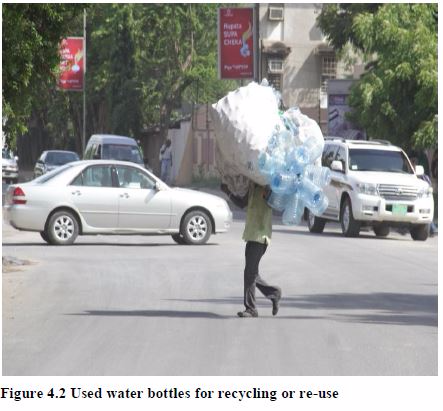
Recycling is the processing of changing used materials into usable raw materials instead of discarding them as wastes altogether. Scrap metals, plastic bottles and glass should be recycled instead of being dumped into the environment. Packaging materials such as plastic bags, beverage and water bottles can be recycled or re-used for packaging or carrying goods.
Using biodegradable materials
Emphasis should be put on manufacturing and using materials that can easily be broken down (biodegradable). For example, paper bags should be manufactured and used instead of plastic (polythene) bags, which are non-biodegradable. Biodegradable plastics have been developed and are used. Some biodegradable plastics include
- biopolymers such as those used in making surgical sutures;
- photodegradable plastics, which break down upon exposure to light: and
- soluble plastics which can be broken down by water
Proper disposal of wastes
Urban waste should only be dumped in allocated dumping sites. These sites must be far away from residential areas to avoid the risk of spreading diseases, pest infestation and a bad smell. The sewage should be properly treated before being drained into dumping pools. Some of the methods that can be used to curb urban waste problem include incineration and recycling. Paraffin should be poured onto the sewage pools to suffocate and kill mosquito larvae and hence prevent the spread of malaria to residents living in the vicinity of the dumping pools.
Reducing the use of agrochemicals
Farmers should be advised and encouraged to avoid dependency on agricultural chemicals (fertilizers, herbicides pesticides, etc). All of these chemicals pollute the soil and affect soil microorganisms a great deal. Farmers should use organic manures and chemicals in their agricultural operations. These do not pollute the land or affect crops and animals as compared to artificial chemicals. They help to improve soil structure and hence prevent soil erosion.
Making and enacting environmental laws and policies
The government should make and implement laws and regulations to prevent and control terrestrial pollution. Likewise, local government authorities should make by-laws aiming at curbing the problem of environmental pollution. The laws must clearly state guidelines and procedures to be followed by everybody regarding environment sanitation. These may include:
- discharge and treatment of sewage;
- disposal of lethal nuclear wastes;
- use of agrochemicals in agricultural production;
- use of plastic and related materials;
- disposal of toxic chemicals and solid wastes from industries; and
- careless littering of the environment by irresponsible people.
Creating public awareness
The general public should be educated about the importance of keeping the environment clean and the benefit of living in a clean environment. This knowledge can be conveyed through meetings or via mass media such as television, radio and newspapers. It may also be conveyed via announcements, posters and other social media.
Aquatic Pollution
The Concept of Aquatic Pollution
Explain the concept of aquatic pollution
Aquatic pollution is the introduction of substances that lower the quality of water into water bodies such as oceans, rivers, lakes, aquifers and ground water. This makes the water unsafe for use in homes and industries. Water pollution also affects living organisms (plants and animals) living in water.
Human Activities which Cause Water Pollution
Identify human activities which cause water pollution
There are two broad categories of sources of water pollution namely, point and non-point sources.
A point source is one that delivers harmful substances directly into a water body. An example of a point source of water pollution is a pipe from an industrial facility discharging effluent (liquid waste) directly into a river, lake or sea.
A non-point source of water pollution is a source that delivers pollutants into the water body indirectly through transport or environmental change. An example of a non-point source of water pollution is when fertilizer from a farm field is carried into a stream by rain (surface run off).
The following are some of the major causes of water pollution:
Pesticides that are applied to crops and animals drip onto the soil and may eventually run off into the local streams and rivers. They can also seep down to reach ground water. This contaminates the water and makes it unwholesome for human use and can drastically affect the aquatic and other organisms whose lives depend on that water.
Fertilizer (nutrient pollution)
Many pollutants, including sewage, manure and chemical fertilizers, contain nutrients such as nitrates and phosphates. Nitrates are very soluble. Rain washes or leaches them out of the soil into rivers. In the rivers, excess levels of nutrients (the nitrates) stimulate the growth of aquatic plants and algae. These form a layer on the water surface. A layer of these algae and aquatic plants on the surface of water will prevent light and oxygen from reaching the organisms under the water. As a result, these organisms will begin to die. When the aquatic organisms and the algae die, bacteria feed on the remains. In the process, they use up the oxygen dissolved in the water. Thus, the amount of oxygen in water drops. As a result, fish and other river life die from oxygen starvation, and the river becomes chocked and lifeless. This is called eutrophication. Water with limited dissolved oxygen supports only a few aquatic organisms. Such areas are called dead zones.
Oil spills
Oil spills in oceans and seas cause water pollution and big problems for local wildlife, fishermen and aquatic organisms. Oil spilled onto land is also carried into water bodies by surface run off. This includes drips of oil, fuel and fluid from motor vehicles, oil spilled onto the ground at filling stations; and drips of oil from industrial machinery. These sources and many more combine together to form continual petroleum pollution to all of the world‟s waters.
Oil spilled by ships, discharge of oily wastes, and drips from motor boats are all significant sources of marine pollution. Drilling and extraction operations for oil and gas can also contaminate coastal waters and ground water.
Mining
Mining causes pollution in a number of ways. They include the following:
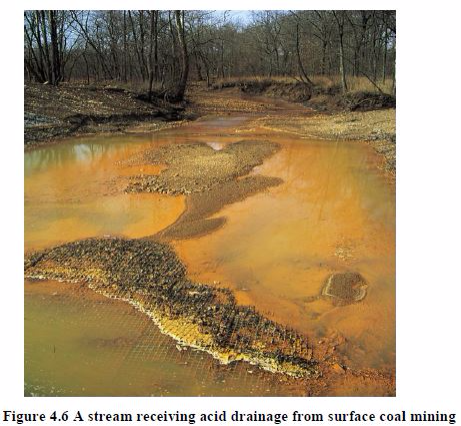
- The mining process exposes heavy metals and sulphur compounds that were previously locked deep in the earth. Rain water leaches these compounds out of the exposed earth, resulting in “acid mine drainage” and heavy metal pollution that can continue long after the mining operations have practically ceased.
- The action of rain water on piles of mining waste (tailings) transfers pollution to freshwater supplies.
- In gold mining, cyanide is intentionally poured on piles of mined rock (a leach heap) to chemically extract the gold from the ore. Some of the cyanide ultimately finds its way into nearby water.
- Huge pools of mining waste slurry (semi-liquid mixture) are often stored behind containment dams. If a dam leaks or bursts, water pollution is likely to take place.
- Mining companies in developing countries sometimes dump mining waste directly into rivers or other water bodies as a method of disposal.
Sediment
The act of clearing the forests to get ample land for agriculture, settlement or wood leaves the land bare and exposed to the agents of denudation. This accelerates soil erosion and the sediment is free to run into nearby streams, rivers and lakes. The increased amount of sediment running off the land into nearby water bodies seriously affects the fish and other aquatic life. Poor farming practices and cultivation along and close to the rivers, exposes the soil to erosion agents. Soil erosion causes water pollution.
Industrial processes
Most of the water that is used in the production process in industries is eventually discharged into water bodies. This waste water may contain harmful chemicals such as acids, alkalis, salts, toxic chemicals, oil, heavy metals and even harmful bacteria, and other reagents. These substances affect the quality of water and the lives of aquatic organisms.
In some cases, the waste water discharged into a water body may be hot enough to kill any organism living in that water.
Sewage
In developing countries about 90% of untreated sewage is discharged directly into rivers and streams. This renders the water unwholesome for domestic and other uses. Untreated sewage harbours a myriad of disease-causing organisms. This is the reason why diseases such as cholera, dysentery, typhoid and bilharzias are very common among African countries. Leaking septic tanks and other sources of sewage can contaminate ground and stream waters as well.
Marine debris (marine litter)
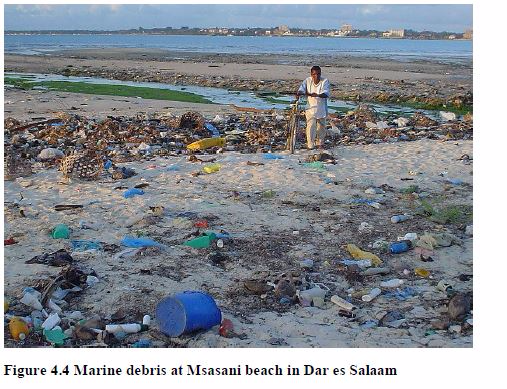
Marine debris is trash in the ocean. This is litter that ends up in ocean, seas or other large water bodies. The debris mainly comes from urban sewers and garbage thrown overboard from ships and boats.
Examples of marine debris include plastic bags, water bottles, balloons, shoes, lags etc. It can also include items that wash in from the ocean, such as fishing line, ropes, nets and traps, and items from ship such as lost cargo from container ships.
Air pollution
Air pollution contributes substantially to water pollution. Pollutants like mercury, sulphur dioxide, nitrogen oxides, and ammonia can get into the water bodies from the air. This can cause problems like mercury contamination in fish, acidification of lakes and eutrophication (nutrient pollution).
Most of the air pollution that affects water comes from coal-fired power plants, vehicle exhaust fumes, and industrial emissions.
According to a long-term study by the United Nations Environment Programme (UNEP), it has been observed that the earth‟s oceans have absorbed enough carbon dioxide from the air to cause a slight increase in ocean acidification. Most of the carbon dioxide gas that acidifies the ocean results from human activities (man-made carbon dioxide). It is feared that further carbon dioxide uptake will increase acidification even more and cause the carbonate structure of corals, algae and marine plankton to dissolve. This could have negative impacts on the biological systems of the oceans
Heat
Heat is a water pollutant. Increase in water temperature results in deaths of many aquatic organisms. This is because, as water temperature increases, the amount of oxygen that can dissolve in it also decreases. Therefore, warm and shallow water will contain very little oxygen to an extent that the dissolved gas will not sustain aquatic life.
These increase in temperature is most often caused by discharge of cooling water (which is always hot) by factories and power plants.
Global warming also contributes significantly to heating of the oceans.
Many marine organisms, including mammals, sea turtles and fish, use sound to communicate, navigate and hunt. Noise from ship engines and sonars has a negative effect on these organisms. Following noise pollution, some species may find it hard to hunt or detect predators. Others may not be able to navigate properly.
The Hazards which are Caused by Water Pollution
Identify the hazards which are caused by water pollution
The following are some of the effects of water pollution:
Waterborne diseases
Human infectious diseases are among the most serious effects of water pollution. Waterborne diseases occur when parasites or other disease-causing microorganisms are transmitted via contaminated water. Water may be contaminated by pathogens originating from excreta. Waterborne diseases include typhoid, diarrhoea, dysentery, cholera, bilharzia and many other diseases caused by bacteria, protozoa and viruses. Contaminated water also spread intestinal parasites such as hook worm, round worm, and ascaris.
Polluted beach water can cause skin rashes, ear aches, pink eye, respiratory infection, hepatitis, diarrhoea, vomiting and stomach ache.
Nutrient pollution
Nutrient pollution stimulates the overgrowths of algae and other aquatic plants. Algae can have direct toxic effects and finally result in oxygen deficiency in water.
Certain species of algae are toxic. Overgrowths of these algae result in harmful algal blooms. These are more colloquiallyreferred to as red tides or brown tides. Zooplankton eat the toxic algae. When fish eat the zooplankton, the toxins are passed to fish. Ultimately, when fish is eaten by seabirds, marine mammals and man, the toxins pass to these organisms. In this way, the toxins pass to the food chain and become part of it.
Blooms of algae and seaweed also reduce water clarity. This makes it hard for marine animals to find food. Algal bloom also blocks the sunlight needed by sea plants, which serve as nurseries for many important fish species.
When the algal overgrowths finally die, bacteria do feed on the remains. In the process, bacteria use up the oxygen dissolved in the water. In some cases, the process takes enough oxygen from the water such that oxygen level in the water falls too low to support normal aquatic life. As a result, fish and other aquatic organisms die from suffocation. The region becomes a coastal dead zone.
Some algae are poisonous to fish and humans. People swimming through these algae or swallowing the water may get rashes, eye irritation, muscle pains, vomiting and diarrhoea.
Excess nitrate in the river may get into drinking water. It increases the risk of blue-baby syndrome. What happens is that bacteria in a feeding bottle or a baby‟s body convert the nitrate to nitrite. This gets taken up instead oxygen, by the haemoglobin in blood. The baby turns blue and can die.
Nutrient pollution can also trigger unusual outbreaks of fish diseases.
Chemical contamination
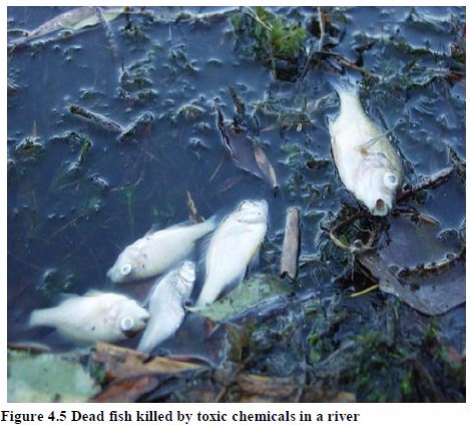
Every year many types of chemicals are draining into water. Severe chemical spills and leaks into water bodies kill fish and other aquatic life. Chemical pollution is caused by a number of toxic chemicals. The following are some categories of water pollution effects due to chemical contamination:
Every year many types of chemicals are draining into water. Severe chemical spills and leaks into water bodies kill fish andother aquatic life. Chemical pollution is caused by a number of toxic chemicals.
The following are some categories of water pollution effects due to chemical contamination:
Pesticides
Pesticides are carried in rain water run off from sources such as farm fields, suburban lawns and home gardens into the nearest rivers and streams.
Pesticides contained in drinking water and in the food chain can result in damage to the nervous system, reproductive and endocrine systems and the liver. It can also damage the DNA and cause various cancers.
Oil spills
Exposure to oil or its constituent chemicals can alter the ecology of aquatic habitats and the physiology of marine organisms.
The oil (or chemical component of the oil) can seep into marsh and sub-tidal sediments and remain there for many years. This negatively affects marsh grasses, marine worms, and other aquatic life forms that live in, on or near the sediment.
Compounds of crude oil, called the polycyclic aromatic hydrocarbons (PAHs), can remain in the marine environment for many years and are toxic to marine life at even low concentrations. Prolonged exposure to PAHs can affect development of marine organisms, increase susceptibility to disease, and distort normal reproductive cycles in many marine species.
Mercury
Mercury gets into water from coal-fired power plants, gold mining and some other industrial processes. In the water, the elemental mercury is converted to methylmercury, [CH3Hg]+, by certain bacteria. Then this new form of mercury moves up the food chain of fish when small fishes are eaten by a big fish. In the end, the big fish may be eaten by man and the mercury is passed on to him.
The effects of mercury on humans are many and are already pretty well understood:
- Young children and unborn babies are at a higher risk because their body systems are still developing. Exposure to mercury in unborn babies can cause neurological problems such as slower reflexes, learning deficit, delayed or incomplete mental development, autism, and brain damage.
- Mercury can also cause serious nervous system problems in adults. These problems include Parkinson‟s disease, multiple sclerosis, and Alzheimer‟s disease. It can also cause heart disease and damage to the brain.
Industrial chemicals
Chemicals used in industrial processes are being discharged into water bodies daily. Many chemicals can have direct toxic effects on aquatic life. Industrial spills into rivers kill fish for many kilometres downstream.
A new threat from chemicals is the hormone-disturbing character of many chemicals. The effects of hormone-disturbing chemicals include interrupted sexual development, thyroid system disorders, inability to breed, reduced immune response, and abnormal and parenting behaviour.
In humans, endocrine disruptors lead to low immune function, mental impairment, decreased fertility and increase in some types of cancers.
Mining
There is a good number of negative water-pollution effects from mining operations. They include the following:
Acid Mine Drainage (AMD):
This refers to the out flow of acid water from metal mines or coal mines. This is how it is formed: Mining process exposes rocks and soil. When rain or surface water flows over exposed rock and soil, it combines with naturally-occurring sulphur to form sulphuric acid. The acidified water eventually finds its way to streams and ground water. This pollutes the water and affects the local aquatic life. Some streams are so acidic that they destroy the aquatic ecosystem completely.
Spills and leaks:
Leaks in containment system, cyanide leach heap or breakage in coal-slurry impoundment dam result in pollution of streams, rivers and ground water. This kills fish and poisons drinking water.
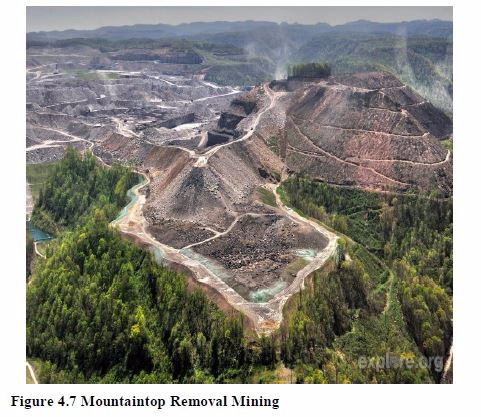
Mountaintop Removal Mining (MTR):
In this technique, the tops of coal-rich mountains are removed and the resulting rocks are dumped into nearby valleys. The rocks bury stream habitats altogether. This has catastrophic effect on whatever life forms that live in or around the stream.
Marine debris
Marine debris, also known as marine litter refers to trash in the ocean. Though trash fouls inland waterways too, it seems to be a particular problem in seas and oceans.
The effects of marine debris are many. Marine animals can swallow the trash items mistaking them with food. For example, sea turtles will eat a plastic bag believing it to be a jelly fish. The bag cause intestinal blockage and sometimes death. In some cases, trash can get attached to food and consequently get ingested together with the food. This may harm or even kill the animal that ingests it.
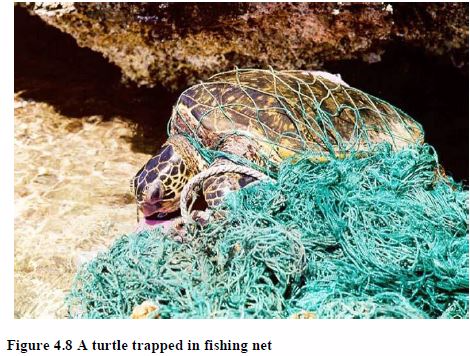
Discarded or lost fishing gear (line, rope, nets) and certain trash items can get wrapped around marine animals‟ fins or flippers and cause them to drawn or injure their fins.
Marine debris can also degrade coral reefs, sea grass beds, and other aquatic habitats. This can interfere with the normal sea life.
Thermal pollution
Discharging the hot water from a power plant into a river could affect aquatic organisms greatly. In fact, industrial thermal pollution is a problem to water bodies.
Aquatic organisms are adapted to a particular temperature range. Even a small increase in temperature can kill the organisms from thermal shock. Also the extra heat may disrupt spawning or kill young fish.
A high temperature warms the water and lowers the amount of oxygen that can dissolve in that water. Insufficient dissolved oxygen forces the aquatic organisms to increase their respiration rates. This increases the aquatic organisms‟ susceptibility to disease, parasites and the effects of toxic chemicals.
Global warming also causes extra heat to the oceans, leading to similar effects explained above.
Noise pollution
Noise pollution from various ship engines and sonar systems make it difficult for marine organisms like whales, dolphins, and porpoises to communicate, mate, find food and avoid hazards. Excessive noise pollution may cause damage to marine animals‟ sound-sensitive organs. This can result to internal bleeding and even death.
Ways of Preventing Water Pollution
Suggest ways of preventing water pollution
We have seen that water pollution poses a great threat to aquatic organisms, humans and the environment. Therefore, something must be done to prevent and control this from happening.
The following are some of the methods that can be employed to prevent and control aquatic pollution:
Reducing nutrient and pesticide pollution
This can be done by adopting good agricultural practices. These include practicing organic farming (farming which does not involve use of artificial chemicals), controlling soil erosion, and reducing or controlling the use of fertilizers and pesticides in agricultural production.
Treating sewage and industrial wastes
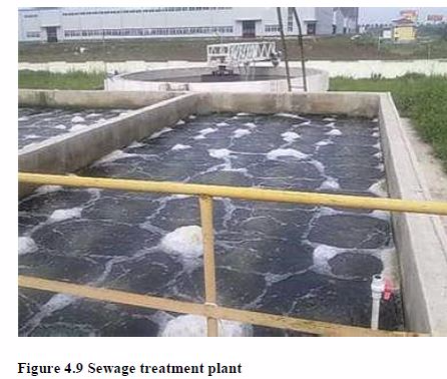
Sewage and industrial waste must be treated in order to kill harmful microorganisms and detoxify poisonous chemicals before being discharged into water bodies. This will reduce the hazards that the chemicals and microbes contained in wastes can cause to the environment in general. Sewage treatment plants should be upgraded so that they can filter out chemicals and toxins. Heated up water from industries should be cooled down and detoxified before being release into water bodies or effluent pools.
Stopping deforestation
Forests act as a soil cover which prevents soil erosion. They also help to absorb carbon dioxide from the air, the excess of which causes acid rains. Cutting down trees indescrimately exposes the soil to erosion agents. Soil erosion produces sediments which pollute water. So the presence of trees prevents water pollution through cutting off deposition of sediments into water and preventing the formation of acid rain.
Controlling coastal development
Infrastructures such as buildings and industries destroy the natural shorelines which serve many purposes like fish nurseries, absorption of hurricane impacts, and filtration of the river water entering the estuary.
Furthermore, most of the waste from these establishments is directed into the nearby water body. So prevention of coastal establishment will prevent this kind of water pollution from taking place.
The government should make and enforce laws that prohibit the establishment of settlements and industries near water bodies. This will help control water pollution and its impacts to the environment.
Reducing pollution from oil spills
Listed below are some of the ways that can be used to control the occurrence and repercussions of oil spills:
- Enforcing the regulations and rules that govern maintenance and inspection of commercial ships and other marine vessels that leak oil and fuel into the water.
- Cleaning oil spills as promptly as they occur.
- Converting oil tankers into double-hull ships. A double-hull ship has two complete layers of watertight hull surface. The178outer layer forms the normal hull of the ship. A second inner hull forms a protective barrier to sea water in case the outer hull is damaged and leaks.
- Educating the public how to keep oil out of the environment.
Controlling production of greenhouse gases
Greenhouse gases, particularly carbon dioxide and sulphur dioxide, contribute to water pollution through acid rain (acidification) and an increase in ocean temperature (thermal pollution). This can be reduced by a number of ways which include forestation, reducing emission of green house gases from industries and motor vehicles, and employing good agricultural practices.
Reducing mercury emissions
The use of mercury in many industrial processes is being phased out. However, some industries continue to use mercury on a large scale. Such industries should apply the appropriate technology to prevent mercury from being released into the environment. Where other alternatives exist, the use of mercury should be stopped completely.
Cleaning up existing and abandoned mines
The following are some of the ways through which water pollution by mines can be controlled:
- Mining companies should clean up abandoned mines which continue to release pollutants to the environment.
- New mines should not be established in areas where they are likely to cause water pollution problems.
- Mining practices which cause water pollution should be banned.
Cleaning up chemical pollution
Chemical pollution on land should be stopped. This is because chemicals on land dissolve in surface run off and finally find their way into water bodies. So preventing chemical pollution on land will automatically help keep our water clean.
Aerial Pollution
The Concept of Aerial Pollution
Explain the concept of aerial pollution
Aerial pollution is the introduction of harmful substances into the earth‟s atmosphere.
Human Activities which Cause Aerial Pollution
Identify human activities which cause aerial pollution
Air pollution can result from both human and natural actions. Natural events that pollute the air include forest fires, volcanic eruptions, wind erosion, pollen dispersal, and evaporation of organic compounds, hot springs, and fumaroles. However, pollution from natural occurrences does not occur very often.
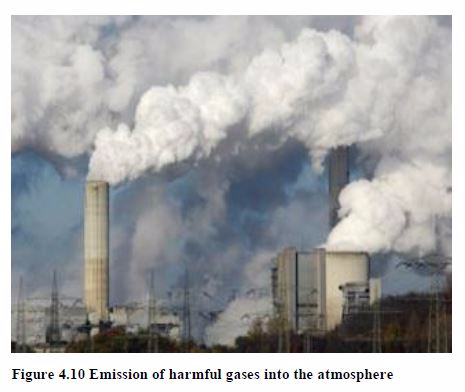
Human activities that cause air pollution include gaseous emissions from industries, burning of fossil fuel (e.g. gas, coal), household and agricultural chemicals, and deforestation.
The following are the chief causes of air pollution:
Carbon dioxide
Carbon dioxide (CO2) is one of the main air pollutants. The major man-made sources of carbon dioxide are burning of fossil fuels and deforestation. The act of deforestation removes trees that absorb carbon dioxide and help to reduce the level of carbon dioxide gas in the atmosphere. The natural sources of carbon dioxide include respiration, decay, volcanic eruptions and diffusion out of the oceans.
Carbon monoxide
Carbon monoxide (CO) is formed when fossil fuels burn in too little air (oxygen). However, when the fuels are burnt in a plentiful supply of oxygen, carbon dioxide (CO2) is produced. Other sources of carbon monoxide include metal processing and chemical manufacturing activities, forest fires, wood burning for heat or cooking and combustion of natural gas.
Ground level ozone (smog)
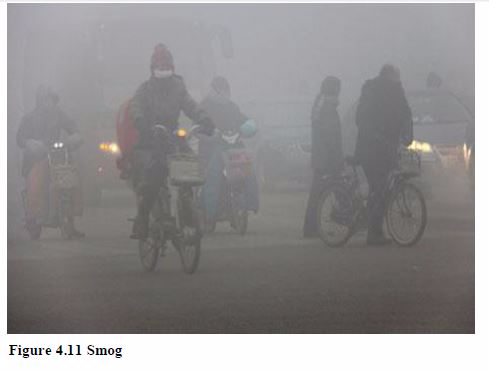
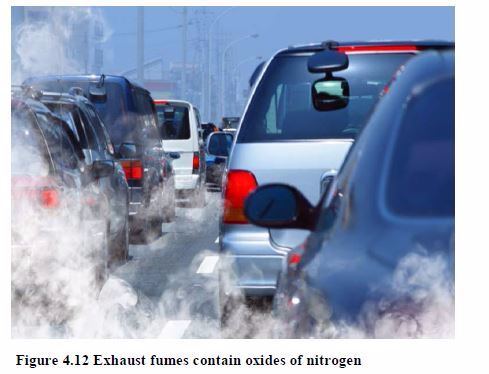
This is a product of burning fossil fuels. Smog is formed when oxides of nitrogen (NOx) react with volatile organic compounds (VOCs) in the presence of sunlight. It is formed in heavy traffic in hot weather, when sunlight causes the nitrogen oxides and hydrocarbons from car exhausts to react together.
Sunlight and hot weather are catalysts in the NOx/VOCs reactions that cause ground-level ozone (smog) to form. Areas with the highest concentration of motor vehicles and industrial emissions tend to have the worst ground-level ozone problems.
Nitrogen oxides
Nitrogen oxides, nicknamed NOx, are highly reactive gases that contain nitrogen and oxygen in varying molecular combinations. The oxides of nitrogen include nitrogen monoxide (NO), nitrogen dioxide (NO2) and dinitrogen oxide (N2O).
Nitrogen oxides form when fuel is burned at high temperatures, such as in automobile engines, coal-fired power plant, or any process that burns fuel. Inside car engines and power station furnaces, the air gets so hot that nitrogen and oxygen react together to form oxides of nitrogen.
Nitrogen monoxide (NO) is also formed in the atmosphere by lightning where nitrogen and oxygen combine together to form the oxide:
NO x and the pollutants formed from it can be transported by wind over long distances. Thus, these types of pollution are not confined to areas where they are produced, and controlling them is best done using regional and national plans.
Sulphur compounds
Compounds of sulphur that pollute the air include sulphur dioxide(SO2), sulphur trioxide (SO3) and hydrogen sulphide (H2S).Sulphur dioxide is the most important air pollutant among the compounds of sulphur.
Coal, oil and gas all contain sulphur and sulphur compounds asimpurities. When these sulphur-containing fuels are burnedsulphur dioxide gas is formed. The gas is also formed duringpetroleum refinery.
Particulate matter (PM)
Particulate matter comprises of extremely small solid particles and liquid droplets. These are mainly particles of carbon (soot) from burning coal in power stations and petrol in motor engines. The other particles include smoke, nitrates, sulphates, dust particles,and organic chemicals. Exhaust fumes from leaded petrol also contain particles of lead.
Lead
Lead can pollute the air. Lead in air comes mainly from industrial activities like lead smelting, metal processing, lead-acid battery manufacturing, waste incineration and power generation. Lead is also produced from combustion of airplane fuel. Leaded petrol is still used in some developing countries. Wind-blown soil and road dust can also contain naturally-occurring lead as well as lead from other sources.
Chlorofluorocarbons (CFCs)
Chlorofluorocarbons are organic compounds made up of carbon, chlorine and fluorine atoms. CFCs are widely used as refrigerants in refrigerators and air condition systems, solvents in cleaners, blowing agents in the production of foam propellants in aerosol cans, and as fire extinguisher chemicals.
Hazards Caused by Aerial Pollution
Identify hazards caused by aerial pollution
The following are some effects of air pollution.
Health problems
Exposure to air pollutants can cause serious health problems. The level of effects usually depends on the length of time of exposure as well as the kind and concentration of the pollutants.
Short term air pollution can aggravate or complicate medical conditions of individuals with asthma, emphysema, bronchitis, lung and heart diseases, and respiratory allergies. Long-term health effects can include chronic respiratory diseases, lung cancer, heart diseases, and even damage to the brain, nerves, liver or kidneys.
Inhaling or ingesting lead can damage the brain and peripheral nerves resulting to retardation, behaviour disorders and memory loss. It can also cause high blood pressure, heart diseases, anaemia and reproductive disorders.
Carbon monoxide is poisonous even in small concentrations. It combines with haemoglobin in the blood and stops it from transporting oxygen to the body cells. This can cause harmful health effects by reducing oxygen delivery to the body tissues and vital organs (most notably the heart and the brain). Inhaling high levels of carbon monoxide can cause vision problems, physical or mental impairment, and even death.
Global warming
Global warming is the increase in the average temperature of the earth‟s atmosphere as a result of the greenhouse effect. Greenhouse gases in the atmosphere allow ultraviolet radiations to pass through them and reach the earth. As the earth‟s surface gets heated up, some of the heat is radiated back to the atmosphere. A layer of the greenhouse gases in the atmosphere, acting as a blanket, prevents the heat from escaping to the upper atmosphere. This causes excess heat in the air around the earth (atmosphere), a phenomenon called global warming.
Global warming is mainly caused by human activities such as fossil fuel burning and deforestation, which produce green house gases such as carbon dioxide and some oxides of nitrogen (NOx). Carbon dioxide is one of the greenhouse gases that contribute to global warning. Indeed, carbon dioxide is responsible for over 50% of the global warming.
One member of the NOx family, nitrogen oxide (N2O), is also a potent greenhouse gas. The gas contributes to the greenhouse effect.
Global warming may result in melting of the polar ice caps, causing an increase in levels of the ocean water. This may lead to flooding of the coastlands and islands. Other effects include increase in the average temperature of the earth, change in weather patterns, and increased desertification, which would in turn cause reduction of the arable land.
Depletion of the ozone layer
The production and emission of chlorofluorocarbons (CFCs), is the leading cause of ozone layer depletion. CFCs accounts for almost 80% of the total depletion of ozone.Ozone is a triatomic form of oxygen (O3), found in the earth’s atmosphere. When the CFCs reach the stratosphere (a layer of the atmosphere with high concentrations of ozone), they are broken down by the intense sun rays to release chlorine radicals (•Cl). These radicals then react with the ozone molecules splitting them into oxygen atoms and free oxygen molecules. This is how the ozone layer is getting depleted.
- CCl3F → •CCl2F + •Cl
- •Cl + O3 → •ClO + O2
- •ClO + O3 → •Cl + 2O2
After each reaction, the free chlorine atom is able to begin destructive cycle again with another ozone molecule.
Acid rain
Human activities produce harmful gases such as oxides of nitrogen and sulphur which are released into the atmosphere. These gases are responsible for the formation of acid rain.
Sulphur dioxide gas in air dissolves in rain water to form acid rain and other sulphur compounds. Acid rain is formed when the sulphur dioxide dissolves in water vapour from the clouds and combines with oxygen from the atmosphere to form an acid rain.
SO2(g) + H2O(l) + ½O2(g) H2SO4(aq)
Sulphur dioxide attacks the lungs, and can affect people with asthma and heart diseases very badly.
Nitrogen monoxide and nitrogen dioxide also play a great part in the formation of acid rain and photochemical smog. Acid rain is formed by the reaction of NOx, oxygen of the air and water vapour. 4NO2(g) + 2H2O(l) + O2(g)→4HNO3(aq)
These acidic solutions then fall on the ground in the form of acid rain. Acid rain damages plants and corrodes many ancient buildings, monuments and sculptures made of marble. It greatly affects the aquatic life due to the acidification of lakes and streams.
Eutrophication
Even though most of the nutrient pollution comes from fertilizers and animals wastes that run off from farm fields, deposition of nitrogen from fossil fuel air pollution adds significantly to the problem.
Eutrophication causes algal bloom which prevents the penetration of air and light into a water body. This deprives aquatic life of oxygen and light. When algae die, bacteria act on them. The bacteria use dissolved oxygen in the water, depleting the gas from the water. The depletion of oxygen in the water (hypoxia) causes a reduction and even death of certain fish and other aquatic organisms.
Effect on wildlife
Just like humans, animals also face some devastating effects of air pollution. Toxic chemicals present in air can force wildlife species to move to new places and change their habitat. The toxic pollutants deposited in the water can also affect sea animals.
Reduced visibility (haze)
Smog reduces visibility, making activities such as driving, surveying and flying difficult.
Different Methods of Preventing Air Pollution
Suggest different methods of preventing air pollution
The following are some remedial measures that can be taken to control air pollution:
Emphasis on clean energy sources
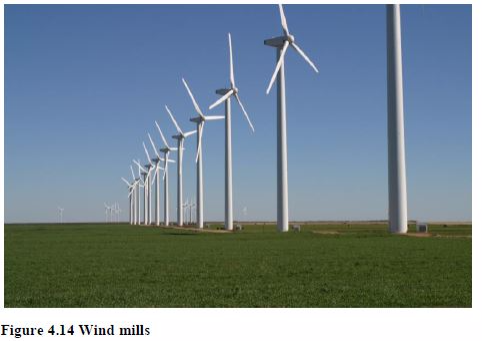
Clean energy sources are those which do not produce harmful substances during production and use. They include wind energy, solar energy, hydro electric power, and geothermal energy.
Installation of solar panels for home will help curb air pollution. This will help reduce dependency on fossil fuels, wood and charcoal which produce and emit harmful substance into the atmosphere during use. Also the use of wind energy, hydro electricity and geothermal sources of energy will greatly reduce the generation of air pollutants.
Using energy-efficient devices
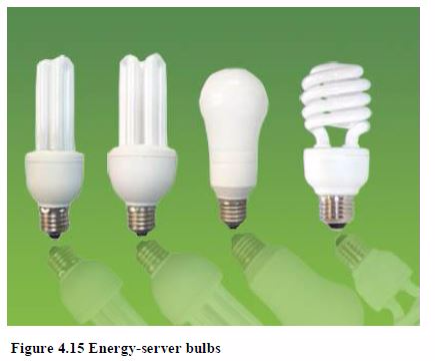
Use devices that consume less electricity not only help lower electricity bills but also reduce the pollution. The domestic appliances which serve energy include energy-serving bulbs, which can be purchased from local shops.
Using public transport
Use of public mode of transport will reduce the number of motor vehicles on the road, and consequently, the emission of harmful gases by car exhaust system.
Reducing pollution from fossil fuels
Several steps are being taken to help cut down pollution from fossil fuel, for example:
- the exhaust of new cars are fitted with catalytic converters in which harmful gases are converted to harmless ones;
- manufacturers are looking at ways to make car engines more efficient so that they can use less petrol, and other alternative fuels;
- coal is turned into smokeless fuel for use in homes; and
- scientists are looking at ways to make homes and factories more energy efficient, so that we can burn less fuel, not more.
Use of air pollution control devices
Air pollution control devices should be installed in industrial plants and any other places where air pollutants are produced in tremendous quantities.Most plants include areas for treating effluent (waste liquid) and waste gases before they are released, for example:
limestone: This will neutralize acidic liquids, or the sulphur dioxide in waste gases from burning coal. Gases leaving the power station are passed through limestone, which reacts with the sulphur dioxide to form calcium sulphate. Calcium sulphate is used to make plaster for building industry.
charcoal: This is porous and has a large surface area. It is excellent at absorbing impurities. So it is used for filtering both air and liquids.
scrubbers: The waste gas is sprayed with water to dissolve harmful compound before they reach the chimneys. incinerators: Harmful waste gases such as solvent fumes are burned in an incinerator to give harmless products.
ion exchangers: when waste liquid flows through an ion exchanger, harmful ions (such as mercury or cadmium ions) are replaced by harmless ones. Ion exchangers can be designed to remove any ions you wish.
electrostatic precipitators: In these, an electric current is passed through smoke on its way to the chimneys. The dust particles get charged and cling to electrodes. This method is used at cement factories to stop cement dust escaping from kilns. The trapped dust is returned to the cement store.
Law enforcement
Environmental pollution laws which ensure safe disposal of wastes should be enacted and implemented. Policies should be put in place to prohibit any kind of pollution by vehicles and industries. Vehicles which emit a lot of exhaust gases should not be allowed to operate. The owners of a plant which pollutes the environment should be fined or the plant should even be closed down.
The National Environment Management Council (NEMC) has put in place laws and regulations that control careless pollution of the environment. Violators of the environment sanitation laws are fined, sentenced and even stopped from operating.
Safety Measures to Protect Industrial Workers from Gaseous Pollution
Identify safety measures to protect industrial workers from gaseous pollution
People working in industries face serious health risks from harmful gases and chemicals used in industrial processes. These gaseous pollutants cause various health problems to workers, including illness and disorders upon contacting the skin or getting inhaled into the body.
Harmful gases get into the worker‟s bodies through breathing contaminated air, eating food contaminated with gaseous fumes or via skin contact.
Safety measures should be ensured in order to protect the workers from being affected by the hazardous fumes or other chemicals. The following are some safety measures that should be taken to protect industrial workers from gaseous pollution.
Eliminate or substitute hazardous chemicals
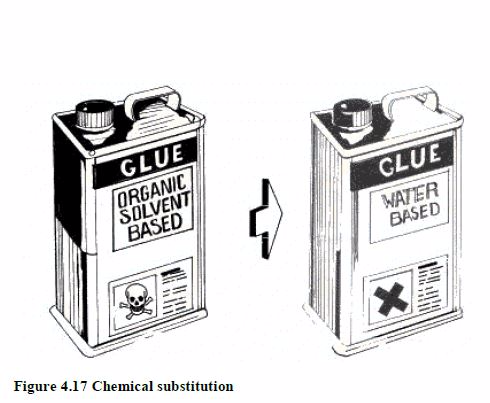
The most effective way of controlling hazards caused by chemicals is to stop using or substitute the hazardous chemicals with the harmless ones. Many industries are now using harmless chemicals in place of the usual hazardous chemicals in industrial processes and operations so as to safeguard the heath of workers.
Examples of substituting for toxic substances are:
- using water-based paints or glues instead of those that are organic solvent based (figure 4.17);
- using water-detergent solutions instead of solvents; and
- using trichloromethane as a degreasing agent instead of trichloroethylene.
Shield processes that release harmful substances
The processes that involve the use of hazardous chemicals or release harmful products should be performed in chambers. This will prevent the harmful substances from being released into the environment.
Use of protective gears
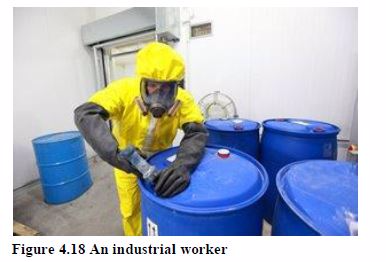
Workers should be provided with the necessary protective equipment and be trained on the correct use of each gear. Each worker should put on protective equipment to ensure personal safety at work place. The protective equipment include safety glasses, goggles, earmuffs and plugs, gloves, safety shoes, helmets, aprons, overalls and respirator (which covers the mouth and nose of the worker to prevent the entry of chemicals into the body by inhalation).If possible, workers must take showers at workplace before leaving work to avoid bringing chemicals at home. Dirty clothes should be left at work. If they must be washed at home, washing should be done separately, never with the family wash!
Ventilation
Ventilation means trapping the contaminants (fumes, gases, vapours or mists) released into the air from the process or operation and preventing them from entering the breathing zone of the workers. The trapped contaminants are conveyed by ducts to a collector (cyclone, filter house, scrubbers or electrostatic precipitators) where they are removed before the air is discharged into the outside environment. This is accomplished by a special exhaust system or by increasing the general ventilation.
Environmental Conservation
The Meaning of Environmental Conservation
Explain the meaning of environmental conservation
Environmental conservation is the protection and preservation of natural resources from destruction, wastage or loss. Thus, conservation of the environment involves the conservation of the natural resources. The natural resources include soil, minerals, water, air, animals and plants.
Importance of conserving the environment
We depend on the environment for our livelihood. It is, therefore, important to conserve the environment for our survival and sustainable development. The following are some of the reasons why environmental conservation is crucial.
Sustenance of life
The environment contains all the resources that sustain human life. These include soil, water, air, animal and plants. Environmental conservation ensures the protection of these resources for the continued sustenance of life on earth.
Protection of animal and plant species
Plants and animals maintain the ecological balance in the ecosystem. Man has been exploiting these resources for quite a long time, to the extent that some plant and animals species are in danger of disappearing from the earth‟s surface. Human activities which lead to destruction of wildlife include hunting, agriculture, settlement, mining and trade. Environmental conservation aims at protecting plants and animals from destruction.
Economic value
Economic activities such as fishing, agriculture, mining and navigation depend on the natural resources. For sustainable economic development, these resources need to be conserved so as make them available in sufficient amounts.
Wildlife conservation makes game and plant resources available for attracting tourists. Tourism earns the country foreign exchange. It also creates employment opportunities to local people who are employed to conserve wildlife resources.
Future generations
Environmental conservation aims at preserving the resources so as to make them available for the upcoming generations.
Beauty/austhecy
The natural resources give the environment beautiful scenery for example, flower are attractive to look at. Forests provide shade and the air around forest is also cold. Thus, environmental conservation initiative helps to preserve this natural beauty.
Right Attitudes, Values,and Behaviours towards Environmental Conservation
Demonstrate right attitudes, values,and behaviours towards environmental conservation
The following are some of the measures taken to conserve the environment.
Setting up organizations and institutions
Many organizations have been set up for the purpose of conserving the environment. These organizations include international organizations, government ministries and agencies, and non-government organizations.Examples of government ministries and agencies include the Ministry of Natural Resource and Tourism and the National Environment Management Council (NEMC) respectively. An example of international agencies concerned with environmental conservation issues is the United Nations Environment Programme (UNEP).
Legislation
The laws that govern environmental conservational are being made and enacted. The laws aim at curbing environmental destruction by punishing or fining those individuals who destroy our environment.
Education
People are being educated about the importance of conserving the environment for their benefits. Environment education is being continually offered in schools, colleges, universities and other organizations. Academic institutions now offer courses such as environmental studies, environmental management, and environmental engineering that teach the history and methods of environmental protection.
Research
Research is being carried out on the best ways to protect and conserve the natural resources. Some of the areas of research include
- alternative sources of energy;
- methods of preventing and controlling pollution;
- sustainable use of natural resources;
- recycling and reuse of material;
- environmental impact assessment.
Pollution prevention and control
Much effort is being directed towards prevention and control of pollution. This is being done by setting up recycling factories, rehabilitating polluted areas and enacting laws and policies to control pollution, among others.
International agreement
International organizations such as the United Nations (UN) and regional blocks such as the European Union (EU) have drafted agreements which provide guidelines on the conservation of the environment. Member nations commit themselves by signing and implementing these agreements. Most of the agreements are legally binding for countries that have formally ratified them. Such agreements include the Kyoto Protocol which was agreed upon in Kyoto, Japan on December 11, 1997.
Personal involvement
It is crucial that everyone gets involved in the conservation of the environment at individual level. Each citizen should feel obliged to take part in conserving the environment. We cannot let the task be done by the government, agencies and the international organizations alone. This is because we are all involved in environmental destruction, and the effect of this destruction affects all of us.
The following are some of the ways in which you can participate in environmental conservation:
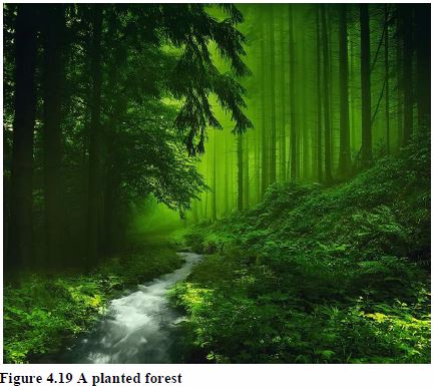
- Plant more trees at home and farm fields, school and village forest. Do not cut down tress indiscrimately because doing so leaves the soil bare and vulnerable to soil erosion.
- Always dump litter in areas designated for waste disposal and in litter bins. Do not just throw dirt anywhere and carelessly.
- Do not start fires near forests. Farmers should not prepare their farm fields by burning the vegetation because the fire can spread and destroy trees and nearby forests. Fire also kills important soil microorganisms, thus curtailing soil fertility and productivity.
- Do not harm domestic and wild animals by any means. Be kind to animals and treat them humbly.
- Convey environmental conservation education to all people. Let them know the importance of conserving and living in a clean environment.
- Participate in environmental conservation programmes and tasks. These include World environment Day (June 5, every year) and clear-up exercises in the local area or town.
Global Warming
Global warming refers to an equivocal and continuing rise in the average temperature of the air and sea at the earth‟s surface. Since the early 20th century, the global air and sea surface temperature has increased by about 0.8°C, with about two-thirds of the increase occurring since 1980. Each of the last three decades has been successively warmer at the earth‟s surface than preceding decades since 1850.
The recent rapid warming was caused by human activities which contribute to the production of greenhouse gases, such as carbon dioxide, that trap heat in the earth‟s atmosphere. It is predicted that the continuation of these activities will result in 1.8–4°C average temperature increase over the next century.
The Global Warming in Terms of ‘Green House’ Effect
Explain the global warming in terms of ‘green house’ effect
The greenhouse effect is a phenomenon in which the greenhouse gases in the earth‟s atmosphere form a layer that shields the heat emitted by the earth and prevents it from escaping out into space.
The sun‟s light (also called solar radiation) passes through the atmosphere and hits the earth‟s surface. Energy from the sunlight is absorbed by the earth‟s surface in form of heat, making it warmer. Some of this heat energy (also called infrared radiation) is released back into the atmosphere. Certain gases, called greenhouse gases, form a layer in the earth‟s upper atmosphere that prevents much of this heat from leaving the atmosphere and going out into space. These gases act like the glass of a greenhouse or window: they let light in, but keep some of the heat from passing back out.
How the Major “Greenhouse” Gases are Produced
Describe how the major “greenhouse” gases are produced
Scientific understanding of the cause of global warming has been increasing. Global warming is mostly caused by increasing concentrations of greenhouse gases in the atmosphere. The greenhouse gases include water vapour (H2O), carbon dioxide (CO2), methane (CH4), dinitrogen oxide or nitrous oxide (N2O), ozone (O3) and chlorofluorocarbons (CFCs). The following greenhouse gases are the main contributors to global warming. They are the main causes of global warming.
Carbon dioxide
Carbon dioxide is the main greenhouse gas. The gas contributes over 50% of the greenhouse effect. It is because of this reasons that man is struggling to reduce carbon dioxide emissions. The following are some of the man-made sources of carbon dioxide in the atmosphere.
Deforestation
Green plants absorb carbon dioxide gas from the atmosphere and use it to manufacture their food through the process of photosynthesis. Cutting down trees means that a few trees are left to absorb carbon dioxide gas from the air. This has led to the increase in the amount of carbon dioxide in the atmosphere.
Combustion of fuel
Burning of fossil fuel such as wood, coal, petroleum and natural gas, releases carbon dioxide into the atmosphere. The gas is produced during combustion of these fuels in car engines, power stations, industries, etc.
Methane
The main source of methane is from agricultural activities. It is released from wetlands such as rice fields and from animals, particularly cud-chewing animals, like cattle. The emission of methane gas into the atmosphere, therefore, increases with increase in agricultural activities. Since 1960s the amount of methane in the air has increased by 1% per year, twice as fast as the build-up of carbon dioxide.
Methane is also produced by the decomposition of waste materials by bacteria. It is the major component of natural gas. The gas is also produced during the mining of coal and oil (as natural gas) and when vegetation is burnt.
Nitrous oxide (dinitrogen oxide, N2O)
Dinitrogen oxide is produced from both man-made and natural processes. Human activities which produce dinitrogen oxide include combustion of fossil fuels in vehicles and power stations, use of nitrogenous fertilizers and burning of vegetation and animal waste. During combustion of fuel in automobile engines, the air gets so hot that nitrogen reacts with oxygen to form dinitrogen oxide.
The gas is also produced by digesting bacteria, and is part of the nitrogen cycle, one of the most important natural processes on earth.
Chlorofluorocarbons (CFCs)
The sources of CFCs in the atmosphere include refrigerators, air conditioners and aerosols. CFCs are extremely effective greenhouse gases. One CFC molecule is about 10,000 times more effective in trapping heat than a carbon dioxide molecule. Some of them are up to 14,000 times effective than carbon dioxide, the main greenhouse gas.
Climatic Conditions caused by Global Warming
Describe climatic conditions caused by global warming
Global warming is expected to have far-reaching, long-lasting and, in many cases, devastating consequences for planet earth. The following are some effects of global warming:
Increase in average temperatures
One of the most immediate and obvious impacts of global warming is the increase in temperatures on the world. The average global temperature has increased by about 0.8°C over the past 100 years. Scientists predict that the earth‟s average temperature will increase by between 1.4 and 5.8°C by the year 2100.Increase in global temperature will affect both the land and the ocean environments. The average temperature of the oceans has increased significantly in the past few decades, causing negative effects on marine life.
When the ocean water gets warm, the algae in the ocean tends to produce toxic oxygen compounds called superoxides which are damaging for the corals. Global warming is threatening the coral reefs to a great extent, and the fact is that if coral reefs are wiped off the planet, it will affect one third of planet‟s marine biodiversity, as well as other ecosystems related to the coral reefs directly or indirectly.
Extreme weather events
Extreme weather events include record-breaking high or low temperatures, floods or intense storms, droughts, heat waves, hurricanes and tornadoes, etc. These are effective measures of climate change and global warming.
Scientists project that extreme weather events, such as heat waves, droughts, blizzards and rainstorms will continue to occur more often and with greater intensity due to global warming. Other effects of extreme weather events include:
- higher or lower agricultural yields;
- melting of arctic ice and snowcaps. This causes landslides, flash floods and glacial lake overflow;
- extinction of some animal and plant species; and
- increase in the range of disease vectors, that is, organisms that cause diseases.
Change in world’s climate patterns
It is forecasted that global warming will cause climate patterns worldwide to experience significant changes. Climate change resulting from increasing temperatures will likely include changes in wind patterns, annual precipitation and seasonal temperature variations.
Climatic patterns in most parts of the world have already changed. Rains fall when least expected and at irregular intervals. This has greatly affected the timing of planting and harvesting activities. Sometimes the rains fall so heavily to cause floods, or too little leading to drought.
Most of the arable land that once used to be productive is slowly turning arid. With time, farmers will run short of the land for cultivation, a fact that will result in famine.
Because high levels of greenhouse gases in the atmosphere are likely to remain high for many years, these changes are expected to last for several decades or longer.
Rise in sea levels
Continued increase in the global temperature will cause the melting of ice caps in the poles and mountain glaciers. Melting polar ice and glaciers are expected to raise sea levels significantly. Global sea levels have risen about 8 inches since 1870 and the rate of increase is expected to accelerate in the coming years. If current trends continue, many coastal areas will eventually be flooded.
Scientists predict that by the year 2100 the sea level will raise by at least 25m, leading to coastal flooding that will displace millions of people. Small islands in the Caribbean, South Pacific, Mediterranean and Indian Ocean will be totally covered by ocean waters.
Ocean acidification
As levels of atmospheric carbon dioxide increase, the oceans absorb some of it. This increases the acidity of seawater. Since the Industrial Revolution began in the early 1700s, the acidity of the oceans has increased about 25%.
Because acids dissolve calcium carbonate, seawater that is more acidic has a drastic effect on organisms with shells made of calcium carbonate, such as corals, mollusks, shellfish and plankton. The acid water is likely to dissolve the carbonaceous shells, thus endangering the lives of these sea creatures. Change in ocean acidity will also affect fish and other aquatic animals and plants.
If current ocean acidification trends continue, coral reefs are expected to become increasingly rare in areas where they are now common.
Effects on plants and animals
The effects of global warming on the earth’s ecosystems are expected to be profound and widespread. Many species of plants and animals are already moving their range northward or to higher altitudes as a result of warming temperatures.
Additionally, migratory birds and insects are now arriving in their summer feeding and nesting grounds several days or weeks earlier than they did in the 20th century.
Warmer temperatures will also expand the range of many disease-causing pathogens that were once confined to tropical and subtropical areas, killing off plant and animal species that formerly were protected from disease.
These and other impacts of global warming, if left unchecked, will likely contribute to the disappearance of up to one-half of the earth’s plants and one-third of animals from their current range by 2050.
Effects on humans
As dramatic as the effects of climate change are expected to be on the natural world, the projected changes to human society may be even more devastating.
Agricultural systems will likely be affected badly. Though growing seasons in some areas will expand, the combined impacts of drought, severe weather, lack of snowmelt, greater number and diversity of pests, lower groundwater tables and a loss of arable land could cause severe crop failures and livestock shortages worldwide.
This loss of food security might, in turn, create havoc in international food markets and could spark famines, food riots, political instability and civil unrest worldwide.
The effect of global warming on human health is also expected to be serious. An increase in mosquito-borne diseases like malaria and dengue fever, as well as a rise in cases of chronic conditions like asthma, are already occurring, most likely as a direct result of global warming.
Causes and effects of climate change –> a result of global warming
Ways of Preventing Global Warming
Suggest ways of preventing global warming
The effects of greenhouse gases in the atmosphere will continue to be felt for many years. This is because greenhouse gases remain in the atmosphere for a very long period of time. For example, carbon dioxide molecules can remain in the atmosphere for a period ranging between 50 and 100 years while that of a CFC molecule is approximately 110 years. This means that global warming will continue even if the emission of greenhouse gases is reduced to very low levels.
A growing number of business leaders, government officials and private citizens are increasingly concerned about global warming and its implications. Thus they are proposing steps to reverse the trend. The following are some steps that can be taken to reduce the emission of greenhouse gases into the atmosphere:
- Conserving the energy so as to reduce the use of fossil fuels which produce greenhouse gases. Such measures can be taken by using public transport to reduce the number of motor vehicles on the road and using cars that consume a little fuel.
- Minimize the use of deodorants, as they contain CFCs (chlorofluorocarbons) that contributes to the ozone depletion, which in turn gives rise to most destructive effects.
- Planting more trees (afforestation) and avoiding cutting down trees (deforestation) carelessly. This is because forests play an important role in absorbing carbon dioxide, thus reducing the amount of carbon dioxide in the atmosphere.
- Encourage the use of renewable sources of energy like wind, biomass, solar, and geothermal energy. The use of solar power and biomass should be installed widely. But there are a few obstacles that are delaying the use of these technologies.
- Raise awareness! Educate people about global warming and its disastrous effects. Share various solutions to stop global warming. Make sure you take initiatives to help conserve the environment and encourage others to do the same.
- Countries, including Tanzania, have ratified the international agreements aiming at minimizing the emission of greenhouse gases. One of those agreements is the Kyoto Protocol.
Ozone Layer Destruction
The Meaning of Ozone Layer and its Importance of to Life on Earth
Explain the meaning of ozone layer and its importance of to life on earth
The atmosphere is divided into five layers. From the closest and thickest to the farthest and thinnest, the layers are: troposphere, stratosphere, mesosphere, thermosphere and exosphere.
The majority of the atmosphere‟s ozone is in the stratosphere, which extends from 10 kilometres to 50 kilometres above the earth‟s surface.
The ozone layer is a layer of gaseous ozone (O3) in the stratospheric atmosphere. The earth‟s stratospheric ozone plays an important role in absorbing ultraviolet radiations. Ultraviolet radiations (UVR), are high energy electromagnetic waves emitted from the sun. UV radiations include UV-A, the least dangerous form of UV radiations, UV-B, and UV-C, which is the most dangerous. UV-C is unable to reach the earth’s surface due to stratospheric ozone’s great ability to absorb it. The real threat comes from UV-B, which can enter the earth’s atmosphere, and has adverse effects.
UV-B radiation (the higher-energy UV) causes skin cancer, eye cataracts, and can lead to genetic damage.Although natural phenomena can cause temporary ozone loss, chlorine and bromine released from man-made compounds such as CFCs are the main cause of ozone layer depletion (destruction). They are also greenhouse gases and contribute to global warning.
CFCs are made up of chlorine, fluorine and carbon atoms and are more extremely stable. This extreme stability allows the CFCs to slowly make their way into the stratosphere. They can remain in the atmosphere for 20 to 120 years or more.
In the stratosphere, CFCs are broken down by UV rays from the sun, releasing free chlorine radicals (•Cl). Chlorine atom (radical) reacts with an ozone molecule (O3) to form chlorine monoxide, ClO, and one molecule of oxygen (O2). Then chlorine monoxide reacts with a second molecule of ozone to yield the original chlorine atom and two molecules of oxygen.
- CCl3F → •CCl2F + •Cl
- •Cl + O3 → •ClO + O2
- •ClO + O3 → •Cl + 2O2
After each reaction, the freed chlorine atom (radical) is able to begin destructive cycle again with another ozone molecule. It is estimated that one chlorine radical can destroy up to 100,000 molecules of ozone.
Chemical Substances which Destroy the Ozone Layer
Identify chemical substances which destroy the ozone layer
The main ODS are chlorofluorocarbons (CFCs), hydrochlorofluorcarbons (HCFCs), carbon tetrachloride and methyl chloroform. Halons (brominated fluorocarbons) also play a big role. Their application is quite limited: they’re used in specialized fire extinguishers. But the problem with halons is they can destroy up to 10 times as much ozone as CFCs can.
Hydrofluorocarbons (HFCs) are being developed to replace CFCs and HCFCs, for uses such as vehicle air conditioning. HFCs do not deplete ozone, but they are strong greenhouse gases. CFCs are even more powerful contributors to global climate change, though, so HFCs are still the better option until even safer substitutes are discovered. The following are the main ozone-depleting substances:
Chlorofluorocarbons (CFCs)
- The most widely used ODS, accounting for over 80% of total stratospheric ozone depletion.
- Used as coolants in refrigerators, freezers and air conditioners in buildings and cars manufactured before 1995.
- Found in industrial solvents, dry-cleaning agents and hospital sterilizers.
- Also used in foam products such as soft-foam padding (e.g. cushions and mattresses) and rigid foam (e.g. home insulation)
Halons
- Used in some fire extinguishers, in cases where materials and equipment would be destroyed by water or other fire extinguisher chemicals.
Trichloroethane (CH3CCl3)
- Used mainly in industry as a solvent in many products and for metal cleaning.
Carbon tetrachloride (CCl4)
- Used in solvents and some fire extinguishers.
Hydrochlorofluorocarbons (HCFCs)
- HCFCs have become major, “transitional” substitutes for CFCs. They are much less harmful to stratospheric ozone than CFCs are. However, HCFCs still cause some ozone destruction and are potent greenhouse gases.
Possible effects of ozone depletion
As ozone depletes in the stratosphere, it forms a ‘hole’ in the layer. This hole enables harmful ultraviolet rays to enter the earth’s atmosphere. Ultraviolet rays of the sun are associated with a number of health-related and environmental issues. Let us take a look at how ozone depletion affects different life forms.
Impact on humans
Skin cancer: Exposure to ultraviolet rays poses an increased risk of developing several types of skin cancers, including malignant melanoma, basal and squamous cell carcinoma.
Eye damage: Direct exposure to UV radiations can result in photokeratitis (snow blindness), and cataracts.
Immune system damage: Increased exposure to UV rays may lead to impairment of the immune system.
Accelerated aging of skin: Constant exposure to UV radiation can cause photo allergy, which results in the outbreak of rash in thin-skinned people.
Other effects: Ozone chemicals can cause difficulty in breathing, chest pain, throat irritation, and can hamper lung functioning.
Effects on amphibians
Ozone depletion is listed as one of the causes of the declining numbers of amphibian species. Ozone depletion affects many species of amphibians at every stage of their life cycle. Some of the effects are mentioned below:
- Hinders growth and development in larvae.
- Changes behaviour and habits.
- Causes deformities in some species.
- Decreases immunity: Some species have become more vulnerable to diseases and death.
- Retinal damage and blindness in some species.
Effects on marine ecosystems
In particular, plankton (phytoplankton and bacterioplankton) are threatened by increased UV radiation. Marine phytoplankton play a fundamental role in both the food chain as well as the oceanic carbon cycle. Plankton play an important role in converting atmospheric carbon dioxide into oxygen. Ultraviolet rays can influence the survival rates of these microscopic organisms, by affecting their orientation and mobility. This eventually disturbs and affects the entire ecosystem.
Impact on plants
In some species of plants, UV radiation can alter the time of flowering, as well as the number of flowers. Plant growth can be directly affected by UV-B radiation. Despite mechanisms to reduce or repair these effects, physiological and developmental processes of plants are affected.
Methods of Protecting the Ozone Layer
Suggest methods of protecting the ozone layer
The most effective way of controlling the depletion of ozone layer is to ban the production and use of ozone depleting substances (ODS). The most dangerous of these substances are chlorofluorocarbons (CFCs).
Since their introduction, CFCs have been used as:
- refrigerants in refrigerator and air conditioning units;
- propellants in aerosol cans;
- solvents and blowing agents for insulation foams;
- cleaners in electronic industry;
- fire extinguisher chemicals.
Eliminating the use of CFCs will prevent the depletion of ozone layer. New refrigerants have been developed and new aerosols use other propellants such as methane in place of CFCs.