Topic 1 The Natural Resources of Tanzania-Geography STD 5
Meaning of resources
Resources are things that enable us to achieve our goals or meet our needs.
Types of resources
Resources are of different types, including
- Natural resources such as
- Land
- Water
- Forests
- Animals and
- Minerals
- Human resources such as
- Skills and lobour
- Capital resources such as money, machines, building and other infrastructure
Each of these resources helps us in different ways to attain our goals and improve our lives
NATURAL RESOURCES
Natural resources are things and raw materials found in the natural environment
That can be used by human being for different purposes. Natural resources include
- Air
- Natural gas
- Water
- Sunlight
- Land
- Minerals
- Oil
- Forests
- Animals
Broadly, natural resources are divided into two main groups which are
- Renewable resources and
- Non-renewable resources
Renewable resources
Renewable resources are those that can constantly regenerate themselves relatively in short periods after being used. Examples include
- Sunlight
- Wind energy
- Water and
- Forest
Non-renewable resources
Non- renewable resources are finite resources that are not easily regenerated or take a long time to form; thus, they become exhausted after use. Examples include
- Oil energy
- Minerals and
- Natural gas
Natural resources found in Tanzania
The following are some of the natural resources found in Tanzania
1. MINERALS
Tanzania has many minerals resources, including
- Gold
- Tanzanite
- Diamonds
- Coal
- Copper
- Salt
- Tin
- Nickel
- Uranium
- And other precious stones
Tanzanite is a precious mineral found only in Tanzania
The mining sector in Tanzania is essential to the country’s economy because it attracts foreign investment and generates revenue through export of minerals
 |
 |
 |
| Tanzanite | Gold | Diamond |
2. Land
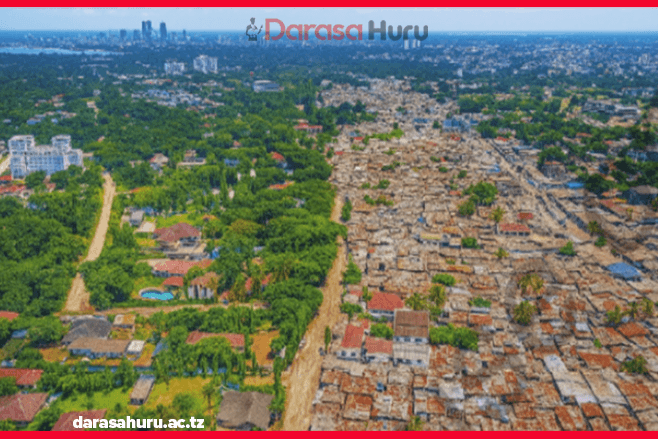
Tanzania is rich in land resources, including fertile land and large grazing areas
Some areas in Tanzania are designated as wildlife parks and reserves, protecting plants, animals and other living organisms. Other land is used for human settlements, industries and businesses. Thus, land is an essential resource that
contributes to Tanzania’s economic growth and the well- being of communities and improves the lives of individuals
3. Water
Water is an essential resource for all living things, including humans, animals and plants
Tanzania has many water resources found in different areas, sources and regions of the country including dams, rivers, lakes, the ocean and ground water
Water resources contribute to the county’s economy and people’s daily lives
5. Forests
A forest is ana area with a collection of many large and small trees, shrubs and grasses.
Forests are a source of income for many people who engage in beekeeping, harvesting fruits and gathering other natural forest-related goods. Forests are therefore important for the local population in their respective areas, and they conserve the environment
6. Wildlife
Wildlife are natural resources, which include all animals and birds that live in a natural environment without being introduce by humans
Some examples of wildlife include elephants, lions, rhinos, buffalo, ostriches and many others
Wildlife resources provide various benefits that contribute to the development of the nation through tourism, wildlife education culture national heritage and animal harvesting

The big five animals
7. Energy
Tanzania has various energy resources, both renewable and non- renewable. The country mainly depends on hydroelectric, natural gas, and biomass energy to generate electricity. In addition, Tanzania has other renewable energy sources such as wind and solar, which help the country reduce dependence on oil, gas and hydropower
DISTRIBUTION OF NATURAL RESOURCES IN TANZANIA
In Tanzania, natural resources are not evenly distributed across the country.
Some places have abundance of certain resources, while others have very little, or none, and some have different resources. This situation is called the distribution of natural resources. The following is an overview of how natural resources are distributed in Tanzania
I. DISTRIBUTION OF MINERAL RESOURCES
1. Gold
Found in Bukombe, Nyang’hwale, and Mbongwe district in Geita region. Also, gold is found in Bunda, Tarime and Butiama district in Mara region and at Bulyanhulu in Msasala council Kahama district in Shinyanga region.
In addition, gold is found in Mpanda district in Kataviregion;In Amani area between Muheza and Korogwe districts in Tanga region; in Sekenke area in Iramba district in Singida region; and Chunya district in Mbeya region.
2. Tanzanite
Found only at Mererani area in Simanjiro district, Manyara region
3. Coal
Found in in the southern and western regions, such as Mchuchuma in Ludewa district, Njombe region; Kiwira in Rungwe district, Mbeya region; Tunduma in Momba district Songwe region; and Ngaka in Mbinga district, Ruvuma region

Coal mining
4. Diamonds
Found in Mwadui in Kishapu district, Shinyanga region.Mwadui continues to be one of the primary sources of diamond production in Tanzania
5. Uranium
Are found primarily in the Manyoni district in Singida region, the Bahi district in Dodoma region, and the Namtumbo district in Ruvuma region. Currently, uranium minerals are being explored for energy production purpose, although their extraction is still in development
6. Iron
Are found in Liganga in Ludewa district in the Njombe region.These areas are famous for having a large reserve of iron minerals. Liganga’s iron is expected to contribute the country’s industrial sector.
Tanzania is also famous for various gemstones, including rubies and sapphires. Rubies are found in Tunduru and Songea districts in Ruvuma region, as well as in rural Morogoro and Ulanga district in Morogoro region.Sapphires are found in Tunduru district in Ruvuma region.Both rubies and Sapphires are very popular in international markets
Other minerals in Tanzania include salt found in Bagamoyo district in Pwani
Region, Mkindani in Mtwara region, Kilwa and Lindi districts in Lindi region, and Uvinza in Kigoma region. Phosphate minerals, which are used to produce fertilizers, are found in Tanga and Lindi regions. Calcium sulphate (gypsum) is found in the Mbeya and Rukwa region, while limestone is found in Tanga, Mbeya and Arusha region
II. DISTRIBUTION OF WATER RESOURCES
The following is the distribution of water resources in Tanzania
1. Dams
Sone of the important dams found in the country include
I. The Julius Nyerere Hydropower station
It is located at Stiegler’s Gorge on the Rufiji River
Is the largest hydropower dam project for Tanzania, aiming to meet the growing energy demands and reduce power shortage in the country

Julius Nyerere Hydroelectric power Project
II. Mtera dam
This dam is located in Chamwino and Mpwapwa district in Dodoma region and Iringa district in Iringa region.
Is one of the dams used for electricity generation through the Mtera Hydropower project

The Mtera dam
III. Nyumba ya mungu dam
Nyumba ya mungu dam is located in Mwanga district in Kilimanjaro region
It is one of the major dams for electricity generation and is used for irrigation agriculture, mainly in Kilimanjaro and Tanga regions

The Nyumba ya Mungu dam
IV. Kidatu dam
The kidatu dam is located in kilosa district in Morogoro region.
Is used for electricity generation through the Kidatu Hydropower Project

The kidatu dam
V. Hombolo dam
Hombolo dam is located in the city of Dodoma, In Dodoma region. Its source is the Kinyasungwe River.This dam is important for irrigation agriculture, watering livestock, fishing and domestic use in this drought- prone area

The Hombolo dam
2. Rivers
Tanzania has many important rivers that provide water services for human beings, industry, animals and plants
Here are some notable rivers in Tanzania, along with their sources, pathways and endpoints
i. Rufiji River
The Rufiji is the longest river in Tanzania, originating from the Udzungwa
Mountains in Iringa and Motogoro regions. The tributaries of the Kilombero, Luwegu and Great Ruaha rivers from the Rufiji River, flowing through various regions, including Morogoro and Pwani regions. The river empties into the Indian Ocean through the Rufiji Delta in the Pwani region. The Rufiji River is important for irrigation in the areas it passes, particularly in the Kilombero valley and in the lower Rufiji basin, which are famous for rice cultivation.
Moreover, the Rufiji River basin is home to diverse wildlife and supports ecological systems. Moreover, the Rufiji River contributes to various hydroelectric projects, such as the Julius Nyerere Hydroelectric Project
ii. Ruvuma River
The Ruvuma River begins a small stream in the Matogoro mountains in southern Tanzania, near Songea twon.It flows towards the Namtumbo district and the neighouring country of Mozambique side, it empties into the Indian ocean. This River is significant for Tanzania as it forms a natural border between Tanzania and Mozambique in the southern part of the country.
iii. Wami River
This river originated in the uluguru mountains in the Morogoro region, where various streams join to form a single river that flows southeast, passing through the Morogoro and Pwani regions. In Pwani region, the river crosses in Chalinze and Bagamoyo districts and finally the river empties into the Indian ocean through Wami Delta near Bagamoyo town. The wami River is important for agricultural activities, livestock keeping, supplying water for industrial and domestic use, and supporting ecological systems.
iv. Ruvu River
The Ruvu River originated in the Uluguru Mountains in Morogoro rgion.It flows through areas of Morogoro before moving into Pwani region, and in the end empties into the Indian ocean through Ruvu Delta.This river is important for agricultural activities, livestock keeping, fishing and supplying water for industrial and domestic use. It also plays an important part in supporting ecological systems in the region
v. Pangani River
The pangani River is formed by two tributaries. The first tributary originates from the slopes of Mount Kilimanjaro, forming the Lumi River. The second tributary comes from the slopes of Mount Meru, forming the Kikuletwa River. Both rivers meet at the Nyumba ya Mungu Dam. After converging at the Nyumba ya Mungu Dam, the Pangani River flows southeast through Kilimanjaro region and empties into the Indian Ocean near Pangani town in Tanga region. This river is crucial for agricultural activities, livestock keeping, and hydroelectric power generation through the Hale Hydroelectric Power Station.
vi. Great Ruaha River
i. This river in the Kipengere Mountains and flows through the Usangu plain, passing through Ruaha National Park and Nyerere National Park before joining the Rufiji River. It is one of the important rivers in Tanzania, contributing to the country’s ecological system and economy
other rivers in Tanzania include the Kagera River, which is found in Kagera region and empties its water into Lake Victoria. The Malagarasi River, which is found in Kigoma region, flows into Lake Tanganyika, and the Mara River, which is found in Mara region, also empties into Lake Victoria
3. Lakes found in Tanzania
i. Lake Victoria
Lake Victoria is the largest freshwater lake in Africa and the second largest in the world. The lake is positioned in Tanzania, Kenya and Uganda
Lake Victoria is one of the primary sources of the Nile River, which flows through South Sudan, Ethiopia and Egypt before ending in the Mediterranean Sea.
ii. Lake Tanganyika
Lake Tanganyika is the East African Rift Valley Lake, located in the western part of Tanzania, in Kigoma, Rukwa and Katavi regions. The lake is also found in the Democratic Republic of Congo, Burundi and Zambia
Lake Tanganyika is also the second deepest lake in the world and the first deepest in Africa with a depth of 1,470 meters
iii. Lake Nyasa
Lake Nyasa is the East African Rift Valley Lake, covering an area of about 29,600 square kilometres.It is the largest and second deepest lake in Africa
Lake Nyasa forms part of the southern border between Tanzania and Malawi, In Tanzania, Lake Nyasa is found in the regions of Ruvuma (Nyasa districts), Mbeya (Kyela district), and Njombe (Ludewa district).
Lake Rukwa
Lake Rukwa is locatd in the East African Rift Valley in southwestern Tanzania. It is situated within the regions of Rukwa, Songwe and Katavi
This lake is part of lake Manyara National Park, which is known for its diverse wildlife and scenic landscapes
iv. Lake Eyasi
Is also a saline lake found in the Karatu district, in the Arusha Region in northern Tanzania. The lake lies within the Rift Valley, southwest of the Ngorongoro conservation area

Distribution of rivers and lakes in Tanzania
All these lakes play an essential role in promoting the blue economy. For instance, fishing is a source of income for communities around these areas and contributes to the national economy. Also, these lakes facilities transportation services and tourism; for example, the clear water and sandy beaches attract Tourists in the Mbamba Bay area in the Ruvuma Region
Overall, Tanzania is rich in water resources that contribute to the nation’s development, particularly in agriculture, energy, trade, fishing, industry, tourism and transportation
v. Indian ocean
The Indian Ocean is an essential water resources located on the eastern side of Tanzania.The ocean borders five regions of mainland Tanzania: Tanga, Pwani,
Dar es salaam, Lindi and Mtwara and it surrounds the islands of Unguja, Pemba and Mafia
Distribution of wildlife resource in Tanzania
the following table indicates the distribution of these parks, major protected areas, and conservation areas
| National Park and conservation area | Location | Size (square km) | Attractions | Uniqueness |
| Serengeti | Northwestern (Mara, Arusha, Simiyu) | 14,763 | Migration of large herds of wild animals such as wildebeest, presence of the ‘Big Five ‘and various wildlife species | Part of a major ecological system, vast open grassland plains a UNESCO world Heritage site, and year-round wildlife presence |
| National Park and conservation area | Location | Size (square km) | Attractions | Uniqueness |
| Ngorongoro Conservation area | Northern (Arusha) | 8,292 | Ngorongoro Crater Empakaai and Olmoti, Maasai culture, presence of ‘Big Five’ and other wildlife | UNESCO world heritage site, one of the largest and most famous craters in the world, coexistence of wildlife, livestock, and human settlements (Maasai, sonjo,
Hadzabe) |
| Kilimanjaro | Northern (Kilimanjaro) | 1,688 | Mount Kilimanjaro and birds | Africa’s highest mountain (5,895m), its diverse habitats and a UNESCO world Heritage site |
| Tarangire | Northern (Manyara, Arusha, Dodoma) | 2,850 | Large elephant herds, various wildlife species, unique baobab trees, and bird
species |
Largest elephant herds of any park, iconic baobab trees |
| Lake Manyara | Northern (Arusha and Manyara | 649 | Flamingos, trees-climbing lions lake Manyara, hippos, hot springs, and groundwater forest | Alkaline lake, suspension bridge |
| National Park and conservation
area |
Location | Size (square km) | Attractions | Uniqueness |
| Ruaha | southwestern (Iringa and Mbeya) | 20, 226 | Large herds of elephants and buffaloes, other wildlife, the Great Ruaha River, Taiga fish species, cultural sites (Chief Mkwawa’s
house and Isimila) |
The second largest national park in Tanzania |
| Mahale Mountain | Western (Kigoma) | 1,613 | Chimpanzees, forests, Lake Tanganyika, Mahale mountain ranges | Chimpanzee habitat, Lake Tanganyika shoreline |
| Gombe | Western (Kigoma) | 56.2 | Chimpanzees, Lake Tanganyika | Renowned for Chimpanzee research |
| Mikumi | Eastern (Morogoro) | 3,230 | Various Wildlife such as giraffes, zebras, lions, antelopes and eland hippos dam | Savannah landscape and flat plains |
| Nyerere | Southern (Mororogoro, Coast, Lindi, Ruvuma) | 30, 893 | Boat safaris on the Rufiji River, Mwalimu Nyerere Hydroelectric Dam and a wide variety of wildlife | Largest protected wildlife area in Africa, UNESCO world Heritage site and the largest national park in
Tanzania |
| Saadani | Eastern (coast and Tanga) | 1,100 | Beaches, Wami River delta, various wildlife and green sea turtles | Only Park with both marine and savannah environments |
| National Park and conservation
area |
Location | Size (square km) | Attractions | Uniqueness |
| Udzungwa mountains | Southeastern (Morogoro and Iringa) | 1,990 | Dense forests, rare monkey species (Kipunji) and waterfalls | No roads inside the park, only hiking trails for
mountain climbing |
| Katavi | Southwestern (Katavi) | 4,471 | Hippos, crocodiles, lions, various antelope species (hartebeest, roan antelope, sable
antelope) |
Remote area with abundant wildlife |
| Rubondo Island | Lake Victoria | 457 | Wildlife, including chimpanzees, sitatunga antelopes and elephants. Rare birds like hornbills, grey parrots, and fish eagles, as well as boat and canoe
tourism |
Rare species such as the sitatunga |
| Saanane Island | Lake Victoria (Mwanza city) | 2.18 | Boat safaris, wildlife such as rock hyenas, monkeys and crocodiles, Klipspringer |
The only national park within city boundaries |
| Kitulo | Southern Highlands (Njombe and
Mbeya ) |
465 | Various types of flowers, birds and waterfalls | ‘Garden of God ‘due to its richness in
flowers |
| Mkomazi | Northeastern (Kilimanjaro and Tanga) | 3,245 | Black rhinos, wild dogs and rare antelopes such as gerenuk, lesser kudu and
dik-dik |
Habitat for endangered species |
| Arusha | Northern (Arusha) | 552 | Mount Meru, Lake Momela, black and white colobus monkeys | Landscape of savannah and forest |
| National Park and conservation area | Location | Size (square km) | Attractions | Uniqueness |
| Burigi-Chato | Northwestern (Geita) | 4,707 | Hippos, birds | New national park in Tanzania |
| Ibanda-Kyerwa | Western (Kagera) | 294 | Kagera River and various wildlife, including leopards, lions, hippos, and buffalo | Remote area with serene and unique landscapes |
| Rumanyika- Karagwe | Western (Kagera) | 247.5 | Wildlife, many ponds and mountains | Quiet landscape near the Uganda border |
| Ugalla River | Western (Tabora) | 3,865 | Hippos, crocodiles, lions, elephants, wild dogs, topi elands, storks, sable antelopes, roan antelopes, buffaloes, duikirs warthogs, aribis, reedbucks, bushbucks | Rivers and wetlands with abundant large hippos and crocodilies in Africa |
| Kigosi | Northwestern (Geita, Kagera, Shinyanga, Tabora) | 8,265 | Wildlife like otters, hartebeest, bushbucks, waterbucks duikers, crocidilies, hippos; Rare birds such as shoebill storks, bearded vulturs and pygmy geese; miombo
woodlands |
The largest wetland in East Africa, home to rare bird species such as storks |
| Jozani-Chwaka Bay | Unguja (South Zanzibar) | 50 | Red colobus monkeys, forests, birds, and butterflies | UNESCO
World Heritage site, the only national park in Zanzibar |
Table 2: Some game reserves in Tanzania
| Pori tengefu | Mahali | Ukubwa kwa kilomita za mraba |
| Ikorongo | Mara | 5,000 |
| Selous | Lindi na Pwani | 18, 020 |
| Maswa | Simiyu | 2,200 |
| Mpanga kipengere | Njombe na Mbeya | 1,574.3 |
| Kijereshi | Simiyu | 82 |
| Lukwati na piti | Songwe | 6,118.9 |
| Moyowosi | Kigoma | 6,000 |
| Mkungunero | Dododma na Manyara | 743.9 |
| Swagaswaga | Dododoma na Manyara | 871 |
| Luganzo – Tongwe | Katavi, Tabora, na Kigoma | 5,746.2 |
| Rungwa | Singida na Mbeya | 9,000 |
| Muhesi | Singida | 2,000 |
| Kizigo | Singida | 4,000 |
| Liparamba | Ruvuma | 570 |
| Lwati | Rukwa | 2228 |
| Lukwika lumesule | Mtwara | 444 |
| Msanjesi | Mtwara | 210 |
| Pande | Dar es salaam | 15 |
| Rukwa | Katavi | 4,000 |
| Ugalla | Tabora | 7,577.4 |
| Uwanda | Rukwa | 5,000 |
| Wamimbiki | Morogoro na Pwani | 2,466.6 |
| Inyonga | Katavi | 6,569.9 |
| Wembere | Tabora na Singida | 5,385.8 |
| Igombe | Tabora | 1,367.1 |
Besides land- based protected areas, Tanzania has a good marine reserves system

Nationa parks, game reserves and conservation area in Tanzania
That protects marine biodiversity and provides unique tourism opportunities. These reserves are managed by the marine parks and reserves unit (MPRU) Table 3 presents some of the marine reserves in Tanzania
Table 3. some of the marine parks in Tanzania
| Reserve name | Location | Attractions | Unique features |
| Mafia island | South (Coast) | Mangroves, seagrass, coral reefs, islands (Shungimbili,
Nyororo) |
Presence of rare creatures like hippos and colourful fish |
| Mnazi Bay | South (Mtwara) | Mangroves, saltwater | Marine environment with hippos and
saltwater fish |
| Tanga Silikanti | North (Tanga) | Coral reefs,
colourful fish |
Stunning scenery
for divers |
| Dar es salaam Marine Reserve system (DMRS) | Dar es salaam | Islands (Bongoyo, Mbudya), Military birds, coral reefs, sea
cucumbers |
Sea cucumbers- the largest marine invertebrates |
ENERGY RESOURCES DISTRIBUTION
Tanzania has several energy resources, including renewable and non-renewable sources, which contribute to economic development and address electricity needs
The following are some of the important energy sources available in Tanzania
i. Natural gas energy
Tanzania has rich natural gas resources, mainly found in Lindi and Mtwara regions, where the first discoveries were made in 1974 in Songo Songo Island (Lindi) and 19182 in the Mnazi Bay area (Mtwara) presently, more natural gas deposits have been discovered in deep- water areas of the Indian ocean in these two regions. Natural gas is important for the national economy as it generates about 50% of the country’s electricity through gas processing plants, such as
those in Madimba (Mtwara). Natural gas is used in industries , transportation (including cycle rickshaws and vehicles) and cooking. Natural gas also contributes to national revenue through export to neighbouring countries such as Burundi, Malawi and Uganda. Tanzania also aims to increase gas exports to the Democratic Republic of the Congo, Kenya and Zambia
ii. Oil energy
Oil exploration activities in Tanzania began in 1952.Until now, Tanzania has signed contracts with various companies for oil exploration. However, Tanzania still plays a significant part in the East African Crude Oil Pipeline (EACOP) Project, which runs from (Hoima) in Uganda to the Tanga region in Tanzania.
The implementation of this project started in 2022 and is estimated to be completed by 2026.Upon the completion of the project, it will contribute to the development of the economy and energy sectors in Tanzania
iii. Hydropower, solar and wind energy
Water, solar and wind projects are essential for promoting the energy sector in Tanzania. For example, there is wind power project in the Singida region.In addition, the Julius Nyerere Hydropower project on the Rufiji River.Moreover, more hydroelectricity is produced at the Mtera, Nyumba ya Mungu and Kidatu
The relationship between Tanzania’s natural resources and development activities
1. Development in the fishing sector
Tanzania’s lakes, rivers and the Indiana ocean provide fish which support food supply, employment and income for people and the nation
2. Development in the agricultural sector
Fertile land, water and good climate help farmers grow crops and keep livestock, increasing food production and economic development
3. Development in the mining sector
Minerals like gold, Tanzanite and coal create jobs, generate foreign exchange and support national development
4. Development in the energy sector
Water, gas, coal and sunshine are used to produce electricity which supports industries, home and social services
5. Development in the industrial sector
Natural resources provide raw materials for industries, helping to produce goods, create employment and grow the economy
6. Development in the tourism and wildlife management sector
Wildlife, forests, mountains and beaches attract tourists, bringing income, conserving nature and supporting national development
7. Development in the construction and infrastructure sector
Resources like stones, sand, timber and cement materials are used to build roads, bridges, houses and other infrastructure
8. Development in the business sector
Natural resources support trade in agricultural products, minerals, fish and forest products, increasing income and investment
9. Development in the transportation sector
Fuel, land and water resources help develop roads, railways and air transport which support movement of people and goods

Mfugale bridge in Dar es salaam

Julius Nyerere International Airport in Dar es salaam

Tanzania Standard Gauge Railway
Exercise The Natural Resources of Tanzania
- What methods can be used to ensure the sustainability of water resources in the country?
- What unique feature differentiates lake Manyara National Park from other national Parks?
- Explain the benefits of wildlife resources in Tanzania
- Explain the use of land resources in your community
CLICK HERE TO GET PDF NOTES