SAMPLE QUESTIONS AND ANSWERS ON NOVELS – A’LEVEL
Question 1:
Although some novels are not set in Tanzania, still they are relevant to the Tanzanian society”. Justify this quotation using three novels you have read under this section.
(In this question your main task is to show how the content of novels made for other society tits in the Tanzanian society).
Answer
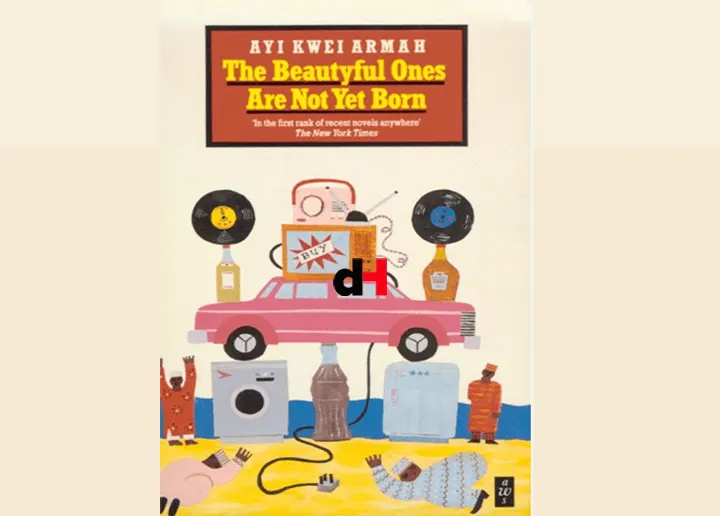
As a work of literature, a novel cannot grow in vacuum (emptiness), it must reflect a particular society at a particular time. The society may be real (hence real setting) or unreal (hence imaginary setting). Because many societies share several similar characteristics, the possibility of novels set elsewhere to reflect other societies is very likely. Likewise, the possibility ofa novel set outside Tanzania to reflect the Tanzanian society is very likely for the same reason The relevance of a novel does not depend on its setting but similarity in the societies. This Car; be proved by using two novels such as A Man of the People by Chinua Achebe (whose setting is imaginary), and The Beautifully ones Are Not Yet Born by Ayi Kwei Armah (whose setting is Ghana during the last days of the leadership of Kwame Nkrumah). Although both books are Set outside Tanzania, they have discussed themes which are very relevant to Tanzania as explained below.
First, both novels have discussed the theme of corruption. In A Man of the People we see Chief Koko bribes Maxwell to induce him from contesting in Chief Koko’s constituency. In the same book we also see Boniface, one of Odili’s bodyguards telling him that they bribed the police and the Court clerk so that their case could be ruined. In The Beautyful Ones Are Not Yet Born, we see the allocation of wagon space clerk using his office to take a bribe from Amankwa the timber contractor. All the examples above can clearly be seen in the Tanzanian society, There is corruption in political affairs, in the police departments and in courts of law in the public transport sector as well as in public offices. The media reports these instances daily.
Secondly, the novels have discussed the theme of poverty. In A Man of the People we see Edna forced to marry Chief Nanga because he paid for her education due to her family’s state of poverty. Also when the food for her mother pours down due to the bicycle accident, she starts picking the food from the sand complaining that her sick mother will starve (no money to buy another food). In TheBeautyful OnesAre Not Yet Born, The Man does not take his lunch because he has no money and those who take lunch are borrowing money or food. For a poor country like Tanzania, this theme is very relevant. We have many examples in this country of school drop outs due to lack of school fees, people who can not afford to buy meals and those who keep on borrowing to attain their basic needs such as food.
Thirdly, the theme of betrayal is considered in the three novels. In A Man of the People the leaders have betrayed citizens by using the support of the citizens into positions which they are to enrich themselves. Examples are like Chief Nanga who lives a luxurious life while villagers in Anata and Urua are very poor. In TheBeautyful Ones Are Not YetBorn the writer tells us that the man on the day of revolution was thinking how Nkrumah got power through peoples support but used the power for his own benefit. All these examples are evident in Tanzania. Our leaders use their positions to enrich themselves and have forgotten those who elected then into power. That is why we see village people in rural Tanzania without electricity or water 50 many years after independence.
Moreover, the novels have given due consideration to the theme of cultural imperialism. InA Man ofthe People Chief Nanga is angry because Mr. Jalio has worn a traditional dress. He wants him to wear western dresses. Also, someone at the book exhibition is wearing clothe? With labels 100% WOOL: MADE IN ENGLAND. In The BeautyfulOnes Are Not Yet Born, we see people trying to call themselves names which look like British names such as ATTOH’ WHITE. In Tanzania we see many people especially leaders trying to be like Europeans m their cultural lifestyle.
They talk, wear, and live like Europeans. The common people in Tanzania call themselves flames that reflect Western or American culture such as MR. BLUE, MR. NICE, EAST COAST TEAM, HARD BLASTERS, QUEEN AISHA, and many others. . Furthermore, the writers have discussed the disillusionment of the people in the societies used in their novels. In AMan of the People we see Odili disappointed by the sacking of Dr. Makinde and other Ministers who wanted to save the country’s economy. In The BeaulyfulOnes Are Not Yet Born we see the man, sister Maanan and Kofi Billy as people who are very disappointed with the state of affairs in Ghana. Maanan and Kofi Billy start smoking “wee” and later Kofi Billy commits suicide while Maanan runs mad. In our country these examples can also be found. Many people are disappointed when they see leaders who stand for the truth being punished for that. Also many people who fought for our independence are dying poor in me villages while some people are so disappointed that they opt for drug abuse which affects them. Some even commit suicide.
In conclusion, the essay above proves that although some novels. Have been set outside Tanzania but they reflect Tanzania society as if they have been set in Tanzania. Thus the statement/quotation in question is justified.
Note: (You can add more examples depending on your speed and time).
Question 2:
With reference to two readings, consider how the writers have made use of imagery and symbolism in their writings.
Answer
Imagery refers to the use of words artistically to create images that appeal to the readers’ sense organs and their minds (mental picture). Symbolism is the use of artificial things to represent actual, phenomena. Writers may sometimes employ the use of imagery and symbolism to present their messages to their readers. The Beautyful Ones Are Not Yet Born by Ayi Kwei Annah and His Excellency the Head of State by Danny Safo can be used to verify this.
With reference to The Beautyful Ones Are Not Yet Born the writer uses imagery where he describes the first and last buses as very old and very new respectively. He also describes the dirt in The Man’s office and in The Man’s bathroom. He also gives us a clear picture of Koomson’s escape through the latrine pit and The Man swimming back from the boat. Imagery is also where Sister Maanan takes the sand and lets it fall to the ground trying to get something she cannot see. The escape by Koomson represents the aftermath of corruption; the swimming of the man represents the cleansing and the sand falling by Sister Maanan represents the mix up of both evil and a few good people.
With reference to His Excellency the Head of State, the writer describes the morning of the two coups at the beginning and at the end of the book to show that revolutions happen unexpectedly. He also describes the physical appearance of General Musante. He describes the healing of the people who pretend to be lunatics and lepers to tell us the treachery of our leaders.
With regard to symbolism, in The Beautijitl Ones Are Not Yet Born, the writer uses the old and new bus to symbolize the old and new governments respectively. He uses the Koomson’s Car and house to symbolize wealth and privilege. He also uses the story of a freak called “The old manchild” to symbolize the worsening of Ghana at a supersonic speed. The sleeping and Waking up of the man at the same beach after Koomson’s escape symbolizes the similarity of life in the old regime and in the new regime.
In His Excellency the Head of State the writer uses Prophet Akaba’s many roomed mansion to symbolize wealthy influence and treachery. He uses the cosmetics and paints used to paint People into lepers and lunatics to symbolize the false means used by leaders to trick the masses into believing into false things. The coup is used to symbolize the bad end of bad leaders and the false healing by Prophet Akaba symbolizes the false promises by our leaders.
As explained above, the writers use imagery and symbolism to appeal to their readers’ Sense of organs and minds so as to present what they have to tell the readers.
Question 3:
People constantly encounter numerous dangers in their efforts to correct the wrongs in their Communities. This also occurs to them when trying to avoid any direct involvement in the wrongs done. Discuss in detail the validity of this statement in relation to two (2) texts have read under this section.
Answer
Wherever there are wrongs, there is always conflict between those who are for the wrongs and those who are against them. The conflict usually arises when those against the wrongs try to protest against the wrongs. However, the conflict may be manifested even where they merely avoid any sort of connection or involvement in the wrongs. This can be verified by using the novels as explained below.
With reference to A Man of the People by Chinua Achebe, a good example of such scenarios is the life of Odili Samalu. When Chief Nanga makes love to Elsie and tells Odili that he will bring him six girls as compensation, Odili opposes this and tells Chief Nanga that he does not fit to be a Minister of Culture. This makes Chief Nanga very furious and the two of them quarrel and Odili leaves Chief Nanga’s house and from then, they become enemies. But again, when Odili refuses to take Chief Nanga’s bribe he quarrels with his father Hezekiah Samalu who calls Odili a ‘Madman’. Also when Odili does not want to involve himself in violent campaigns he quarrels with his bodyguards who tell him that he cannot fight a dirty game with clean hands. Again, when he is disappointed with Maxwell for taking Chief Koko’s bribe, Maxwell misunderstands him and tells him that in such a dirty game their hands must get ditty a little.
These examples can be found in our society where corruption and violent campains are rampant. There are people who become enemies of those in authority simply because they are against corruption or violence. During the presidential campaigns in Zanzibar in the past few years, for instance, people who opposed the violence between CCM and CUF youth members were considered enemies. If you are in a CCM zone you must hate CUF or else you will be considered an enemy. Likewise, if you are in the CUF zone you must speak against CCM or else you are considered an enemy of the rest.
With reference to The Beautyful Ones Are Not Yet Born by Ayi Kwei Armah the same is the case through the life of The Man, Teacher and Rama Krishna. The man tells the messenger who has won a lottery prize not to corrupt public officers. The Man and works hard to oppose the boat deal between Koomson and his mother-in-law but, this only makes him to be taken as an enemy of the society and an obstacle to development. Also when he refuses Amankwa’s bribe, Amankwa calls him a very bad person who will never prosper. When he tells his wife how he refused corruption his wife calls him a “Chichidodo”. Thus, he is humiliated both by hi5 family and at society level.
Teacher refuses to involve himself with corruption and he is isolated by his family and lives alone at a small place near the prostitutes’ little houses. Rama Krishna (takes his name from an Indian prophet) vows not to corrupt himself with anything he avoids involvement in any social, political or economic misconduct (including food and women) but when he dies hi9 lungs and heart are rotten and have worms to show that you cannot stay in a corrupt society and remain uncorrupt.
These examples are also evident in Tanzania. People who do oppose corruption or avoid being involved in it usually remain with poor life, and are therefore hated and even humiliated by their families and society at large. Others like Teacher are isolated by their families because they Oppose corruption while others refuse corruption and find themselves being involved inevitably. For instance, you may ask for financial support from a person and the money the person gives you comes from corruption so you cannot escape. Our country is clearly reflected in this regard by the books above. .
In conclusion the conflict between people who try to correct the wrongs or those who avoid direct involvement in the wrongs on one hand and those who perpetuate the wrongs is inevitable as verified above.
Question 4:
With reference to two (2) readings from this section, comment on the writers use of imagery as a technique employed by authors.
Answer
Imagery refers to a literary technique which takes the form of descriptive language, which is a
word so descriptively used so as to give the reader a picture of what the writer wants him/her to see (visual imagery). Imagery (or such descriptive language) can be used to present a picture of certain things, certain persons or certain events all with the aim of sending the writer’s message clearly. This means the writer decides that of all the techniques, imagery will present his message so clearly and persuasively. This can be seen by looking at A Man of the People by Chinua Achebe and The BeautyfulOnes Are Not Yet Born by Ayi Kwei Armah.
In A Man of the People the writer describes some persons, things and events to present certain messages. Imagery has been used to create Chief Nanga himself. We get a picture of a handsome and talkative man, a man who likes jokes, a man who is neither serious nor responsible and who wears expensive attire like suits and gold chains and rides in a Cadillac, spends money roughly and a womanizer that kind of man. Although it is difficult to tell whether he is tall or short, fat or thin, dark or white but this is easy to assume. Chief Koko on the other hand, is as words describe him, a fat and jovial man and prefers foreign beverage. So through this technique, we know that Chief Nanga squanders public money, is irresponsible and like Chief Koko, is westernized.
Among the things that are described in the book include the Cadillac a long American vehicle, with its ministerial flag, comfortable seats, chauffer-driven. Chief Nanga’s house in Bori is a big storey building with many rooms and seven bathrooms, each with a water closet and each room is self-contained with a private door, and the house is surrounded by a fence. These two things show us how Chief Nanga and other leaders lived in luxury and the writer has succeeded in this.
One of the events described so clearly in the book is the book exhibition where we see Chief Nanga as a Minister of Culture making a lot of mistakes, such as promoting western dresses (cultural imperialism), confusing the name of a book and a song (lack of seriousness) and bribing the journalist (corruption).
The writer has surely successfully employed the use of descriptive language (imagery) to present various messages.
In The Beautyful Ones Are Not Yet Born several persons, things, and events have been described and successfully leaves a picture in the readers mind of what the writer intended to draw. The writer describes Koomson as a rich man who drives in a big ministerial car, who wears western dresses and lives in the Upper Residential Area which tells us he is in a privileged class and an example of cultural imperialism.
Among the things that the writer has described so well are the two buses, the old, dirty and ramshackle bus at the very beginning of the novel and the new bus at the end of the book which leaves us with the picture. The new bus at the end is small, green, with inscriptions at its back in oval shape with a flower in the middle of the inscriptions. The two buses successfully represent the old Nkrumah government and the military one respectively. Another described thing is the whole Ghananian situation which has been described using the dirt. Everything else iS so dirty. From the man in the bus, the bus driver, the rubbish receptacles, the language, the banister at the man’s office, the office itself, the latrines, the food sold and other things.
Armah has also described some events leaving a clear picture of reality in the minds of the readers. We get the picture of the man strolling down from office and going downstairs passing the food sellers/vendors and buyers and goes to the sea at lunch time and we see how poor he is. He has no money to buy himself lunch. Other events are Koomson and Estella at the man’s home and the man and Oyo at Koomson’s home and the escape of Koomson supported by the than through the latrine pit to the harbour. The readers, here learn that the end result or corruption is always very bad.
The two writers above have been successful in using imagery as a technique to describe people, things, events and even the general situation to present their messages clearly to the readers, as is discussed in the essay.
Question 5:
“In any piece of writing, effective presentation of the content is essential ”. With reference to two novels, explain how ‘the writers have tried to present their messages as clearly am persuasively as possible.
Answer
Literature is always a reflection of the society. As such any work of literature is usually aimed at showing what is going on in a society of its setting. This being the aim, a writer of a literary work of art such as a novel, a play or a poem has to ensure that he/she chooses a proper means of presenting his or her message effectively. The means chosen are what are referred to as form and what is presented is what is referred as content.
It is true that in any piece of writing effective presentation of the content is essential. This is because a literary artist aims at presenting message. The truth of the above statement can be proved by referring to two readings which are A Man of the People by Chinua Achebe, The Beautifid One are Are Not yet Born by Ayi Kwei Armah.
In A man of the People, the novelist has used different techniques as follows:
The title of the book is satiric and ironic constructed. This is purposely constructed because, it achieves the writer’s aim which is to make the readers hate Chief Nanga and corruption practices. Therefore, the novelist has succeeded to convey the message that A man of the people is the one who is not corrupt and who is working and serving the people.
Characters used by Chinua Achebe in this book do successfully portray the messages in the novel. For example, through Chief Nanga and Chief Koko we get the idea of corruption, and cultural imperialism while through Odili and Maxwell we get sacrifice as a means of achieving our lost right.
In the Beautyful One are Are Not yet Born by Ayi Kwei Armah, we find that the novelist has used different techniques for effective presentation of the content as follows.
The tittle of the novel The Beautiful Ones are not yet Born is technically constructed to show that good leaders are not yet born therefore; African leaders are not good leaders. These are represented by Koomson.
The use of symbolism such as old and new buses, which are symbolizing the country of Ghana and all African countries, The Bus driver, symbolizes the President, and the Bus Conductor to smbolize the Ministers, and short roads and long roads are symbolically constructed. For example, short roads are symbolizing the leaders who are not corrupt while the long roads aw symbolizing leaders who are corrupt. That is, they are waiting for their salaries.
Therefore, from the above discussion with examples given from two novels it is clear that in many piece of writing effective presentation of the content is essential,
With reference to A Man of the People by Chinua Achebe, the title of the book being satiric and ironic has achieved the writer’s aim which is to make the readers to dislike Chief Nanga and to hate corruption
Although the setting of the book is imaginary yet the rest of the form of the book is an aid to let us know that this is an African state, West Africa and presumably Nigeria, e.g. the pidgin English used.
The plot of the novel is simple and straight forward to ensure that the themes are understood as clearly as possible. Even the use of flashback is a success eg. When Odili tells us What happened in the past When Chief Nanga joined the parliament. From that story. The readers are persuaded to hate the irresponsibility and selfishness of leaders like Chief Nanga.
The characters used by Achebe in this book do successfully portray the messages in the book Through Chief Nanga and Chief Koko, we get the theme of corruption and cultural imperialism while through Odili and Maxwell we see sacrifice (how to light corruption and its effects)
The style of the writer is yet evidence. The language used is standard which makes the message very clear. The literary techniques are such as symbolism (e.g. the story of Josiah, Azoge and the villagers of Anata boycotting Josiah’s shop which teaches us the need for unity to fight social evils). Through imagery, we get the picture of Chief Nanga’s house and poor people sleeping on the eaves of shops and see clearly classes and poverty.
As explained in the essay above the writers have tried to tell their readers clearly and persuasively the messages they intend because their aim is to reflect the societies hence the form should be so effective in this.
Question 6:
“Though corruption is an ancient and universal social evil. There is a clear distinction between the response of African leadership and reaction of other nations to the same disease. ” In the light of two (2) novels you have read. Explain how African leader! Respond to corruption
Answer
Corruption has been there from time immemorial and even today it is evidenced all over the world. That is to say corruption is not exclusive to Africa (ie. not only found in Africa). However, there is a distinction between the way African countries fight against corruption and the way other countries do. This distinction is only two-fold, i.e. serious and less serious response.
While other countries have very strict measures to combat corruption, African countries have softer measures. China, for example, has a death penalty for any one proved to have taken corruption. Although death penalty is indeed considered too harsh or inhuman but it shows how serious the country is on that issue. African countries do not even have life imprisonment although they are affected badly by corruption.
This less serious response towards corruption in African countries can be proved by looking at the following books, that is, A Man of the People by Chinua Achebe and The Beautyfill Ones Are Not Yet Born by Ayi Kwei Armah. Because of the socio political and economic similarities among African societies what is portrayed in these novels is a representation of African societies or countries in general.
In AMan of the People, we see several instances of corruption and no single reaction to combat it by the government. Chief Nanga takes corruption from the British Amalgamated; he also takes corruption from another foreign company called Antonio and Sons so that he can give the company a tender to construct the National Academy of Arts and Sciences. The Minister of Foreign Trade Alhaji Suleiman Wagaba does the same with British Amalgamated. Chief Nanga bribes the newspaper editor who has been bribed by TC. Kobino while Chief Koko bribes Maxwell. There is nowhere in the book where we see the government setting up any probe (inquiry) and forcing these leaders to resign or taking any strict measures against them. On the contrary, the government promotes them. Chief Nanga says the “bribe” he takes from foreign companies goes to the P.O.P. (the ruling party). After elections, Chief Nanga is promoted back to his ministerial position while Chief Koko‘s widow is also given a ministerial Position. This is summed up by Odiii when he says that in their country, Ministers could afford being corrupt and reckless and yet escape any trouble because no one was serious at all.
In the Beautyful Ones Are Not YetBorn there are so many instances of corruption as it is the central theme of the novel. Corruption in public offices when we are told that the public corporations which were formerly owned by foreigners (before independence) still practice this social evil (corruption), again Amankwa giving corruption to the official responsible for allocation of wagon space. Zacharia Lagos, Abednego Yamoah and Joseph Koomson himself are corrupt officials. Yet the Nkrumah government has not done enough to combat it. Although a few people are caught but the writer tells us that the “net” to catch corrupt people’ is designed to catch ‘small fish”, that Is people who take ‘big’ corruption are not caught. Again, corrupt people are given other jobs; e.g. the supervisor of allocation clerks is transfcn’ed from ‘ National Secondary School to the Railway Corporation. Again, when this supervisor and the allocation of wagon space clerk divide Amankwa’s corruption among themselves the write. keys they are happy because in Ghana people who take corruption are heroes while in other Countries they would be In prison. Even after the coup, the military government is just useless in this matter because it is like the old government.
As discussed in the essay above, these examples from the two novels represent a clearpicture of the distinction between the response of African countries and the response of other countries in dealing with corruption.