KISWAHILI NOTES FORM 1 – 6 ALL TOPICS
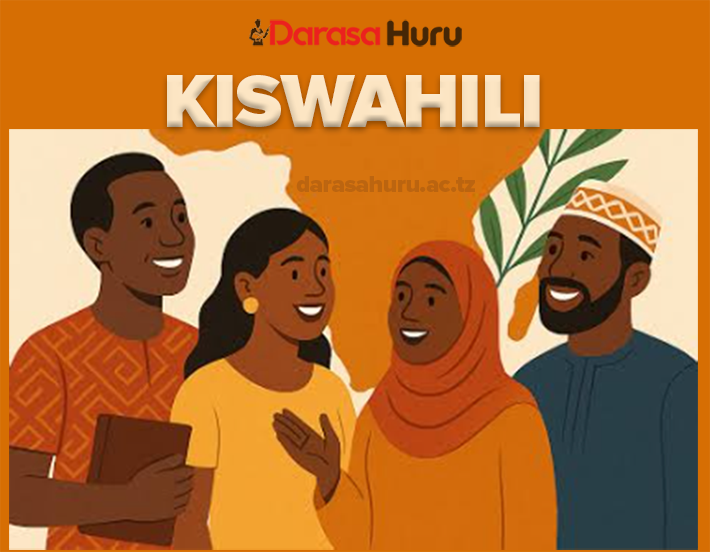
KISWAHILI STUDY NOTES FORM 1 – 6: Swahili culture is the culture of the Swahili people inhabiting the Swahili Coast, encompassing today’s Tanzania, Kenya, Uganda, and Mozambique, as well as the adjacent islands of Zanzibar and Comoros and some parts of the Democratic Republic of the Congo and Malawi.
They speak Swahili as their native language, which belongs to the Niger-Congo family. Swahili culture is the product of the history of the coastal part of the African Great Lakes region. As with the Swahili language, Swahili culture has a Bantu core and has also borrowed from foreign influences.
Around 3,000 years ago, speakers of the proto-Bantu language group began a millennia-long series of migrations eastward from their homeland between West Africa and Central Africa, at the border of eastern Nigeria and Cameroon.
This Bantu expansion first introduced Bantu peoples to central, southern, and southeastern Africa, regions they had previously been absent from. The Swahili people are mainly united under the mother tongue of Kiswahili, a Bantu language.
This also extends to Arab, Persian, and other migrants who reached the coast around the 7th and 8th centuries, providing considerable cultural infusion and numerous loan words from Arabic and Persian.
KISWAHILI NOTES FORM 1 – 6 ALL TOPICS
I: KISWAHILI STUDY NOTES FORM 1 – 4 ALL TOPICS
KISWAHILI NOTES KIDATO CHA KWANZA
KISWAHILI NOTES KIDATO CHA PILI
KISWAHILI NOTES KIDATO CHA TATU
KISWAHILI NOTES KIDATO CHA NNE
II: KISWAHILI FORM 5 NA 6 – ALL TOPICS
KISWAHILI NOTES KIDATO CHA TANO
KISWAHILI NOTES KIDATO CHA SITA