CHAPTER 2 GROWTH AND DEVELOPMENT IN PLANTS AND ANIMALS – SCIENCE STD 5
Growth in living things is the increase in body size (height and width) and weight. Plant growth involves the increase in height of a plant, which occurs at the tips of roots and shoots. Also, plants grow by increasing the width or thickness of the plant stem.
Like plants, animals also grow by increasing in height and weight. Plants and animals grow through different stages. The changes through which plants and animals undergo throughout their life cycle are called development. In plants development involves germination, the occurrence of new leaves, roots and other parts such as flowers and seeds or fruits
Development in Animals
Development in animals includes changes in body structure and function. Examples of development in animals include a caterpillar becoming a butterfly and a baby growing into an adult. Development in plants and animals involves physical and behavioral changes
Growth and development in plants
Plant growth and development refers to the series of changes a plant undergo throughout its life cycle. Plant growth and development involves different stages. Each stage of development plays a vital role and has distinct features.
These stages include
i. Seed germination
ii. Seedling stage
iii. Vegetative stage
iv. Reproduction stage
v. Senescence stage

Stages of plant growth and development
1. Seed germination
Seed germination is the process by which a seed develops into a new plant. A seed germinates when it has matured and has received the required conditions, such as sunlight, water, air, nutrients and anchors the seedling into the soil. The radicle also absorbs water and nutrients needed for plant growth. The radicle is the embryonic root of the plant. Another part called the plumule also emerge, it is the embryonic shoot of the plant. It begins to grow upwards, eventually forming the stem and leaves of the plant. During this stage, food stored in the seed is used as a source of energy for germination
2. Seedling stage
Seedling is the stage that follows after seed germination. At this stage, the seedling develops few leaves. Its roots continue to grow into the soil to absorb water and nutrients. During this stage food storage is minimal, hence the seedling begins to manufacture its own food through photosynthesis
3. Vegetative stage
In this stage, the plant continues to grow and develops more leaves. It increases the production of its own food through photosynthesis. The roots, stems and branches continue to grow and become strong
4. Reproductive stage
This is the stage whereby the plant matures and develops from the vegetative stage to the reproductive stage. During this stage, flowering plants begin to form buds, which gradually develop into flowers that contain reproductive structures. Flowers facilitate pollination and fertilization, leading to the formation of fruits or seeds. Fruits contain seeds for growing new plants. Plants such as watermelon, orange, tomato, avocado, maize and bean produce seed- bearing fruits. Some plants do not form flowers but produce seeds, which may germinate into new plants
5. Senescence stage
Senescence is the natural process of aging in plants, during which cell division stops making the tissues, or whole organs gradually lose their function and eventually. Die. Senescence of different plant parts such as leaves and flowers occurs throughout the plant life, although its rate increases as the plant gets older or after producing seeds. However, unlike in annual plants, in perennial plants senescence occurs in specific organs like leaves and flowers, allowing the plant to survive and grow for many years
Essential requirements for plant growth
Plants grow well when they get their essential requirements.
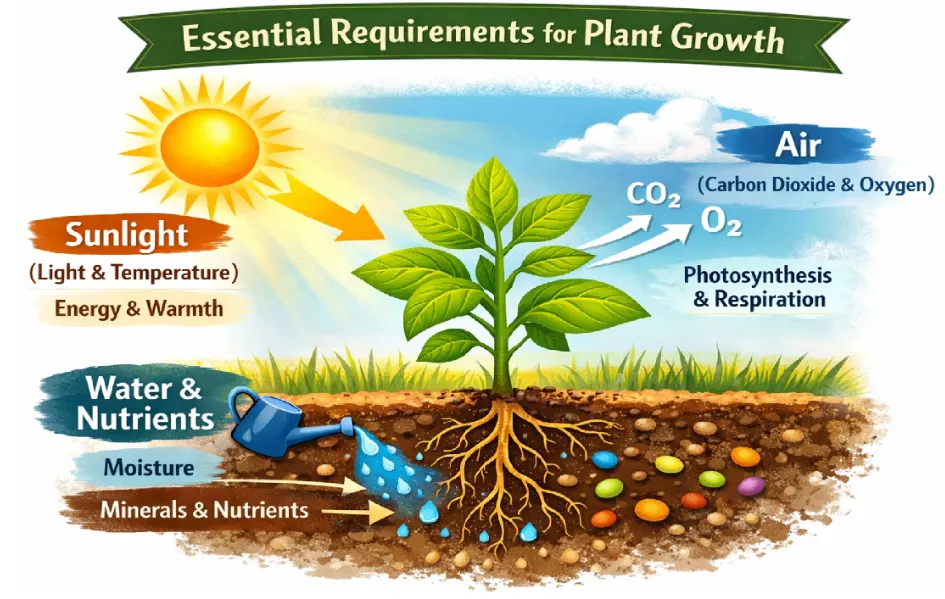
Plant growth depends on the availability of essential requirements including
- Sunlight
- Air
- Water
- Nutrients
- Temperature
1. Sunlight
Sunlight provides energy for photosynthesis, the process by which plants make their own food for growth and development
2. Air
Plants need carbon dioxide for photosynthesis and oxygen for respiration, which helps release energy for growth
Experiment 2:
Investigating the importance of air in plant growth
Aim: To prove that air is important for plant growth
Materials: Bean or amaranth seeds, two containers with fertile soil, water,
a plastic cover or glass, a ruler, a notebook and a pen
Procedure
1. Sow two seeds in two separate containers, labelled A and B.
2. Water both containers daily.
3. Place the first container (A) in an area with sunlight and sufficient air as seen in Figure below
4. Cover the second container (B) tightly with plastic or glass as seen in Figure below and place in an area with sunlight.
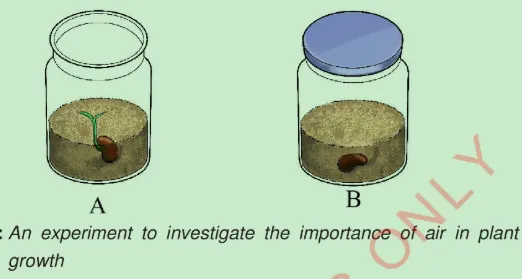
5. Observe and measure the height of the plants in both containers daily for fourteen days.
6. Compare the growth of the plants in the two containers.
Results: Write the results of the experiment you performed.
Conclusion: Write the conclusion of the experiment you performed.
3. Water
Water is essential for transporting nutrients, maintaining cell structure and supporting chemical reactions inside the plant
i. Nutrients
Nutrients from the soil are needed for healthy growth, strong roots and the formation of leaves, flowers and fruits
ii. Temperature
Suitable temperature ensures proper functioning of enzymes and processes necessary for plant growth and survival
Experiment: instigating the importance of water and sunlight in plant growth
Aim: To determine the importance of water and sunlight in plant growth
Materials: Bean seedling planted in three containers, labeled A, B and C, each with holes at the bottom, water and boxes that prevent light from passing
Experiment 3:
Investigating the importance of sunlight in plant growth
Aim: To determine the importance of sunlight in plant growth
Materials: Two (2) seedlings of the same type and size planted in 2 containers labelled A and B and, water, sunlight, a dark box
that blocks light from passing through, a ruler and a notebook.
Procedure
1. Place a seedling in container A in a spot with sunlight.
2. Place a seedling in container B in a dark box that does not allow light
to pass through it.
3. Water both seedlings with the same amount of water daily.
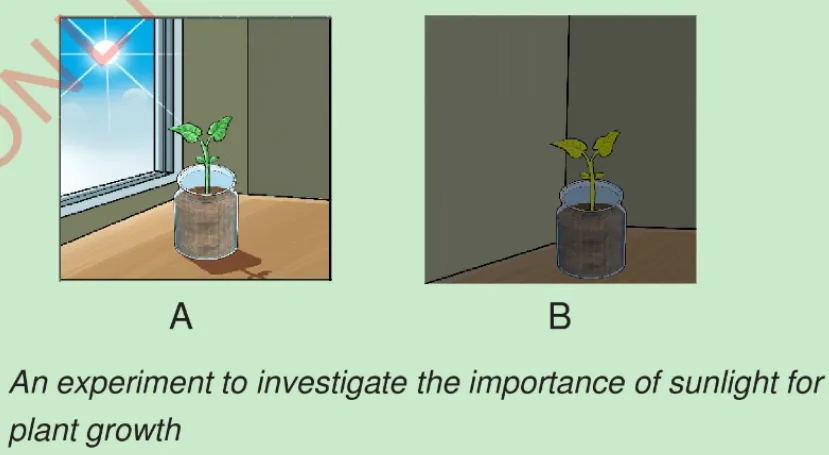
4. Observe the seedlings for two weeks, measuring plant height every 2-3 days and noting leaf colour and strength. Record the observation in the table.
GROWTH IN ANIMALS
Growth and development in animals depend on the availability of the factors such as weather and climatic conditions, nutrition and availability of water
Nutrition
Animals require a balanced diet containing all essential nutrients. Lack of nutrients, such as proteins, carbohydrates, fats, vitamins or minerals in their food can result in poor growth and development
Environmental condition
Environmental conditions such as temperature, shelter and availability of space affect how animals grow and develop. A favorable environment reduces stress and allows normal body functions to take place
Water availability
Animals require constant access to clean and safe water. Water is essential for digestion, control of the body temperature, and transportation of nutrients, all of which are important for growth
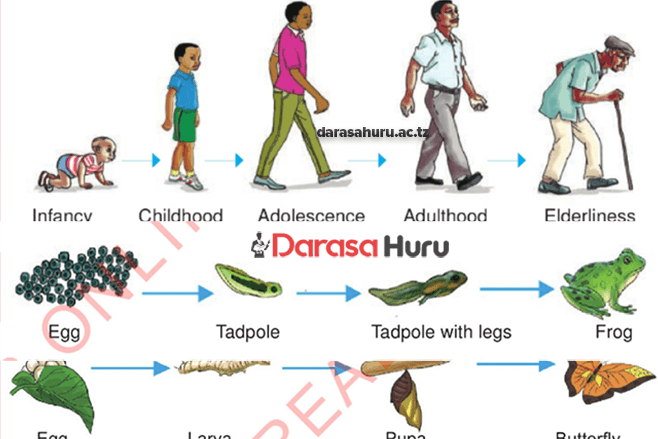
The following are examples of changes during an animal’s growth and development
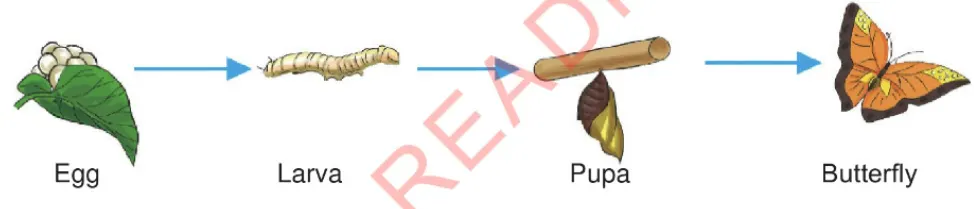
1. Butterflies go through different developmental stages of growth namely:
Egg —– Larva —— Pupa ———Butterfly
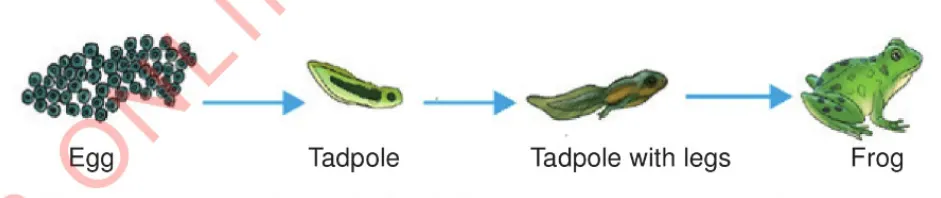
2. Frogs go through the following stages of growth
Eggs ——–Tadpole ——–Tadpole with legs ——– Frog
3. Human passes through the following stages of growth
STAGES OF HUMAN GROWTH AND DEVELOPMENT
Infancy ——- Childhood ——– Adolescence ——-Adulthood ——-Elderly Stages of human growth and development
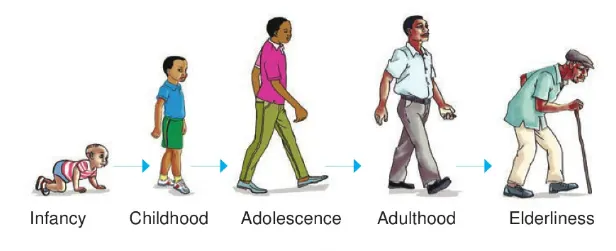
Human pass-through different stages of growth and development, including infancy, childhood, adolescence, adulthood and old age (Elderly).
Each stage has unique changes that contribute to overall growth and development in humans
1. Infancy
This is the early stage of life from birth to about 2 years. The baby grows quickly, learns to sit, crow, stand, walk and start speaking
2. Childhood
From about 2 to 13 years. The child grows steadily, goes to school, develops thinking and communication skills and learns to interact with others
3. Adolescence
Adolescence is a transition stage between childhood and adulthood. It is during this stag that puberty occurs. Puberty is defined as the phase where a child’s physical and sexual characteristics start to mature into adult features.
A child also undergoes physical, mental and emotional changes which are driven by hormones. Puberty usually starts between the ages of 12 to 13 years in boys and 11 to 12 years in girls, though it can vary due to genetic, nutritional and environmental factors
PHYSICAL CHANGES DURING PUBERTY
Both boys and girls undergo various changes during puberty
a) Physical changes during puberty in girls
Physical changes in girls during puberty include:-
i. Growth and enlargement of breasts ii. Increase activity of sweat glands iii. Increased vaginal discharge
2. Growth of hair under the armpits and around the pubic area
3. Increase in height and weight vi. Voice becoming softer
4. Appearance of pimples/Acne on the face in some girls
5. Widening of hips
6. Maturation of eggs and the beginning of menstruation
Menstrual cycle
Menstruation is natural biological process of discharging blood mixed with mucus from the breakdown of lining of the uterus through the vagina.
The onset of menstruation is a key sign of puberty in girls. Menstruation usually occurs once every month forming a part of the menstrual cycle in which one or more egg matures.
The menstrual cycle refers to the period from the first day of menstruation to the day before the next period. It usually lasts 28 days
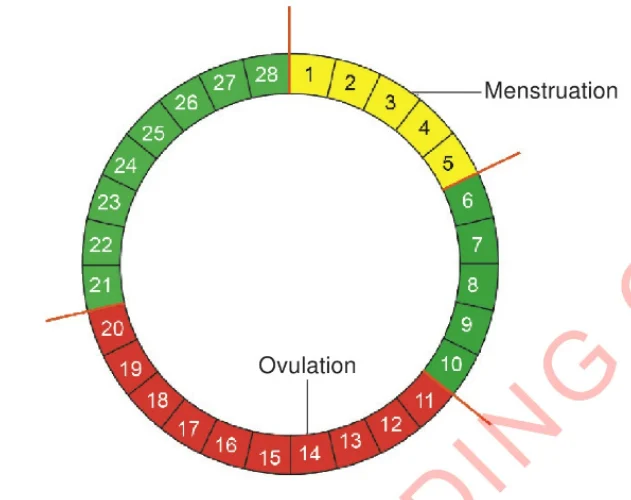
The duration of menstruation varies from person to prototypically, menstruation lasts between 3 to 5 days, through some women may have shorter periods, while others may experience longer periods of up to 7 days. During menstruation special material called sanitary pads or sanitary napkins are used to absorb the blood that comes through the vagina. It is advised to use cotton – made pads.
Pads are attached to the inside of underwear with adhesive strips or wings. It should be changed regularly typically after every 3 to 4 hours, in order to maintain hygiene and prevent effects that can rise like rashes or infections.
DISORDERS IN THE MENSTRUAL CYCLE
Sometimes, irregularities or disorders occur in the menstrual cycle. Some of these irregularities include discomfort during menstruation, lack of menstruation periods, severe menstrual pain, and prolonged or excessive bleeding during the menstruation period. These conditions may be caused by hormonal changes, stress, or underlying health issues
I. DISCOMFORT DURING MENSTRUATION
Some women experience discomfort during menstruation, making it difficult for them to perform their daily activities efficiently. The discomfort may last a few hours or several days, depending on the person. The symptoms may include depression, stomach pain, headaches, dizziness, rapid heartbeat, loss of appetite and water retention in the feet, hands and fingers reduce the discomfort, it is advised to make physical exercises 3 to 5 times a week, eat a balanced diet and get enough sleep and rest Severe menstrual pain (Dysmenorrhea)
some women experience severe pain during menstruation. The pain may begin at puberty or later in life. The pain is often caused by uterine contractions due to hormonal imbalance. Other causes include infections in the cervix, uterine fibroids and infections within the reproductive system. Any woman can experience pain during menstruation, however, those who smoke, consume alcohol, are overweight, or have experienced early, puberty before age 11 are often at higher risk.
II. Excessive menstrual bleeding (Menorrhagia)
Excessive menstrual bleeding occurs when a woman loses more blood than usual or has a longer menstruation period. This may result from a blood clotting disorder that prevents proper clotting of blood or hormonal imbalances that affect the menstrual cycle
Physical changes during puberty in boys include
i. Enlargement of the testicles and penis
ii. Increased activity of sweat glands
iii. Growth of hair in the armpits, around the genitals, chest, abdomen, and beard (for some boys)
iv. Increase in height and weight
v. Voice deepening
vi. Development of pimples/acne in the face
vii. Experiencing wet dreams
viii. Growth and broadening of muscles in the chest and arms
i. Social changes during puberty
During puberty, boys and girls experience the following social changes
1. Self-awareness
2. Desir for recognition
3. Desire for freedom
4. Curiosity to learn new things
ii. Mental changes during puberty
During puberty, boys and girls experience mental changes that influence their behaviour. These changes include
1. Increased ability to understand reality in their surroundings
2. Improve problem- solving skills, even for complex and confusing issues
3. Enhanced ability to understand other people’s thoughts and perspectives
4. Ignoring the consequences of some of their actions
iii. Changes in relationships during puberty
During puberty, boys and girls also show changes in their interactions with society such as
1. Spending more time with friends than family
2. Developing different opinions from adults
3. Desire to compete
iv. Emotional changes during puberty
Adolescence experience significant emotional changes during puberty including
1. Intense and fluctuating emotions
2. Increased self-consciousness
Ways to cope with changes during puberty
The changes during puberty in boys and girls cannot be avoided. However, following some strategies can help to reduce the challenges of these changes.
To manage puberty effectively, the following are recommended
1. Engaging in physical exercises
2. Getting sufficient sleep and eating a balanced diet
3. Avoiding alcohol, tobacco and other substances
4. Sharing challenges with friends or family
5. Seeking help from trusted individuals
6. Maintaining personal hygiene `
4. Adulthood (18-65 years)
Adulthood is the stage of human growth that occurs between the age of 18 and 65 years. During this stage, a person is fully developed physically and mentally and takes on major responsibilities such as working, raising a family and making important life decisions
5. Old Age (65 years and above)
Old age is the final stage of human growth and development and begins at the age of 65 years and above. At this stage, physical strength and body functions gradually decline and individuals often require more rest, medical care and support
Exercise CHAPTER 2 GROWTH AND DEVELOPMENT IN PLANTS AND ANIMALS – SCIENCE STD 5
1. Why is sunlight important for plant growth? _____________
2. Explain three essential requirements for plant growth
_______________________________________________ ___
_______________________________________________ ___
3. Growth is the increase in _____________ of a living organism
4. Plants need _______________, water, air and nutrients for proper growth
5. The process by which a seed begins to grow is called________________
6. Nutrients is important because it provides _________________ for growth
7. Mention two factors that affect growth and development in plants
_____________________________________________________
_______________________________________________ ______
8. Mention two factors that affect growth and development in animals
________________________________________________________
_______________________________________________ _________
Exercise 02
1. Puberty is the stage when c child’s body changes into an_________body
2. During puberty, both boys and girls experience _____________ changes
3. In girls, puberty causes the breasts to ____________________________
4. Puberty usually begins between the ages of __________ and_________
5. Sweat glands become more ____________ during puberty
6. In boys, the testes start producing ________ cells
7. During puberty, hair grows under the _____________ and in the public area
8. Proper __________________ and exercise help the body during puberty
9. Menstruation normally happens once every______________________
10. The menstrual cycle usually lasts about ______________ days
11. Menstruation is the shedding of the ________________ lining
12. Menstrual bleeding normally lasts for __________ to ________days
Vocabulary
Acne – small skin spots or pimples that appear during puberty due to increased oil production
Hormones – chemical substance produced by special group of cells to perform a specific function in the body
Life cycle – series of stages an organism goes through from birth to reproduction and death
Nutrient – substance that provides essential nourishment to living organisms, enabling growth, maintenance, and normal functioning the process by which pollen grains are transferred from the male part (anther) of a flower to the female part (stigma) of the same or another flower, enabling fertilization
Seedling – a young plant that emerges from a seed after germination.
Senescence – the process of aging or growing old in plants and animals
Stunted growth – a condition where a plant or an animal does not grow to its normal size because of lacking proper food, care, or is affected by diseases