CHAPTER 4 MAGNETISM – SCIENCE STD 5
A magnet is a device that is used in various applications.
In this chapter, you will learn about the concept of magnetism. You will also conduct simple experiments to explore magnetism and identity the properties and uses of magnets. In addition, you will learn how to store magnets.
The competencies developed will enable you to use magnets in your everyday life.
The concept of magnetism
Magnetism is the ability of magnet to attract or repel objects
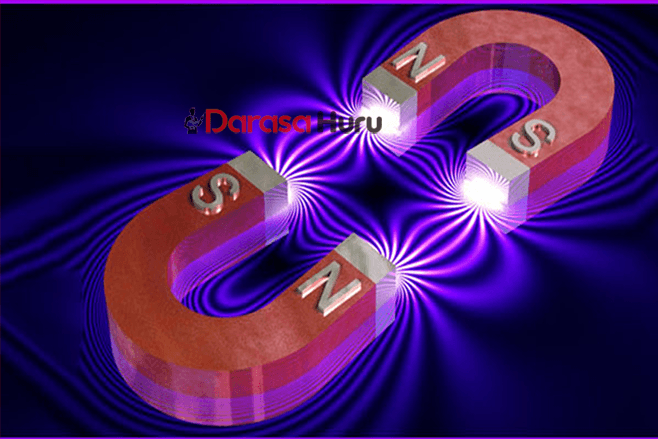
Magnet is a device that has the ability to attract objects made of iron – related materials. Each magnet has two poles
These poles are
- The north (N) pole
- The south (s) pole
Magnets produce the magnetic field. The magnetic field is a region around the magnet where magnetic forces can be felt.
The magnetic force is what causes materials to be attracted or repelled by a magnet. Therefore, magnetic force is the push or pull caused by magnetism. Also, magnetic force represented by imaginary lines called magnetic lines of force which can be visualized when you sprinkle iron filings around a bar magnet. The filings arrange themselves in a specific pattern and forming lines
Shapes of magnets
Magnets have various shapes depending on their uses. These are
- Horseshoe magnet
- Cylindrical magnet
- U – shaped magnet
- Bar magnet
- Ring magnet
Each shape affects how the magnet creates its magnetism
The magnets have different uses in devices depending on their shapes

Properties of magnets
Magnets show several essential properties that define their behaviour some of the properties are
1. Magnets attract things made of iron – related materials
2. The magnetic force is strongest at the poles
3. Like poles repel while unlike poles attract each other
The shape of a magnet affects its ability to attract objects. Also, the poles of the magnet have the strongest force of attraction. Other parts of the magnets show a weaker force of attraction
The law of magnetism
The basic law of magnetism states that; ‘’unlike poles of magnets attract each other, while like poles of magnets repel each other’’
Like poles of magnets repel each other when brought closer together.
This is because the magnetic forces are acting against each other. On the other hand, unlike poles of the magnets attract each other. This activity proves the law of magnetism
Uses of magnet
Magnets are used in various places such as homes, schools, hospitals and industries. The following are some of the uses of magnets
i. Lifting heavy objects
Magnets are used to pick up objects made of iron-related materials. The objects can be moved by a magnet from one place to another. At the port, magnets are also used to load and unload cargo made of iron-related materials.

ii. Maintenance of electronic devices
Mobile phone, radio and computer technicians use magnetic screwdrivers to attract small screws used to assemble phones, radios and computers. The Figure below shows a screw attracted to a magnetic screwdriver.

iii. Making electric bell
Magnets are used to make an electric bell. When the switch button is pressed, an electric current produces a magnetic force. This magnetic force attracts an iron rod or striker causing it to strike the gong and produce a sound.
iv. Identifying the cardinal directions
The compass is a device made up by using a magnet. It shows the direction of the North and South poles of the Earth as seen in Figure below. The compass is used to guide people in identifying the cardinal directions. It is also used to guide captains and pilots to move in the correct direction.

v. Electricity generation
The magnet is used in generating electricity. For example, it is used in a bicycle dynamo. A bicycle dynamo has a magnet that is surrounded by a coil. When the bicycle wheel rotates, it causes the magnet to rotate. Rotation of the magnet generates electricity in the coil.

vi. Separation of objects
Magnets are used to separate iron related materials from non-iron-related materials. This procedure is used in food industries to separate iron- related particles from food products. This ensures safety and prevents food contamination.

Storing magnets
Magnets become weak, if they are not stored properly. If you want magnets to maintain their magnetic strength, the following must be observed
1. Keep magnets away from things made of iron
2. Make sure like poles of different magnets are not facing each other
3. Do not burn magnets
4. Do not keep magnets close to objects with strong magnetism or electricity
5. Do not hit or hammer magnets
Revision exercise
Section A: Choose the correct answer.
1. Which of the following is the purpose of fixing magnets on a freezer’s door edges and some cabinets’ doors?
(a) Expel heat
(b) Warm the region inside
(c) Make the doors stick properly
(d) Remove iron nature
2. One of the following is a property of a magnet when suspended in air
(a) Its North pole points towards the North of the Earth
(b) Its North pole points towards the South of the Earth
(c) The North pole and the South pole lack direction
(d) It rotates all the time
3. If you want to pick up a nail from a bucket filled with water, which of the following is the best way?
(a) Dive into the bucket
(b) Drill a hole in the bucket
(c) Pull the nail from the bucket using an iron rod
(d) Dip a magnet tied to a long string into the bucket
Section B: Short answer questions.
4. List two (2) equipment found at home or school that contains magnets.
5. Explain what will happen, if you place a plastic cover, paper clips, stick and plastic rulers in contact with a magnet.
6. If you were given a bar magnet with unknown poles, how would you determine the North and South poles of the magnet?
7. You accidentally put iron particles into a basket containing maize flour. How can you separate those particles from the maize flour?
8. How would you design an experiment to demonstrate the presence of magnetic fields using available materials?
9. In what ways can you store a magnet without affecting its magnetic strength?
Vocabulary
Dynamo – a device that uses magnetic principles to generate electricity from a rotating coil between magnets
Force – is a push or pull on objects