CHAPTER 3 REPRODUCTIVE SYSTEM – SCIENCE STD 5
Reproduction is a biological process by which living organisms give rise to offspring.
Reproduction ensures an increase in number of living things, and continuity of the species from one generation to another
There are two types of reproduction namely
- Sexual reproduction
- Asexual reproduction Sexual reproduction
1. Sexual reproduction
sexual reproduction is the type of reproduction that involves two parents (male and female) and the fusion of gametes (sperm and egg)
In humans and some plants, the reproductive cells are produced by two parents (male and female parents). However, in some flowering plants, only one parent can produce both reproductive cells.
Examples of sexual reproduction
i. Humans – sperm + egg – baby
ii. Dogs, cats, birds – mating produces offspring
iii. Flowering plants – pollen fertilizes ovule – seed
iv. Frogs and fish – sperm fertilizes eggs
2. Asexual reproduction
Asexual reproduction involves only one parent without the need for fusion of the reproductive cells.
Asexual reproduction produces offspring that are genetically identical to the parent
Examples of asexual reproduction
i. Bacteria – divide by binary fission
ii. Amoeba – reproduce by binary fission
iii. Hydra – reproduce by budding
iv. Plants (like potato, onion, sugarcane) reproduce by vegetative propagation
What is the reproductive system?
The reproductive system is a collection of organs and structures in living organisms responsible for the production of offspring.
In human beings, this system is divided into two types
- Male reproductive system
- Female reproductive system
The reproduction in humans is possible only after puberty. The reproduction in humans involves the production of reproductive or sex cells called gametes. The male gametes are called sperm and are produced in the testes, while the female gametes are called ova or eggs and are produced in the ovary
Hormones, such as oestrogen, progesterone, and testosterone regulate the reproductive system. They control the growth of reproductive organs, the menstrual cycle, the production of gametes and pregnancy
Advantages of reproduction
1. Continuation of species
Reproduction ensures that a species does not become extinct
2. Increase in population
It helps in producing more offspring, increasing the number of individuals
3. Genetic variation (in sexual reproduction)
Sexual reproduction produces offspring with different traits, which helps in adapting to changing environments
4. Replacement of dead individuals
Reproduction replaces old and dead individuals in a population
5. Survival of organisms
By producing offspring, organisms ensure their genes are passed to th next generation
6. Propagation of plants and animals
Helps in spreading plants and animals to new areas
Human reproductive system
1. Male reproductive system
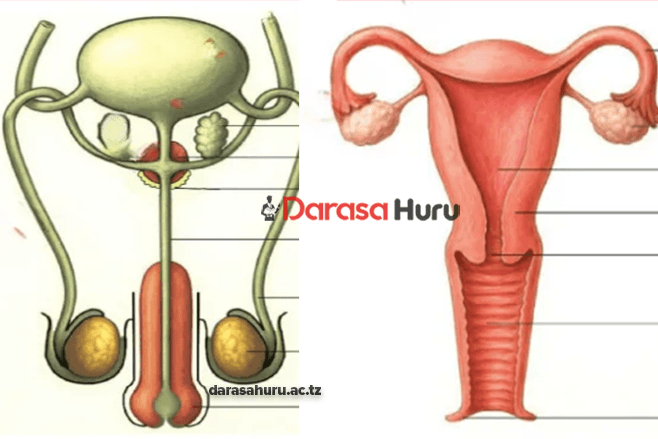
The male reproductive system consists of the external and internal structure.
The external structures include
- The penis and
- Testes
The internal structures consist of the
- Sperm ducts
- The urethra
- The seminal vesicles
- The prostate gland
- The Cowper’s gland

Parts of the male reproductive system Structure, Description and It’s Functions
| s/n | Structure | Description | Function(s) |
| 1 | Testes | Are located inside a skin sac called the scrotum, which hangs behind the penis. Each male has two testes. | -To produce and store male gametes (sperms) -To produce the testosterone hormone, which is responsible for changes occurring during puberty such as beard growth, deepening of the voice, and increased muscle development |
| 2 | Sperm ducts (vasa deferentia) | Coiled tube connecting the testes and the
urethra |
To store and transport sperms from the testes to the urethra |
| 3 | Penis | The external male reproductive organ located in front of the
testes |
-To transport sperm into the female reproductive system -To expel urine from the urinary bladder through the urethra |
| 4. | Urethra | A narrow tube located inside the penis. It connects the urinary bladder and the penis | -To transport semen (sperm mixed with seminal fluid) out of the male body through the penis during ejaculation -To transport urine from the urinary bladder out of the body |
| 5 | Seminal vesicles | A pair of small glands located near the prostate gland, behind the urinary bladder | To produce and secrete fluids that nourish the sperm and provide energy for the sperm to swim towards the egg |
| 6 | Prostate gland | An organ located below the urinary bladder, surrounding the upper part of the urethra | To produce a thick, slippery fluid that helps to protect and aid sperm movement |
| 7 | Cowper’s gland | A pea-sized gland located below the prostate gland | To produce a lubricating fluid that helps to neutralize acidity in the urethra, preparing it for the passage of sperms |
2. Female reproductive system
The female reproductive system is a specialized system responsible for production of eggs, secretion of hormones and provision of an environment for fertilization and foetal development. This system consists of four main parts, namely
- The ovaries
- Fallopian tubes
- Uterus
- Vagina
Additionally, the female reproductive system is regulated by oestrogen and progesterone hormones. These hormones control the menstrual cycle, pregnancy and childbirth

Parts of the Female reproductive system Structure, Description and It’s Functions
| s/n | Structure | Description | Function(s) |
| 1 | Ovaries | These are pair of reproductive glands on the left and right sides of the uterus | -To produce and store female gametes (eggs) -To secrete essential hormones, such as oestrogen and progesterone, which help to regulate the menstrual cycle. The |
| hormones also control various developmental changes that occur in women during puberty | |||
| 2 | Fallopian tubes | A pair of tubes located on the left and right sides of the uterus connecting the ovaries to the uterus | -To transport the egg from the ovaries to the uterus by capturing and directing the egg towards the uterus
-The place where fertilization takes place |
| 3 | Uterus (womb) | A muscular organ with thick muscular walls. During pregnancy, the foetus grows and develops inside the uterus until childbirth | -Supports the implantation of the fertilized egg
-Forms the placenta that support foetal development during pregnancy |
| 4 | Cervix | Is the lower part of the uterus that connects the uterus | -To regulate and allow the flow of blood during menstruation -allows passage of sperms into the uterus |
| 5 | Vagina | The vagina is part of the female reproductive system located between the cervix and the external parts of the body | -To receive sperm
-It serves as the passage for the baby during childbirth -It provides a route for menstrual blood to pass out of the body -It protects other reproductive organs from infections by maintaining the acidic environment that prevents harmful pathogens |
Disorders in the reproductive system
Disorders in the reproductive system are various conditions that interfere with or impair the normal functioning of the reproductive system. These disorders can be structural or health related.
The causes of disorders may include genetic inheritance, unhealthy lifestyle factors, poor nutrition, chronic diseases, or environmental influences, such as exposure to harmful chemicals or radiation.
However, regular medical checkups and early treatment can help prevent or correct reproductive system disorders in both males and females.
Disorders in the male reproductive system
Disorders in the male reproductive system refer to conditions that can interfere with the normal functioning of the male reproductive system. Some of these disorders include:
1. Infertility
This is a condition in which a male is unable to impregnate a female. Male infertility can be caused by various factors, including producing too few sperm resulting in reduced chances of fertilization. It can also result from weak sperm that are unable to swim toward the egg.
Additionally, sperm abnormalities such as missing tails, having two tails, lacking a head, or having an irregular shape can contribute to infertility.
Furthermore, the testes may fail to produce sperm due to diseases, poor nutrition or hormonal deficiencies. Another cause of infertility is blocked sperm ducts often resulting from sexually transmitted infections such as gonorrhoea and syphilis.
2. Prostate gland disorders
This refers to conditions in which the prostate gland is damaged or enlarged. This disorder can affect both the urinary and reproductive system. Prostate enlargement may result from infections or cancer, causing blockage of the urethra leading to difficulty in urination.
Disorders in the female reproductive system
These are conditions that interfere with the normal functioning of the female reproductive system. Some of these abnormalities include.
1. Infertility
Infertility is the condition whereby the female egg cannot be fertilized.
Infertility in women can be caused by various factors, including the failure of eggs to mature. This condition often results from hormonal imbalances whereby the ovaries may fail to produce sufficient oestrogen or progesterone
Infertility in females may also be caused by sexually transmitted infections such as gonorrhoea, syphilis, and chlamydia. These infections can block the fallopian tube, hence preventing the egg from passing through to allow fertilization
2 Cervical disorders
The cervix can be damaged due to complications during childbirth or due to infections within the cervix. This may result in a deformed cervix
3. Menstrual disorders
These are problems related to timing, flow, or discomfort associated with a woman’s menstrual cycle. They include amenorrhea, which is a condition in which a matured female stops having her periods or misses them for a certain period of time without being pregnant.
Menstrual disorders also include painful periods due cramps of uterine wall, a condition termed as dysmenorrhea. They can also include excessively heavy or prolonged menstrual flow, a condition known as menorrhagia.
These disorders may be caused by hormonal imbalances, particularly a lack of oestrogen production, genetic abnormalities, chronic illnesses, and stress. These disorders can be treated, hence, it is important to seek medical advice
Caring for the reproductive system
The following should be done to care for the reproductive system
- Observing cleanliness
- Eating a balanced diet and taking regular physical exercises iii. Avoiding risky behaviour
Revision exercise-REPRODUCTIVE SYSTEM
Section A: Choose the correct answer.
1. Which of the following is not a part of the female reproductive system?
(a) Urethra
(b) Ovary
(c) Fallopian tube
(d) Uterus
2. Which of the following hormones is primarily responsible for changes during puberty in males?
(a) Oestrogen
(b) Progesterone
(c) Testosterone
(d) Prolactin
3. Which of the following parts of the female reproductive produces eggs?
(a) Uterus
(b) Ovary
(c) Fallopian tube
(d) Urethra
4. Which of the following is a function of the uterus?
(a) Nurturing the foetus
(b) Producing sperm
(c) Producing eggs
(d) Producing hormones
5. Which of the following diseases affects the female reproductive system?
(a) Pneumonia
(b) Cervical cancer
(c) Arthritis
(d) Diabetes
6. One of the following is among the causes of amenorrhoea.
(a) Increase in body weight
(b) Frequent pregnancies
(c) Hormonal imbalance
(d) Consumption of natural foods
7. Which of the following are the causes of decreased sperm production in men?
(a) Regular physical exercise
(b) Smoking
(c) Drinking enough water
(d) Eating enough fruits
8. Which of the following can help maintain a healthier reproductive system?
(a) Regular health check-ups
(b) Taking medication without doctor’s advice
(c) Excessive alcohol consumption
(d) Smoking
Section B: Write TRUE for a correct statement and FALSE for an incorrect statement.
9. Infertility is a disorder in the reproductive systems of both males and females.
10. The testes are part of the female reproductive system responsible for producing sperm.
11. The vagina helps in transferring sperm from the testis to the urethra.
12. Sexually transmitted diseases are disorders in the male reproductive system.
Section C: Short answer questions.
13. What complications can occur if the man’s prostate gland becomes enlarged?
14. Explain two (2) functions of the seminal vesicles in males.
15. Explain the significance of an acidic environment in the vagina of the human being.
VOCABULARY
| Foetus | the developing baby inside the uterus after the |
| embryonic stage | |
| Hormones | chemical substances produced by special group of |
| cells to perform a specific function in the body | |
| Implantation | the process by which a fertilised egg attaches to the |
| lining of the uterus |
| Placenta | an organ that forms in the uterus during pregnancy |
| to nourish the developing foetus | |
| Puberty | the stage during which the body becomes capable |
| of sexual reproduction. | |
| Risky behaviour | actions that increase the likelihood of harmful |
| consequences, including unprotected sex, | |
| substance abuse, or multiple sexual partners |