CHAPTER 1 DIGESTIVE SYSTEM – SCIENCE STD 5
Concept of the Digestive System
Digestion is the biological process by which food is broken down into smaller particles which provide nutrients that can be absorbed by the body.
These nutrients are used by the body for
i. Growth
ii. Repair
iii. Production of energy
iv. Protection against diseases
For the body to obtain these nutrients, food must be broken down into small particles that can be absorbed by the body. Digestion takes place within the digestive system
The digestive system is a collection of organs that are responsible for breaking down food into small particles that can be absorbed and used by the body
It is important to eat balanced diet, drink sufficient amount of water and avoid high in fat or sugar to keep the digestive system healthy. Apart from human beings, other animals also have digestive systems suited to the type of food they eat
Importance of the Digestive System
The digestive system is very important to the body because it:
1. Breaks down food – it changes large pieces of food into small, simple substances the body can use
2. Helps in absorption of nutrients – nutrients like carbohydrates, proteins, fats, vitamins and minerals are absorbed into the blood
3. Provides energy – digested food gives the body energy for growth, movement, and daily activities
4. Supports growth and repair – nutrients are used to build new cells and repair damaged tissues
5. Removes waste materials – undigested food is removed from the body as faeces, keeping the body clean and healthy
6. Maintains good health – proper digestion helps the body function well and prevents diseases related to poor nutrients
Parts of the digestive system
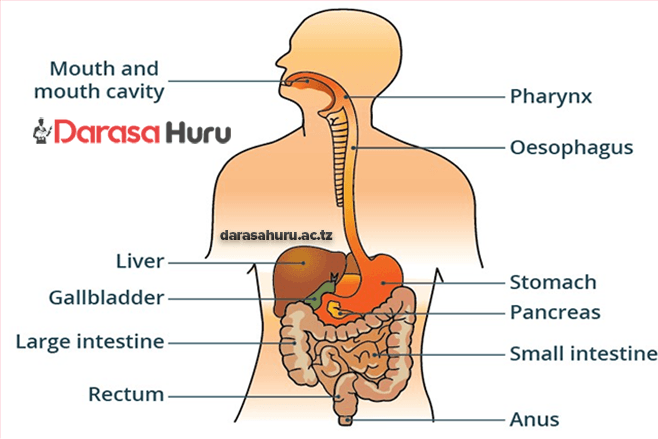
The digestive system consists of various organs that work together to facilitate the breakdown of food. The human digestive system begins in the mouth and ends at the anus. It includes the digestive tract, organs and glands that work together
The main parts of the digestive tract are
i. The mouth cavity
ii. Pharynx
iii. Oesophagus
iv. Stomach
v. Small intestine, the small intestine consists of the duodenum and ileum
vi. Large intestine, the large intestine includes the colon, rectum and anus
The digestive system is also composed of salivary and gastric or stomach glands. Other organs of the digestive system such as the liver, pancreas and gallbladder, also contain glands that produce digestive enzymes which break down food

The digestive system
Functions of each part of the digestive system
1. Mouth cavity
The digestion process starts in the mouth cavity, where food is chewed using teeth and mixed with saliva. Foods rich starch begin digestion in the mouth cavity and are therefore transported through the oesophagus into the stomach
2. Pharynx
The pharynx is a part of the digestive system located between the mouth and the oesophagus.Its function is to direct food from the mouth cavity to the oesophagus. A flap called the epiglottis prevents food from entering the airway by closing the windpipe during swallowing.
3. Oesophagus
The oesophagus is a muscular tube that connects the pharynx to the upper part of the stomach. Food moves through the oesophagus in a series of muscle contractions and relaxation in the walls. This movement helps to move food to the stomach.
4. Stomach
Upon reaching the stomach, food is broken down with the help of acid and digestive enzymes, which are produced there. The acid and enzymes digest proteins, starch and fats, converting them into a semi – liquid paste called chyme. The chyme then moves to the small intestine for further digestion and absorption small intestine this part is located between the stomach and the large intestine.
The first part of the small intestine where digestion occurs is called the duodenum. The duodenum receives enzymes from the pancreas and bile from the gall bladder which breaks down food.
The main foods broken down in this part are fats, proteins and carbohydrates the ileum is the last part of the small intestine where the digestion process is completed. When partially digested food reaches the ileum, it stimulates the intestinal walls to release digestive enzymes. These enzymes complete the breakdown of proteins, carbohydrates and fats
The small intestine then absorbs nutrients from digested food and allows the body to utilize them for various bodily functions
5. Colon
This is the first part of the large intestine responsible for reabsorption of water from the digested food into the body. It is also the section where some nutrients, such as vitamins, are produced by bacteria found in this part. The colon serves to store faces before thy are eliminated from the body
6. Rectum
The rectum is the second part of the large intestine, where faeces are stored temporarily before being expelled from the body during defecation.
7. Anus
This is the last section of the digestive system that is responsible for allowing faeces to pass to the outside of the body. Faeces are the remains of food that were not digested and absorbed by the digestive system Disorders in the digestive system
The digestive system can be affected by various disorders that can lower its efficiency in food digestion or nutrient absorption. A digestive system disorder is a condition that affects the normal functioning of the digestive tract, making it difficult for the body to properly digest and absorb food. These disorders can be congenital, inherited or caused by lifestyle factors and poor nutrients. Some of the disorders in the digestive system include.
DISORDER IN THE DIGESTIVE SYSTEM
1. Constipation
This is a disorder of the digestive system that causes a person to have difficult in passing faeces or to have hard, dry faeces. This problem can be caused by eating foods with low fibre content, not drinking enough water, and lack of physical exercise. In addition, health issues such as poor functioning of the large intestine can also cause constipation
Prevention methods
Constipation can be prevented by eating foods rich in fibre such as fruits and vegetables, drink enough water and carrying out physical exercises regularly
2. Bloating
This is a condition where the stomach fels full, tight or swollen, oftn due to a building up of gas in the stomach. It can result from overeating, eating too fast, food intolerance or consuming gas- producing foods. Symptoms of bloating include stomach pain, a feeling of fullness and burping sometimes, the gas can have a strong, unpleasant odour.
Prevention methods
To prevent bloating, it is important to eat food in moderate amounts and chew it slowly to reduce the amount of swallowed air. Also, drink enough water to aid digestion in the stomach. Limit intake of gas – producing foods such as beans and carbonated beverage. Eating fibre- rich fruits and vegetables also prevent bloating
3. Heartburn
This is condition that occurs when acid from the stomach rises into the oesophagus, causing pain or a burning feeling in the chest, frequent burping and a sour taste in the mouth. Heartburn can be caused by overeating. It can also be caused by eating with a high amount of spices or fats. These foods take longer to be digested and can increase stomach acid production. Another cause of heartburn is eating large amounts of acidic foods, such as lemons and limes. Beverages likes soda, coffee and alcohol can also cause heartburn. Eating just before sleeping can also lead to heartburn
Prevention methods
Heartburn can be prevented by eating slowly, allowing the digestive process to occur effectively. Also, eating smaller amounts of food mor frequently and avoiding foods that cause heartburn. High intake of acidic foods, such as oranges, lime, tangerine, potatoes, beans and tomatoes and foods with a lot of spices or fat should be avoided. After eating, rest for two to three hours before lying down or going to bed. Additionally, exercise or strenuous activity shortly after eating should be avoided. If heartburn persists, it is advisable to seek medical advice
4. Stomach ulcers
This is a condition resulting from erosion of the lining of the stomach wall. Stomach ulcers can be caused by eating foods that are high in acid or having a bacterial infection that erodes the walls of the stomach lining. Sometimes, stomach ulcers can be caused by prolonged periods of hunger. When the acid and enzymes in the come into contact with the eroded walls, they cause sores. This is because acid burns the stomach wall, creating ulcers or sores. Stomach ulcers cause severe pain in the abdomen. When the ulcers are large, they may cause heavy bleeding. Symptoms of stomach ulcers include intense pain, such as a burning sensation in the stomach. Other symptoms include vomiting blood and passing stool mixed with blood.
Prevention methods
Stomach ulcers can be prevented by eating at regular intervals and reducing the intake of highly acidic foods. Additionally, avoiding smoking and alcohol can help to prevent ulcers.
Proper eating habits
Maintaining proper eating habits is important for good health and for preventing problems in the digestive system. A healthy diet should consist of balanced meals that include all essential nutrients in appropriate proportions. These essential nutrients include carbohydrates, proteins, fats, vitamins, minerals, and water. It is also important to have regular meal
Mealtimes and reduce the intake of unhealthy foods and snacks that lack essential nutrients. It is advisable to consume whole grains and drink sufficient amounts of water to ensure proper functioning of the digestive system.
Drinking water, half an hour before and after a meal is important for effective digestion and nutrient absorption. You can improve the body health and protect from disorders in the digestive system by following these habits
REVISION EXERCISES – CHAPTER 1 DIGESTIVE SYSTEM – SCIENCE STD 5
Exercise 01
1. Explain the meaning of digestion.______________________________
2. Why is the digestion process important to human beings?____________
3. What is the relationship between the digestive system and the energy used by the body for daily activities?__________________________
4. Why does eating a balance diet contribute to the well – functioning of the human digestive system?____________________________________
Exercise 02
1. Explain the role of the mouth in the digestion process._______________
2. Describe the functions of the stomach and small intestine in the process of food digestion. ______________________
3. Why is it important to chew food thoroughly before swallowing?______
4. Explain the importance of saliva in the digestion process. ____________
Exercise 03
1. What are the causes of constipation?______________________
2. What should be done to avoid bloating? Give two points _______
3. Suggest three ways to prevent heartburn _____________________
4. Name two eating habits that can cause problems in the digestive system _
5. Explain the effects of eating too much of fatty foods on the digestive system______
Exercise 04
1. The __________ is the first part of the digestive system where food enters the body.
2. ___________ helps in breaking down food into smaller pieces by chewing
3. The ____________ produces bile which helps in the digestion of fats
4. Food moves from the stomach to the _______________ where most nutrients are absorbed
5. The process of breaking down food into simpler form is called ________
6. The pancreas produces _______________ that help digest proteins, carbohydrates and fats
7. The _________ carries food from the mouth to the stomach
8. The small intestine is divided into three parts: _____________, jejunum, and ileum.
9. The ___________ prevents food from entering the windpipe.
10.__________ is the muscular movement that pushes food along the digestive tract
11.The ______________ is where water is absorbed from undigested food
12.The ____________ is the largest internal organ and produce bile.