CHAPTER TWO BUSINESS UNITS
Meaning of Business unit
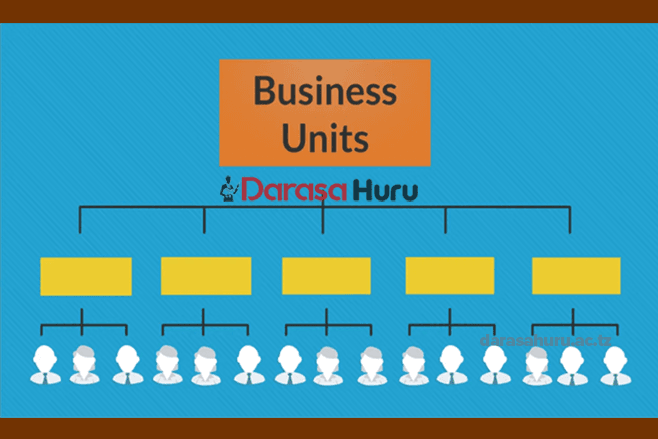
Business unit: is an organization or a firm that deals with the production, exchange, and distribution of products usually to make profits.
Is the business organization formed and owned by groups of people or by an individual with aim of making profit.
The business unit which is also known as an enterprise, a firm or an organization engages in activities such as production, distribution, and marketing.
Size classification: is a method that is used to categorize businesses according to metrices, such as annual turnover, number of employees, or value of assets.

NB: in the event of an enterprise falling under more than one category, then the level of investment will be the deciding factor.
FORMS / TYPES OF BUSINESS UNITS
There are two forms of business ownership which are Various forms of business organization may be classified as under.
- Private sector
- Public sector
A: PRIVATE SECTOR:
These are sector which of business owned by the private individual.
Types of private sector:
There are four types of private sector which are
- Sole proprietorship
- Partnership
- Joint stock company
- Cooperative societies.
- Joint ventures
- Franchises
1. JOINT STOCK COMPANY
Company:
is a corporate association of persons formed to carry out specific functions with the aim of generating profit.
Company:
is an association of persons bonded together for some particular object usually to carry on business with a view of making profit.
Company:
is an artificial person created by law with capital divided into transferable shares or stocks and with limited or unlimited liabilities possessing a common seal and perpetual succession (continuous existence).
MAIN FEATURES / CHARACTERISTICS OF A JOINT STOCK COMPANY
i. Legal personality
Being association of persons created by law a company has an Entity separate from shareholders and therefore, it can hold property, Contract debts in its own name, enter into contract with other organizations and individuals as well, can be sued and can also sue in its own name.
ii. Capital divided into transferable shares
The capital of a company is divided into a number of shares and each share is transferable without the consent of other shareholders with the exception of private company where there is certain restriction in the transfer of shares.
iii. Common seal (Signature embodied in the company):
Since a company is a separate entity is will be necessary for it to sign papers and documents. The seal is kept under the safe custody of some responsible official so as to avoid its misuse.
iv. Perpetual succession / continuous existence:
A company exists indefinitely till it liquidated or wound up. Its existence is not affected by the death or lunacy, insolvency, retirement or any calamity to its shareholders.
v. Separate identity:
Members of the company are quite distinct and separate from the company, they cannot be sued for the debts or obligations of the company, No members can bind his company by his act or dealing with the third party.
vi. Limited liability
Liability of the members of a limited company is limited to the face value of the share subscribed by each of them. Their private properties are not liable for the debts incurred by the company.
vii. Centralized management / separation of ownership and control:
The owners of the business have no right to take part in day-to-day management of the business of the company. Instead, the responsibility is rested in the board of directors elected by members in the general body meeting of the company
TYPES OF COMPANIES
The following are classification of companies.
1. Classification of companies based on Ownership:
i. PRIVATE LIMITED COMPANIES:
Refers to the companies whose number of members ranges from two to fifty. Private companies are formed when there is no intention to raise capital by selling shares to the public. Example of private companies are Bakhresa Group and MeTL
CHARACTERISTICS OF PRIVATE COMPANIES:
Membership.
This ranges from 2 shareholders to 50
limited Liability.
Member’s liability is limited to their capital contribution.
Transfer of shares.
Ownership of shares cannot be transferred from one person to another nor can the share be sold to the public.
Management.
It is controlled by a board of directors elected by shareholders. However, the ultimate control rests with the shareholders as they have the power to replace the directors.
Time to begin operating.
A private company can begin operating as soon as it receives a certificate of incorporation.
Separate legal entity.
That is, it owns property quite different from the shareholders.
There is assured continuity.
It is not affected by the death, Bankruptcy, of one of the members.
PUBLIC LIMITED COMPANY
This is a company with a minimum of seven members and no specific maximum membership.
public limited company may have its name ending with “PLC” i.e Public Limited Company (in Britain) or “Inc “ i.e. incorporated (in US). Its name must however, end with the word “Limited
FEATURES / CHARACTERISTICS OF PUBLIC LIMITED COMPANY
Number of members: it has minimum number of seven members and there is no maximum number of members.
Transfer of shares: no restrictions to transfer of shares of a public company. Shares are easily transferred from one person to another.
Limited liability: members liability is restricted to the amount they have contributed as capital.
Continuity: there is an assurance of continuity since a member death, withdraw or bankruptcy does not affect the existence and continuity of the company.
Separate legal entity: a public company is a separate legal entity. That means the affairs of the business are separate from the shareholders.
Raising capital: a public company can invite the public to buy its share to raise more capital for the business.
2. Classification of companies based on the nature of capital
1. Companies limited by shares
In companies limited by shares, the liabilities of members are limited to the extent of the number of fully paid-up shares.
This means that in case of winding up, members will be liable only for the number of shares that have been fully paid for
2. Companies limited by guarantee:
Is a company without any shareholder but is owned by members called guarantors who agree to pay a nominal amount of debts or liabilities in the event of winding up. For example, most not-for-profit companies operate as companies limited by guarantee.
3. Unlimited companies:
If the company will not have sufficient assets to pay all the liabilities during winding up, the personal belongings of shareholders will be used to compensate for the deficit.
3. Classification of companies on the basis of control or holding
1. Holding and subsidiary /group companies:
In some cases, the company’s shares might be held fully or partly by another company. Likewise, the company whose shares are owned by the parent company becomes a subsidiary company.
2. Associate companies:
Associate companies are those in which other companies have significant influence. By significance influence it implies a control of at least 20 per cent and no more than 50 per cent of total share capital or of a business decision under agreement.
4. Classification of companies in terms of access to capital
1. Listed Companies:
Listed companies have their securities listed on stock exchange markets. This means people can freely buy and sell their shares.
2. Unlisted companies:
Unlisted companies, on the other hand, do not list their securities on stock exchange markets. Private companies can come under this category.
5. Other classifications of companies
(i) Government companies:
Government companies are those in which more than 50 per cent of share capital is held by either the central government, or by one or more state governments, or jointly by the central government and one or more state governments.
(ii) Foreign companies:
Foreign companies are incorporated outside their domestic country. They also conduct business in the domestic country using a place of business either by themselves or with other companies.
(iii) Charitable companies under certain specific section:
Certain companies have charitable purposes as their objectives. Charitable companies focus on the promotion of arts, science, culture, religion, education, sports, trade, and commerce as their objectives.
(iv) Dormant companies:
These companies are generally formed for future projects. They do not have significant accounting transactions and do not have to carry out all compliances with regular companies.
ADVANTAGES OF A COMPANY
Operating a business as a company has the following advantages:
(i) Encourages business expansion:
It is easy for a company to grow since a limited company’s capital can be raised from different sources, therefore, expanding the business becomes easier. Companies can increase their capital by issuing more shares or debentures.
(ii) Allows transfer of ownership:
If shareholders are dissatisfied with the company’s performance, they can sell their shares at any moment in the stock market.
(iii) Limited liability:
Unless otherwise stated, the liability of shareholders is limited to the amount of capital they have agreed to contribute or the guarantee a shareholder provides.
(iv) Presence of professional management:
The management of a company is in the hands of the board of directors who are elected by the shareholders and have extensive expertise.
DISADVANTAGES OF A COMPANY
(i) Absence of direct control by shareholders:
The owners (shareholders) do not have direct control over the running of the business. Only the expert directors have control of the business.
(ii) Lack of secrecy:
Due to legal requirements, a public company must make numerous statements available to the Registrar of companies, financial institutions and the general public.
(iii) Complex formalities:
Company’s operations are guided by regulations that must be adhered to. Adhering to such formalities may sometimes be costly.
(iv) Possibilities of misallocation of resources by management:
Since companies are not operated by owners, those operating the company may abuse their powers and conduct fraudulent activities for their personal gains.
(v) Lack of personal interest:
Unlike proprietorship and partnership, salaried managers handle a company’s daytoday operations. They may have little personal interest and dedication to the business since they are only employees not owners.
(vi) Double taxation:
After paying out all salaries, bonuses, overhead, and other expenses, the company also pays taxes on profits, thus, leads to double taxation.
THE FORMATION OF A COMPANY:
In the beginning, persons known as ‘Promoters’ prepare the plan of the company. After preparing the plan, they submit an application to the Registrar of companies seeking permission to establish such a company along with the following documents:
THERE DOCUMENTS ARE DISCUSSED IN DETAILS BELOW;
1. Memorandum of association:
It defines the powers and limitations of the company. Also, it lay out the relationship of the company with the outsiders (general public). The Memorandum of Association has the following contents or clauses each defining a particular aspect of the company.
(a) Name clause:
The clause states the name of the company. The name should end with the with the world Limited (Ltd) to save as the reminder to the people dealing with the company that the liability of members is limited. e.g. ((TZ) Ltd.
(b) Domicile / Address / Situation / Location clause:
This shows details of the company’s registered office. The registered office is the place where all the statutory books and other documents of the company will be kept.
(c) The objective clause:
This outlines the aims and objectives for which the company is being formed, and the company cannot act beyond the registered objectives.
(d) Capital clause:
This states the amount of authorized / registered capital the company wishes to have. It includes the Total amount of share capital, the units into which share capital is divided, types of shares available to the public.
(e) Liability clause:
This states that the liability of members is limited to their capital contribution. In case of the company limited by guarantee, the liability of members is limited to the amount has undertaken to pay at the time of liquidation of the company.
(f) Declaration clause / Association clause:
This is a declaration made by the promoters showing that they desire to form themselves into a limited company and they have agreed to take the stated number of initial shares in the capital of the company.
2. Articles of association:
This is document clearly stats the rules and regulations that guide the internal operation of the company.
THE ARTICLES OF ASSOCIATION CONTAIN THE FOLLOWING INFORMATION:
- Organization structure
- It states the rights and powers of each type of shareholders and the founders / promoters of the company and powers of directors.
- How to elect management committee.
- How and when to hold meetings.
- Ways of raising finance for expansion.
- How records of the company are to be kept.
- It shows the salary to be paid to the management committee.
- Borrowing, dividend and reserves policies.
- It states whether shares are transferable from one company or person to another and how, e.g. by sales exchange, etc.
- Book –keeping and auditing requirements.
LIST OF DIRECTORS:
This documentation contains details of names, address, occupations, shares subscriber, and a statement of agreement to serve as directors.
STATUTORY DECLARATION:
This forma states that all the necessary requirements have been fully complied with and directors agree to act as such. This may be signed by the secretary or one of the directors or promoters of the company.
CERTIFICATE OF INCORPORATION:
A certificate of incorporation is a conclusive proof of the fact that the company has been duly incorporated and it gives a company legal existence. The company comes into existence from the date of issue of the certificate of incorporation.
PROSPECTUS:
This is a notice, circular, advertisement or other invitation offering the public the opportunity to purchase the shares in the formed company.
The purpose of this document is to provide the public with sufficient information about the company to encourage them to buy shares of the company.
CERTIFICATE OF TRADING/TRADING LICENSE:
This is a document which empowers the public write company to start operating. It is issued by the registrar of the Company after the Company has raised the minimum share capital.
WINDING UP OF A COMPANY
Means closing down of the business. that is, the life of the company comes to an end.
CIRCUMSTANCES THAT MAY LEAD TO THE DISSOLUTION OF A COMPANY
Failure to begin business within one year
Suppose a company does not commence business within one year from the date of registration. In that case, it will be wound up by a court order.
Inability to pay for the debts
A company can face a situation where its liability exceeds its assets. In that case, the company can be declared bankrupt and closed.
Fall in number of members below the limit
A minimum number in a company is either two for a private or seven for a public company. If the number of members falls below the minimum, the company dissolves.
Companies joining together (Amalgamation)
When two or more companies join to form one large company different from the original ones, the previous companies will automatically be dissolved to form the new one.
Failure to submit statutory report
A public company is obliged to submit statutory reports such as financial statements. Failure to publish the statements may lead to dissolution.
Attainment of the objective
Some companies are formed to perform a particular task. After the accomplishment of its objective or expiry of the period fixed for its existence, the company dissolves.
Acting against the objective
This means a company is acting contrary to its objective clause. It may be wound up by the court order.
2. CO-OPERATIVE ORGANIZATIONS:
Co-operative
is a voluntary association of individuals who make efforts to achieve interest of its members.
OR
It is the type of ownership whereby people with common interest join together to achieve certain economic and social objectives.
Examples of co-operative organizations include: Savings and Credit Co-operative Societies (SACCOS), Kilimo Fursa Co-operative, and Agricultural Marketing Co-operative Society (AMCOS).
CHARACTERISTICS OF CO-OPERATIVE SOCIETIES:
These are the rules and regulations set to govern co-operative societies. For an organization to be called a co-operative society, it must adhere to the following principles: –
(i) Open and voluntary membership.
It is a voluntary association of people and membership is open to all those who can fulfil the requirements of co-operatives. The minimum number required is 10.
(ii) Democratic administration.
The affairs of the co-operative is and must be administered/managed in a “democratic manner’
(iii) Equality.
All members in a co-operative society are equal regardless of their religion, race, political status, tribe, height, sex, age, financial status, etc.
(iv) Dividends or repayment.
Profits made by the co-operative society are distributed amongst members in a form of dividends or repayments, at the end of the trading period according to one’s contributions towards the co-operative.
(v) Limited interest on share capital ideally.
Co-operative societies do not pay interest on share capital. But if members provided for it in their constitutions, the interest given should be fixed, and should be known by all members.
(vi) Share capital.
A person is considered a member after contributing to the required capital by buying the minimum number of shares. However, a member may hold several shares up to a specified limit.
(vii) Promotion of education.
It is one of the duties of co-operative society to teach its members the principles and techniques of co-operatives including how to produce economically, how to make use of new technologies, etc.
(viii) Neutrality.
This principle states that co-operatives should not take sides in any political social or economic affairs. A co-operative is expected to be free from the influence of politics, tribal affiliation, religion and other bias that can affect its performance.
(ix) Honest.
Its members must not be dishonest and selfish. All the activities must be carried on honestly and fairly.
ADVANTAGES OF CO-OPERATIVE ORGANISATIONS
Co-operative organizations have the following advantages:
Easy formation:
The formation of a co-operative organization is considered easy as there is always a cooperative officer in place to assist and provide guidelines.
Freedom of entry and exit:
Everyone who is interested can join a co-operative organization. A member can be anyone who shares a common interest.
Promotes democracy:
All members of co-operative organizations have equal rights and power regardless of their shares. Co-operative organizations allow anyone to join, leave, and choose a leader or chosen as a leader.
There is fair distribution of surplus:
The surplus generated by co-operative organizations are dispersed among members fairly; as a result, everyone in the co-operative organization benefits.
Limited liabilities:
A co-operative organization members’ liability is restricted to the amount of share they have contributed. A co-operative organization member cannot be held individually accountable for the organization’s liabilities.
Going concern/continuity:
A co-operative organization has its legal entity separate from its members. As a result, the death, insanity, or insolvency of its members has no bearing on its continuation.
Government assistance:
The government can provide full assistance to co-operative organizations to encourage their growth. It may offer low-interest loans, as well as subsidies and other benefits.
Provide credit in rural areas:
Villagers have been liberated from informal money lenders, thanks to co-operative groups. Informal money lenders used to charge large interest rates, and the villagers’ income were utilized solely to pay the interest.
DISADVANTAGES OF CO-OPERATIVE ORGANISATIONS
Co-operative organizations have the following disadvantages:
Limited financial resources:
The co-operative organizations are always operating on limited financial resources resulting from low membership dues (fees).
An excessive reliance on government funds:
Heavy reliance on government assistance may result in the inability to properly plan their activities. This is because in most cases the government subsidies do not come on time as expected.
Lack of administrative skills:
The members of the managing committee may not have the required qualification, skills, or experience. Lack of managerial skills results in inefficient management, poor functioning and difficulty in achieving objectives achieving objectives.
Misuse of funds:
If the members of the managing committee are corrupt, they might misuse the funds of the co- operative organization.
Possibility of conflicts among members:
Co-operative organizations are based on the principles of co-operation and therefore harmony among members is important.
3. FRANCHISE:
Is a business in which the owner of a business system (the franchisor) grants an individual or group (the franchise) the right to run a business using the franchisor business system for a fee and or some share of income generated.
Franchising means:
Is the to spread business in areas where the original owner is unable to reach. Some examples of the franchises found in Tanzania include Kentucky Fried Chicken (KFC), and Subway which American fast-food claims that are operating in Tanzania.
ADVANTAGES OF FRANCHISE:
The following are the advantages of the franchise
Business operations assistance:
The assistance may be informs of equipment, supplies, marketing, support or plans to operate the business.
Profit:
Most franchises have recognizable brands that bring customers from different countries. This popularity results in higher profits.
Customer base:
Even the branch is opened in a small town still the potential customers are already familiar with the brand from exposure to commercials or travel to other cities.
Ease of securing finance:
An already established brand in franchising makes it relatively easier to obtain finance from lenders due to brand awareness.
Less risk of failure:
Since the franchisee operate a business that has been tested already in the market and has a known brand.
Training offered to franchisee:
Training provided by the franchisor compensates for a experience.
DISADVANTAGES OF FRANCHISE:
The following are the disadvantages of franchise:
Little room for creativity:
Franchisees are not entirely in control of their business, they cannot make decisions on producing or delivering products the way they prefer.
Higher initial cost:
This may be disadvantage for small businesses as they need to meet some compliance cost in the country where the franchisor needs to operate in.
Potential for conflict:
This is because any close business relationship can result in misunderstanding especially when there is an imbalance of power among parties involved.
Risk from other franchises:
Failure of one franchise may cost other franchises as the investor may lose an entire chain of investment due to poor image of any one of the franchises.
Lack of financial privacy: the franchise agreement will likely stipulate
That the franchisor can oversee the entire financial ecosystem of the franchise.
4. JOINT VENTURES:
Is when two or more companies form or create a single legal entity in which each party owns shares in newly formed company.
Or is a union between two or more companies that pool their resources and expertise to pursue a common goal for a specific period of time.
FEATURES OF JOINT VENTURES
The following are features of joint ventures;
Agreement:
Two or more companies agree to undertake a business for a definite purpose and are bound by it.
Joint control:
There exists a joint control of the co-ventures over business assets, operations, administration and even the venture.
Pooling of resources
Firms in the joint venture pool their resources, which help in large scale production including capital, manpower, technical know-how and expertise.
Sharing of profit and loss:
The co-ventures agree to share the profits and losses of the business in an agreed ratio mostly depending on the amount of capital contributed by each party.
Access to advanced technology:
By entering into joint ventures, companies get access to various techniques of production, marketing and doing business.
Dissolution:
Once the term or purpose of the joint venture is complete, the agreement comes to an end.
ADVANTAGES OF JOINT VENTURES:
The following are the advantages of joint ventures;
Access to new markets
This in turn enhances sales of the products rendered by the new joint venture firm.
Enhance business growth
Joint venture arrangement helps businesses to grow faster, increase productivity and generate greater profits.
Provide access to more resources
This advantageous in combining expertise, knowledge and technology if offering better services.
Flexibility
Being a temporary contract between participating companies, a joint venture can dissolve at any specific future date or when the project is completed.
No loss of identity:
Each company can maintain its own identity and can easily return to normal business operations once the joint venture is complete.
Economies of scale:
The strength of one organization can be utilized by the other. This gives a competitive advantage to both the organizations to generate economies of scale.
Minimization of risk:
Joint ventures tend to share risk between the companies involved in the agreement. This in turn helps to minimize the overall risk of the venture.
DISADVANTAGES OF THE JOINT VENTURES:
The following are the disadvantages of the joint ventures;
Taxation challenges:
Creating a joint venture may result in more complex tax arrangements especially when the joint venture involves companies from different countries.
Political risk:
Joint ventures formed by companies from different countries may involve high political risks especially if the wrong partner is chosen.
Unequal involvement:
Equal pay may be possible, but it is extremely unlikely for all the companies working together to share the same involvement and responsibilities.
Clash of culture:
Companies involved in the joint venture agreement may have different beliefs, tastes and preference which may lead to poor cooperation and integration.
CHAPTER TWO BUSINESS UNITS
READ FULL NOTES PDF
DOWNLOAD PDF NOTES