BUSINESS ENVIRONMENT
a) The concept of the business environment.
Business environment: refers to all the factors influencing business operations and wellbeing. Or
Business environment: refers to all conditions both internal and external that influence the operations, performance, and decision-making of a business entity.
Business Environment.
The business environment refers to the external and internal factors that influence a company’s operations, growth, and success.
IMPORTANCE OF BUSINESS ENVIRONMENT
Here are some key reasons why the business environment is important:
1. Helps in Decision-Making:
A well-analyzed business environment helps companies make informed decisions regarding investments, marketing strategies, and operational improvements.
2. Identifies Opportunities and Threats:
By understanding market trends, consumer preferences, and competition, businesses can identify new opportunities and prepare for potential threats.
3. Enhances Business Growth and Expansion:
A favorable business environment (economic stability, government policies, and technological advancements) encourages business expansion and innovation.
4. Improve Business Performance:
Factors like economic conditions, legal regulations, and social trends directly impact a company’s profitability and sustainability.
5. Encourages Innovation and Competitiveness:
Companies that continuously analyze their environment can innovate and stay ahead of competitors by adapting to technological changes and customer needs.
6. Ensures Compliance with Laws and Regulations:
Businesses must operate within legal and regulatory frameworks, which influence taxation, employment policies, and industry standards.
7. Influences Customer and Supplier Relations:
A stable and well-understood environment helps build strong relationships with customers, suppliers, and other stakeholders.
8. Helps in Risk Management:
By assessing political, economic, and market risks, businesses can develop strategies to mitigate uncertainties and reduce financial losses.
TYPES OF BUSINESS ENVIRONMENT
There are two types of business environment.
- Internal environment
- External environment
A) INTERNAL BUSINESS ENVIRONMRNT
These consists of all factors within the business organizations management control.
Components of the internal environment.
The internal environment includes a variety of elements, some of which are explained as follows.
I. Organizational structure
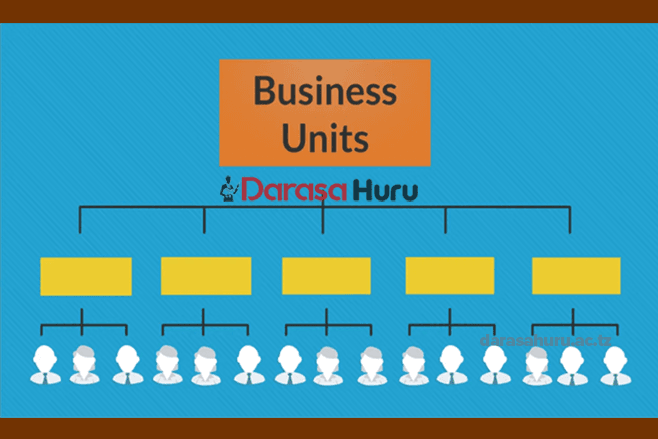
This refers to the framework of responsibilities, roles, hierarchies, communication channels and relationships within the business.
Importance of organizational structure:
- It determines how tasks are divided
- coordinated and executed across departments.
- It facilitates communication and collaboration
- Better decision making
- enabling the business to adopt to changing market condition.
II. Leadership style.

A leadership style refers to a leader’s methods, characteristics, and behaviours when directing, motivating, and managing their teams.
Leadership styles refer to the behavioural approach employed by leaders to influence, motivate, and direct their followers.
Example of leadership style
Autocratic Leadership, Authoritative Leadership, PaceSetting Leadership, Democratic Leadership, Coaching Style Leadership, Affiliative Leadership, Laissez-Faire Leadership.
Importance of leadership style.
- Different leadership styles have varying impact on customer orientation, employee motivation, engagement and performance.
- Effective leadership empowers employees, inspires trust, promotes transparency.
- It fosters a culture of innovation and continuous improvement.
III. Corporate governance.
This refers to the system of rules, practices and processes from which the businesses are directed, controlled and governed.
Importance of corporate governance.
- It ensures accountability, transparency, ethical behaviours at all levels of the business organization.
- Solid corporate governance mitigates risks and safeguards stakeholders’ interests.
(iii)Promotes long-term sustainability and value creation.
IV. Organizational climate
This reflects the predominant mood, atmosphere, and perceptions within the business organisation. It includes factors such as communication patterns, morale, trust, and employee’s satisfaction.
Importance of organizational climate:
- A positive organizational climate fosters creativity
- employee engagement and commitment which drive business performance.
V. Organizational culture.
This refers to the shared values, beliefs, norms and behaviours that tend to shape the work environment and guide employee actions.
Importance of organisational culture:
- It reflects the business organizational identity, personality and its core principles.
- Positives organizational culture fosters unit, cohesion and creates a sense of belongingness among employees which results I driving business performance and resilience.
VI. Human resources management.
This encompasses all activities related to recruitment, training, development, retention and retirement of employees.
Importance Of Human Resource Manage
The competent and motivated workforce is the backbone of organizational success, driving productivity, creativity and customer satisfaction.
VII. Operational processes.
This encompasses the procedures, workflows, and systems used to deliver products to customers
Importance of operational processes:
- It helps to define the way resources are allocated
- It helps to show how tasks are performed.
- It shows how objectives are achieved within the business organisational.
- It streaming lining and optimising operational processes that boost efficiency.
- It eliminates unnecessary costs and improve business performance.
B) EXTERNAL ENVIRONMRNT
These are external forces that influence business organisational its operations, decisions, and performance. These are factors that the business has no direct control of.
Components of the external environment.
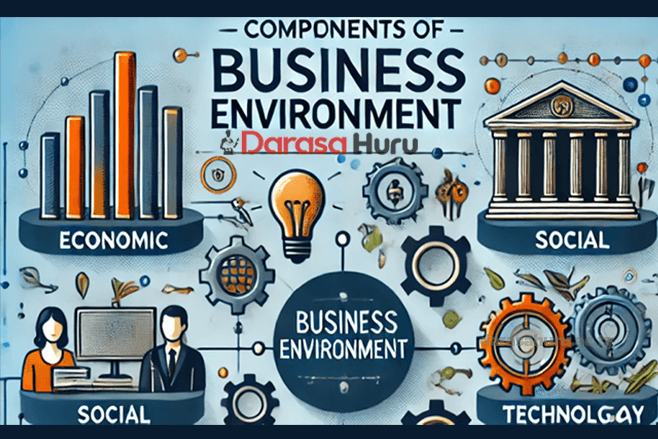
The external environment includes a variety of elements, some of which are explained as follows:
1. Economic environment.
This involves factors such as market conditions, macroeconomics indicators and economic policies that impact business operation and performances.
- Economic environment it includes elements such as inflation rates, market forces, Gross Domestic product (GDP) or economic growth, interest rates, exchange rates, unemployment rates, purchasing power, and overall market demand.
- These factors significantly influence business sales, costs, profitability and investment decisions.
2. Social environment.
This reflects the social attitudes, trends, health consciousness, values and behaviours that shape customer preferences, demand and business practices.
- It includes demographic factors such as age distribution, population size, levels of income, literacy levels, as well as cultural diversity.
- Understanding social dynamic helps business to tailor their products marketing strategies to meet the needs and expectations of diverse customers segments effectively.
3. Political and legal environment.
This reflects how the state or government regulates the economy. It compasses government policies, laws, regulations, and political stability that impact business decisions and operations.
- It involves factors such as tax policies, tariffs, labour laws, consumer laws, safety laws, trade regulations, competitive laws environment regulations, political will and intellectual property rights.
- Changes in political stability can create uncertainties and challenges for businesses that require them to adopt their strategies and operations accordingly.
4. Technological environment.
This comprises innovation, advancements in technology, and digitalisation that influence businesses across industries.
- It includes factors such as artificial intelligence, automation information technology, and digital platforms.
- Embracing technology enables business to enhance their performance in terms of productivity, efficiency competitiveness, innovation of new products, quality of products and ability to reach customers through digital channels.
5. Competitive environment:
This comprises rival businesses, industry structure, market dynamics and competitive forces that influence businesses competitiveness and market positioning.
- It includes factors like competitors’ strategies, strengths, weakness and market share.
- Understanding competitive environment dynamics helps business to identify opportunities, differentiate their products and develop effective strategies to gain a competitive edge in the market.
6. Global environment:
This comprises international factors, trends and events that impact businesses as a result of globalisation.
- It includes factors such as international trade, climate change, ecological aspects, geopolitical risks, cultural diversity, economic interdependence and cross-border regulations.
- Globalisation presents opportunities for the businesses to expand international access new markets and collaborate with global partners.
- Global environment posses’ challenges in terms of market volatility, cultural differences and geopolitical tensions.
DIFFERENCE BETWEEN INTERNAL AND EXTERNAL ENVIRONMENT
Differentiate between internal and external environments through the bases of differences.
Definition:
The internal environment refers to the environment within the organization. It includes all the factors, conditions, etc. that exist within the organization. On the other hand, the external environment refers to the environment that is outside the organization. It includes the factors and conditions, etc. that exist outside the periphery of the organization.
Nature of Control:
The factors of the internal environment are controllable in nature and can be controlled by the manager. Whereas, external environmental factors are uncontrollable in nature.
Influence:
Forces of the internal environment have a direct influence on organizational performance. On the other hand, external forces have an indirect impact on an organization’s operations.
Existence:
The internal environment exists within the organization, whereas, the external environment exists outside the organization.
Offering:
The analysis of the internal environment offers managers about organizational strengths and weaknesses. And, the analysis of the external environment offers management insight into probable opportunities and threats.
Effect on Changes:
The forces of the internal environment have an effect specific to the organization, whereas, external forces have an effect on whole industry changes.
Elements:
Elements of the internal environment include – organizational resources, organizational culture, value systems, management structure, missions, objectives, etc. Whereas, elements of the external environment include – micro (customers, suppliers, competitors, etc.) and macro (pestle).
Decision-Making:
Internal factors inform and influence the organization’s decision-making processes. Whereas, external factors provide insights and considerations for the organization’s decision-making processes.
BUSINESS START-UPS:
Is the process of establishing a new venture with the aim of bringing products to the market. Or
Is the process of bringing a business idea to life.
It involves identifying business ideas, identifying a business opportunity, securing funding and executing a plan to turn the idea into a viable business.
AGENTS SUPPORTING BUSINESS STARTS-UPS.
Government and non-government agencies play complementary roles in regulating and supporting medium-sized business in Tanzania.
Types of agents supporting business.
There are two types of supporting business starts-ups:
- Government agents
- Non-government agents
A) GOVERNMENT AGENTS:
These are agents which ensure proper policies and regulations that are developed to impact or support the business performance. The following are some of government agents.
1. TANZANIA INVESTMENT CENTRE (T.I.C).
The Tanzania Investment Centre was established in 1997 under the Tanzania investment Act (1997), Cap 38. The following are roles performed by (TIC),
Functions/roles of Tanzania Investment Centre(T.I.C)
i. Its responsible for promoting and facilitating investment in Tanzania.
ii. Advising the government on policy matters to create a competitive, attractive and sustainable investment climate.
iii. Facilitating business registration and licensing and providing advisory services to investors.
iv. TIC play significant role in creating and enabling environment for mediumsized to succeed by Providing information on investment opportunities in the country, incentives and regulations.
2. THE TANZANIA REVENUE AUTHORITY (TRA).
The Tanzania Revenue Authority (TRA) was established by Act of parliament No. II of 1995 and start operate on 1st July 1996. The following are roles performed by TRA.
Functions/roles of Tanzania Revenue Authority.
i. Its responsible for overseeing tax administration and revenue collection in Tanzania.
ii. It ensuring compliance with tax laws and regulations.
iii. Providing guidance and assistance to medium-sized business in fulfilling their tax obligations.
iv. This in turn helps to mitigate medium-sized business challenges hence improving their performance.
3. TANZANIA TRADE DEVELOPMENT AUTHORITY (TAN TRADE).
Tanzania Trade Development Authority was established by the Tanzania Trade
Development Authority Act NO.4 of 2009. Tan Trade replaced the Board of External Trade (BET) and Board of Internal Trade (BIT). The following are roles performed by Tan Trade.
Functions/roles of Tanzania Trade Development Authority.
i. It creates a conducive environment for medium-sized business to operate and thrive.
ii. It facilitates access to market, promoting export opportunity and providing regulatory guidance.
iii. Tan Trade initiates to organise international trade fairs create platforms for medium-sized business to showcase their products.
iv. Expand their networks and explore new business opportunity both domestically and internationally.
4. SMALL INDUSTRIES DEVELOPMENT ORGANISATION (SIDO).
Small industries Development Organisation (SIDO) was established under the Act No.28 of 1983. The following are role played by SIDO.
Functions/roles of Small Industries Development Organisation.
i. SIDO has played a significant role in nurturing medium-sized business in Tanzania.
ii. Tasked with developing the small industry sector.
iii. It providing comprehensive support to medium-sized enterprise development by providing access to infrastructure, technology and skills development.
iv. SIDO collaborates closely with other government agencies and international donors, including Tanzania Bureau of Standards (TBS), World Bank (WB).
Generally, SIDO capitalizes on strategic interventions and partnership to remain a key catalyst for the development of business in Tanzania and fostering economic growth in the country.
5. MICRO, SMALL, AND MEDIUM INDUSTRIAL DEVELOPMENT AGENCY. (SMIDA)
SMIDA was established by Act No. 2 of 2018 as an industrial development agency under the ministry of Trade and Industries implementing almost the same as SIDO in Zanzibar.
Functions/roles of Micro, Small and Medium Industrial Development Agency.
i. The core functions of the agency are to advise, develop, coordinate, promote and offer every form of support to micro, small and medium-sized industries in Zanzibar.
ii. SMIDA facilitates affordable credit schemes and offer other financial and nonfinancial services through the small and medium industries development fund (SMIDA) in Zanzibar.
B) NON-GOVERNMENT AGENCIES.
Non-government agencies supporting business in Tanzania are
1. TANZANIA CHAMBER OF COMMERCE, INDUSTRY AND AGRICULTURE (TCCIA)
TCCIA serves as crucial institution in supporting the growth and development of business including medium-sized enterprises in Tanzania.
Functions/roles of Tanzania Chamber of Commerce, Industry and Agriculture.
i. It facilitating the country transition from centralized, planned economy to a more open or mixed economy.
ii. TCCIA, it supports the private sector and create an enabling environment for medium-sized business to flourish, through its advocacy efforts, capacitybuilding initiatives and networking opportunities.
iii. TCCIA empowers medium-sized business to navigate regulatory challenges, access market opportunities and foster growth.
iv. TCCIA helps in shaping policies and regulations that support the needs of medium-sized businesses by facilitating dialogue between the private sector and government.
v. TCCIA enhances access to resources, expertise and market linkages for medium-sized business which enable them to compete effectively in domestic and global markets.
2. ZANZIBAR NATIONAL CHAMBER OF COMMERCE (ZNCC).
ZNCC was established in 2007 as the Zanzibar National Chamber of Commerce, industry and Agriculture.
Functions/roles of Zanzibar National Chamber of Commerce.
i. ZNCC is an apex body of the private sector linking its members to the government.
ii. Its main functions are advocacy, training, networking, and information sharing.
iii. It facilitating of all manners concerning trade, market opportunities, business advisory services and entrepreneurial skill development.
3. TANZANIA ASSOCIATION OF MICRO FINANCE INSTITUTIONS (TAMFI).
TAMFI is a not-for-profit umbrella organisation for microfinance institutions in Tanzania. It was formally registered in 2001 as the network for microfinance activities in the country.
Functions/roles of Tanzania Association of Micro Finance Institution.
i. TAMFI, it seeks to develop the capability of microfinance institutions and the microfinance sector in general through advocacy, lobbying, research and development.
ii. It promotes and encourages the establishment of new products and related market.
iii. Organises forums and meetings in order to promote communication among member.
iv. TAMFI encourages networking which is an integral part of any association.
4. TANZANIA PRIVATE SECTOR FOUNDATION (TPSF).
TPSF was formally incorporated under the companies Act (Cap212) as a company limited by guarantee on 4th November 1998.
Functions/roles of Tanzania Private Sector Foundation.
i. It promoting private sector led social and economic development in Tanzania.
ii. TPSF is the voice of the private sector and the umbrella body for private sector associations and corporate bodies in all sectors of the company.
iii. TPSF provide a platform for the private sector to engage in public, private dialogue at local, national and international levels.
iv. The foundation opens potential markets for its member through business forum and participation in local and international trade fairs.
STAKEHOLDERS IN THE BUSINESS
Stakeholders in the business: These are government authorities that regulate business through laws, regulations, and policies.
They have interest in compliance with legal requirements, public safety, and providing necessary services to the public including business.
Investors:
These are individuals or groups that have invested their stake in a business. They include venture capitalists, shareholders and lenders who provide financial resources to the business in exchange for returns on their investment.
They are interested in the business profitability, growth potential and the protection for their investments.
Suppliers:
These are individuals who provide goods and services to the business to facilitate production process. Suppliers have interests in fair treatment, timely payment, and long-term partnership with the business.
Communities:
These are stakeholders who may be impacted by business activities such as employment opportunities, environment impact and contribution to community development initiatives.
They have interests in sustainable practices, corporate social responsibility and positive engagement.
STAKEHOLDER ENGAGEMENT AND MANAGEMENT
Stakeholder engagement: is the process of involving the stakeholders in relevant decision-making processes and activities.
Stakeholder engagement: is involves identifying key stakeholder, understanding their interest and concerns and actively involving them in relevant decision-making processes in the business.
Stakeholder management: this involves developing strategies to actively address the needs, interests, and expectations of different stakeholder groups.
Stakeholders’ matrix or stakeholder analysis matrix or stakeholder mapping:
Is a tool used by business to identify and analyze stakeholder based on their level of interest and power. Or
This is a tool used by business and organizations to identify, analyze and prioritize stakeholders according to their level of interest and power in a business.
The matrix helps business to understand stakeholder roles, expectations and relationship with the business which allows effective communication, engagement and management of stakeholder relationships.
Matrix levels
The matrix typically comprises of a grid with two axes the level of interest axis and the level of power axis.
a) Level of interest axis:
This axis represents the extent to which stakeholders are affected by or interested in the business.
Stakeholder with high interest is those with a significant stake in the project’s success or failure and are likely to be directly impacted with low interest may have minimal involvement or be indirectly affected by the business.
b) Power or influence axis.
This axis represents the degree of power that stakeholders have over the business.
Stakeholder with high influence is those who possess the authority, resources or decision-making power to shape the business direction, outcome or implementation.
Stakeholder with low influence have limited ability to directly impact the business outcomes.
Based on their placement on the matrix, stakeholders can be categorized into four main quadrants as shown in the figure below.

1. High level of interest with high power (key players).
These are stakeholders have both a high level of interest in the business and significant power over its outcomes.
Functions of High level of interest with high power.
1. These are crucial stakeholders who must be closely engaged, consulted, and managed throughout the business lifecycle.
2. These involves in the planning process as they have power to bring a change once satisfied with the plans.
3. Examples includes, owners, business sponsors, senior management, regulatory authority or major investors.
2. High level of interest with low power (keep informed).
These stakeholders have a high level of interest in the business but limited influence or power over its outcomes.
Functions of High level of interest with low power.
1. They may not have decision-making authority; they can still impact the project through word-of-mouth support or contributions.
2. It is essential to keep them informed, engaged and satisfied to maintain their support.
3. Examples may include community groups, ordinary customers, or local residents.
3. Low level of interest with high power (keep satisfied).
These stakeholders have significant influence over the business outcomes but have minimum interest in the business.
Functions of low level of interest with high power.
1. They may include regulatory bodies, industry associations, or government agencies responsible for overseeing the business compliance approvals.
2. Their involvement may be limited, their decision or actions can significantly impact the business success.
4. Low level of interest with low power(monitors).
These stakeholders have minimal interest in the business and little influence over its outcomes.
Functions of low level of interest with low power.
1. They may include peripheral stakeholders or individuals who are indirectly affected by the project and are not actively engaged,
2. Their impact may be minimal but it still important to monitors their interests and mange any potentials risks or concerns that may arise.
3. These include community groups, and advocacy groups.
Contribution of business stakeholder to success of the business.
Increase Your Knowledge.
When you know and understand more, you can work smarter, make better decisions, come up with new (and profitable ideas), and increase your capabilities.
Tap Into Resources.
For example, during periods of high demand, you might be able to share equipment with another local business. Or you might be able to share storage/office space with another stakeholder in order to keep both your costs down.
Reduce Your Risk.
Careful stakeholder management and engagement can allow you to spot issues much sooner and take early action to reduce risk for your business. For instance, those with strong negative opinions, conflicts of interest.
Overcome Resistance to Change.
Some of your stakeholders will welcome change, while others will likely resist it likely because each change impacts each stakeholder differently.
Support Corporate Governance.
Help to support corporate governance and ensure the organization operates smoothly and behaves with accountability, transparency, and integrity.
Achieve Your Objectives.
Managing and engaging with your business stakeholders should play a key role in every project and strategy, supporting your underlying objectives.
Survive and Thrive in the Long Run.
If you want your business to survive and thrive in the long run, you’ll need to strategically manage and engage with each of your stakeholder groups.
READ NOTES IN PDF
CLICK HERE TO DOWNLOAD PSDF NOTES