THE EXTERNAL STRUCTURE OF THE EARTH REVISION QUESTIONS AND ANSWERS – GEOGRAPHY FORM TWO
Note for Tanzania Form Two Geography: In the Tanzania secondary school syllabus, the topic most commonly taught is “The Structure of the Earth,” which focuses mainly on the internal structure (crust, mantle, and core).
The term “external structure of the Earth” is less commonly used as a standalone topic. If your teacher refers to the external structure, they are usually discussing the Earth’s surface features and spheres (lithosphere, hydrosphere, atmosphere, and biosphere).
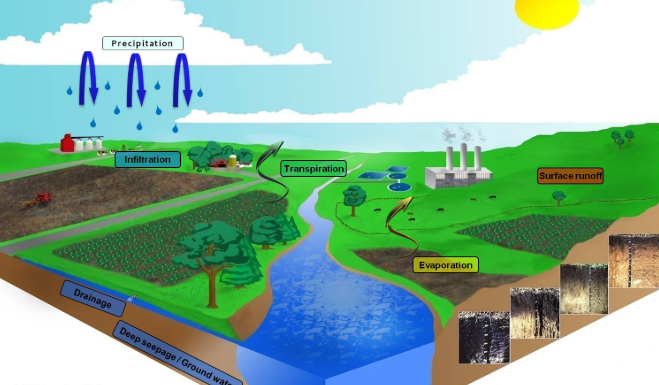
The external structure of the Earth refers to the natural features and layers found on or above the Earth’s surface, including land, water, and the atmosphere. It includes the lithosphere, hydrosphere, atmosphere, and biosphere.
The external structure of the Earth refers to the physical features found on the Earth’s surface, such as landforms and water bodies, together with the natural layers surrounding the Earth that support life. In Form Two Geography, it mainly focuses on major landforms and surface features, including mountains, plains, plateaus, valleys, rivers, lakes, oceans, and the atmosphere.
Explain the importance of the Earth’s external structure
Answer:
- Provides land for settlement.
- Supports agriculture.
- Supplies water for domestic and industrial use.
- Provides habitats for plants and animals.
- Supports transportation through roads, rivers, and oceans.
- Provides natural resources such as minerals and forests.
The Earth’s external structure consists of:
- Lithosphere – land (rocks, soil, mountains, plains, plateaus)
- Hydrosphere – all water (oceans, lakes, rivers, seas)
- Atmosphere – gases surrounding the Earth
- Biosphere – all living organisms
THE EXTERNAL STRUCTURE OF THE EARTH REVISION QUESTIONS AND ANSWERS – GEOGRAPHY FORM TWO
READ FULL NOTES FULL PAGE
CLICK HERE TO GET PDF