
CHAPTER 1 ACTING – ARTS AND SPORTS STD IV
What is acting?
Acting is one of the elements in the performing arts that conveys messages to society using words and actions
Acting practices
Acting practices include the preparation of various physical and mental techniques
Acting practices include body movements, acting various emotions and voice projection
Body movement practices in acting
Body movements in acting are the way an actor uses his or her body to convey messages without words. Body movements are also referred to as body language
Body movements include
- Mime
- Gestures
Postures and facial expressions
Examples of body movements are such as
- Walking
- Standing
- Dancing
Body movements are one of the ways used to convey message in the performing arts. An actor can use body movements to express emotions such as
- Happiness
- Sadness
- Fear
- Confidence
Performing arts such as acting and dance often use body movements to communicate message to the audience
Examples of body movements in acting
Body movements in acting help the actor to make the audience understand his or her role and the message
The following are examples of body movements in acting
Standing upright.
When an actor stands upright with his or her chest forward, he or she may be showing confidence, authority, power or courage;
Facing down
When the character turns down his or her face or eyes, shows the actor’s feelings of anxiety, fear, shame, guilt, or weakness;
Folding the arms on the chest
These movements show that the character is defensive, not ready to talk or has feelings of doubt. Also, these movements can indicate the anger or harshness of the character;
Walking quickly with short steps
In acting this shows anxiety, ear or hurry. The character shows that he or she has manymthings on his or her mind or tries to run away from a certainmsituation or event;
Nodding the head gently
In acting, this can show acceptance or agreement to something. When someone quietly nods his or her head, indicates his or her agreement with another person’s idea or suggestion
Gazing eyes
When the actor makes such eye movements, he or she shows surprise, fear, disbelief at something or something that happened;
Holding the head with both hands
These movements can indicate sadness or shock. It can show a character who is worried or who is going through a lot of suffering; and Raising shoulders and lowering hands.
When an actor makes these movements, he or she shows a lack of concern, acceptance of failure or doubt. Also, it can indicate a character’s surrender to a certain situation.
Using body movements to act out living and non – living things
Body movements can be used to imitate the behaviour, motions and emotions of living and non-living things
- To imitate living and non-living things using body movements, it is better to consider the following steps
- Observing the behaviour of the character you want to imitate to see how the character walks, sits, eats or even defends oneself
- Understating the body of the character you want to act
- Imitating the movements of the character you want to act
- Using body language to show the emotions of the character such as fear, happiness or anger
- Practicing regularly to get into the behaviour of the character until your body can show the movements easily
- Using props and costumes to show well the characteristics of the character you want to portray
Examples of acting the body movements of living things
The following are some examples of body movements of living things
- Acting the movements of an elephant
- Acting the movements of a frog
- Acting the movements of a giraffe
- Acting the movements of blooming flowers
Examples of acting movements of non – living thigs
- Acting the movements of a bicycle
- Acting the movement of a car
- Acting the movement of a motorcycle
- Acting the movements of the stone
Similarly, you can imitate the movements of other things such as
- The flow or movements of a river
- The movements or motion of the wind
- The movements of the rain
Importance of body movements in acting
Body movements are very important in acting because they help the actor to
- Express inner emotions such as happiness, sadness, anger or anxiety that cannot directly be shown through words
- Add reality to acting. When the actor uses the correct body movements, the audience can believe and understand more of what is being performed
- Communicate with the audience. Body movements are also used to convey messages and feelings to the audience, especially if there are no spoken words
- Indicate future actions or give to the audience about what is nearly to happen in the play.
Emotional practices in acting
Emotional practices are exercises that help the actor understand, explore and manage various emotions effectively in acting.
Examples of emotions are
- Happiness
- Sadness
- Anger
- Fear
- Surprise
- Shame
- Hate
- Love
- Jealousy
An actor can practice emotional exercise in various ways, including
Emotional memory and practices of laughing or crying
Emotional memory
An actor can use emotional memories from events in his or her own life. This helps to arouse the emotions required when acting out a certain character. This technique helps the actor bring reality into the performance. Often these feelings come from his or her personal experiences
The practices of laughing or crying
Such practices help an actor to arouse and manage emotions effectively. Laughing and crying are normal emotions, but they can be challenging to portray realistically in acting
An actor can laugh or cry in a low or high voice
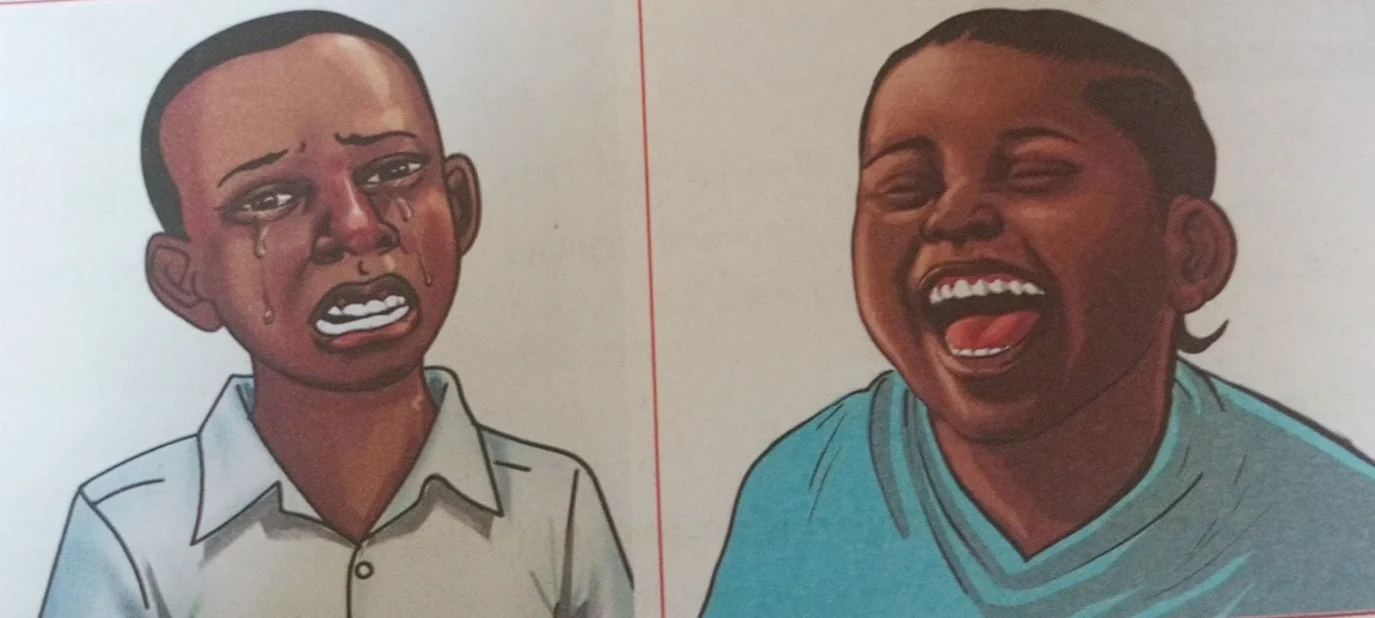
An actor practising how to cry and how to lough
Exercise
- What can you do to show you are sad without saying anything?
- Explain how you can show anger without raising your voice in acting
Voice projection practices in acting
Voice is one of the most important tools in acting
Voice projection is the practice of producing and controlling sound to ensure it can be heard clearly by the audience, depending on the context.
Using voice effectively is very important for an actor because it helps the audience to understand the performance
Voice parctice can be very fun and interesting, Voice practices in acting include
- Breathing practices
- Speaking at a distance
Inhaling and exhaling practices
Inhaling and exhaling practices for an actor aim to help him or her control his or her breath properly
This helps him or her produce powerful voice and enhance his or her acting on stage
There are various practices such as
- Deep
- And rapid breathing
Speaking at a distance
Speaking at a distance practice is very important in acting because
It helps the actor use his or her voice to convey the message to the audience. These practcies help the actor to change his or her voice according to the size of the stage and the distance between humor her and the audience
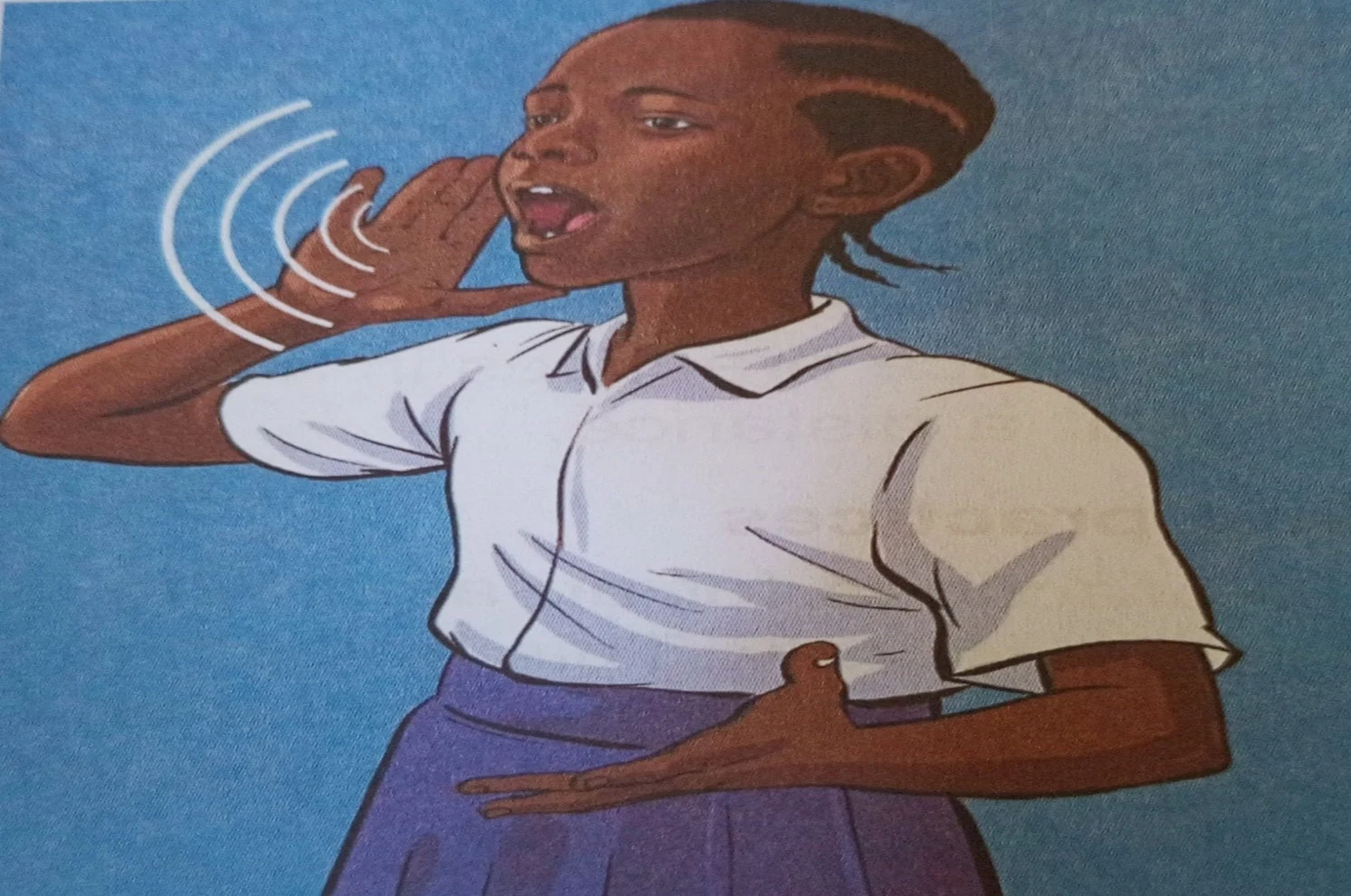
An actor practising speaking at a distance
Exercise
- Why is important to have a strong and clear voice when performing?
- Explain how to use voice to show emotions if you are playing the role of an angry person in a play
Vocabularies
Costume – Clothes of the artists at the performance
ICT – Information and communication technology
Posture – The way a person position the body when sitting, standing, or moving
Gesture – Refers to a movement of a part of the body, especially the hands or head, that expresses an idea, feeling or
intention
