INTERACTIONS IN NORTHERN AFRICA
Pre-colonial Northem Africa which comprises modern-day Egypt, Libya, Tunisia, Algeria and certain parts of Sudan and Mauritania was a region of rich interactions influenced by trade diplomacy and religious exchanges. Due to its strategic location, Northem Africa became an important zone for cross-continental interactions between Africa and Asia. The interactions shaped the region’s cultural and economic foundations, many of which still exist.
Factors for interaction
Various conditions facilitated the interactions in pre-colonial Northern Africa.
1. The region’s geographical location and climate
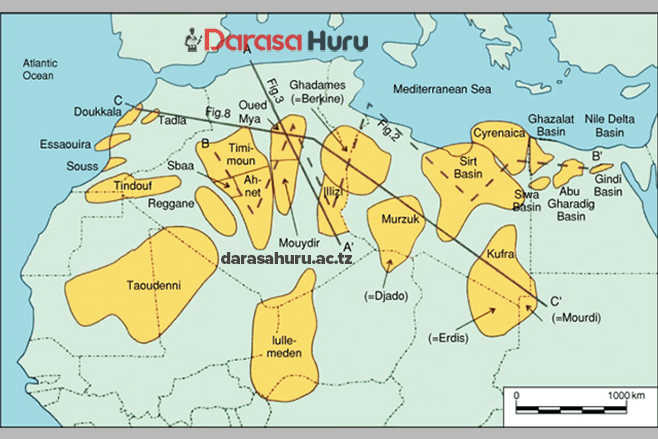
Northern Africa strategic position between the Mediterranean Sea, the Sahara Desert and the Sea made it a center for trade, migration and conquests. Cities such as Carthage Alexandria and Tripoli became important trading ports which linked Africa with southern Europe and the Middle East. The Sahara Desert became a condition for the Trans-Saharan Trade, with camel caravans facilitating commerce between Northern and West Africa.
2. Migration and inter-ethnic relations
Also encouraged interactions in Northern Africa, contributing to demographic and cultural diversity, for instance, Arabs settled in Northern Africa, intermarrying with the Berber people and creating the Arab-Berbers identity in the 7h and gt centuries in the region (the Maghreb region),
3. Trade
The growth of trade networks in Northern Africa facilitated econ and cultural interactions. A good example is the Trans-Saharan Trade that linked North African merchants with West African kingdoms; they exchanged gold, salt and enslaved individuals. North African traders, especially the Berbers and controlled important trade routes and facilitated the exchange of goods between Saharan Africa and the Mediterranean world. The Berbers also contribute spread of Islam, serving as mediators between Arab traders and African communities.
4. Religion
Religion played an essential role in shaping interactions in Northern Afica, particularly with the introduction and spread of Islam. A good example was the Arab conquests (7 century CE), Following the rise of Islam, Arab armies expanded into Northern Africa, bringing the Arabic language and Islamic governance into the region. Indigenous Berber groups adopted Islam and helped spread it further into West Africa and the Sahel region.
5. Political alliances
The establishment of powerful states and empires in Northern Africa facilitated the forging of diplomatic relations and military cooperation with the neighboring regions. For example, Ancient Egypt’s (c. 3100 BCE-30 BCE) control over the Nile allowed it to interact with Nubia and the Mediterranean world. The Egyptian pharaohs- maintained trade and military alliances with communities, such as the Hittites and Greeks.
Similarly, the Carthaginian Empire (9- 20d centuries BCE), founded by Phoenicians in modern-day Tunisia, dominated the Mediterranean trade and had diplomatic relations with the Roman Empire and Greek city-states which facilitated the spread of Latin culture, Christianity and infrastructural development, such as the construction of paved roads. Christianity spread to Northern Africa in the 1″ century CE, especially in Egypt and Carthage
6. Wars
Conquests and military alliances played a role in shaping interactions that occurred in Northem Africa. For example, the Punic Wars BCE) occurred whereby Carthage fought against Rome in a struggle for domination over the Mediterranean world. After Carthage’s defeat, Rome gained Northern Africa. Another example was the Arab-Berber Resistance (7h- 8th Century CE) The Berbers initially resisted Arab rule but later allied with them, helping to expand Islam into West Africa and Spain
CLICK HERE TO GET PDF NOTES