Interactions among the People of Africa
The word Interaction refers to the process by which people come in contact with one another and influence each other. Inn pre-colonial Africa Interaction was a state in which people from one community got into contact with one another community and affect each other.
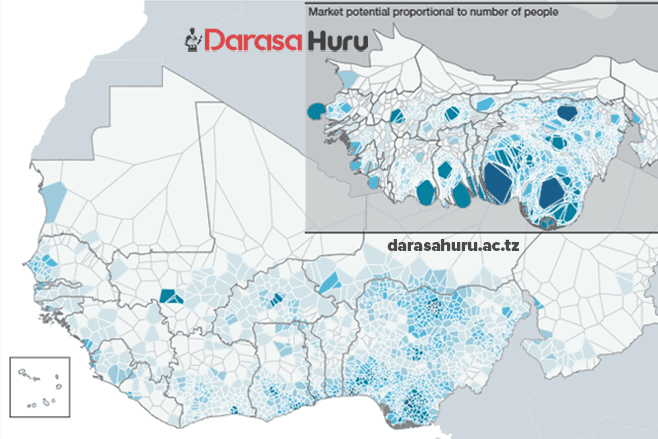
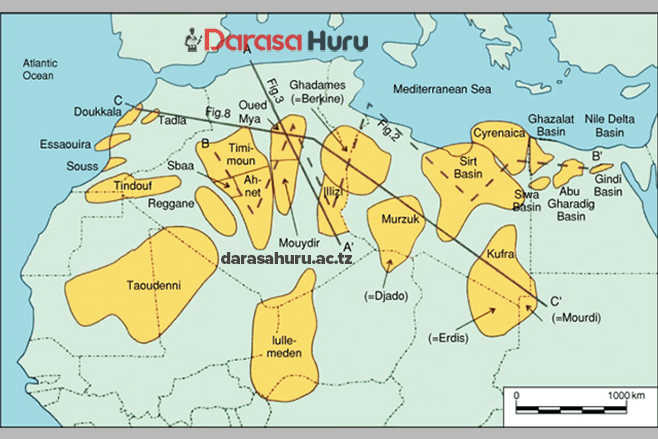
For example, in west Africa Between 8th – 16th C. AD communities from the Sudanic belt engaged in trade with the communities from north Africa in the Trans – Sahara trade this led to the introduction of Islamic religion, growth of states to the people of the Sudanic belt, intermarriage, and development of new technology.
In east Africa the Swahili coastal city states such as Kilwa, Mombasa, and Zanzibar flourishes due to trade with Arabs, Persian, and Indian merchants, which led to the development of unique afro Arab culture and language.
Interactions were major links and contacts which were established by the Africans since the late Stone Age and Iron Age up to the middle of the 19th century when Africa was not yet colonized by the Europeans.
FACTORS FOR EARLY INTERACTIONS IN THE PRE-COLONIAL AFRICA.
A. Social factors
Migration
East Africa belongs to four main language groups namely the Khoisan, the Cushites, the Nilotes and the Bantu. These early large groups interacted with the larger Cushites, Bantu and the Nilotes communities that began settling in East Africa from the first century A.D. Through interaction of one community practiced medicine interacted with another led to some changes such as introduction of iron technology in East Africa.
Religion
It played a crucial role in all African societies. Religious beliefs were taken seriously and affected every phase of life. There was a variety of religious activities in pre-colonial Africa. These included burial rites purifications, rituals naming of ceremonies and prayers to bless soldiers before they went to war.
Religious activities took place at different levels such as family level, clan level and community level e.g. The Bushmen of Congo held prayers before going to hunt as they believed that God was the source of all food.
Among the Asante people of West Africa the king of Asante (Asantehene) based his right to office on the possession of the Royal or Golden stool, Asantehene was regarded as the chief priest. Natural cults also existed in many parts of Africa. Their main aim was to please the spirits and legendary heroes e.g. the juju practiced in Western Africa the Shona held a cult called Mwari.
Wars
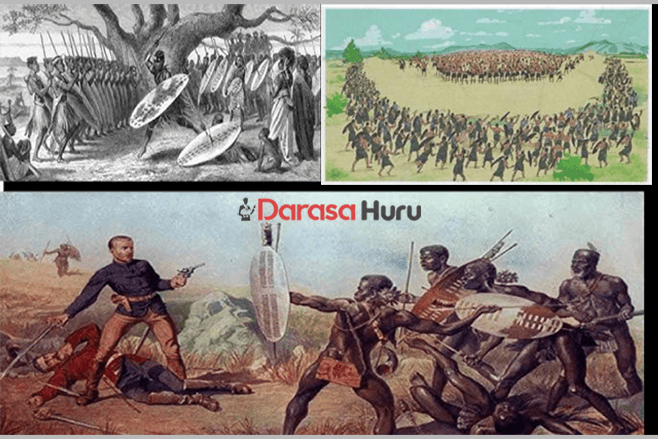
African communities engaged in war from time to time; they fought with various reasons such as to increase the number of the herds of livestock, to get fertile land for agriculture purposes and expansion of the kingdom e.g. Buganda conquered Buddu, Karagwe and Busoga to expand their kingdom by 1839.
Egyptian army had established their base at Gondokora the area located around Southern Khartoum and by 1869, Egyptian had raided and destroyed the Lango and Ancholi region in the modern day Uganda.
Music and dances
African music and dances brought people together; communities’ rites and ceremonies were accompanied by songs and dances. Every African society developed songs for work, Laborers sang while clearing fields, sowing and harvesting goods, example of dances were Mdundiko among the Zaramo and Sindimba of Makonde.
The Yomba of West Africa performed Orik music where by other songs praised or condemned certain characteristics including leadership and relation with neighbors. Dances were also performed for different purposes; some dances were open to everyone while others restricted to a certain secret society professional and artisans example Chagga men and women performed a dance called Rring during wedding ceremonies and Luguru led their dance called Gubi.
Medicine
African’s had medicine men and women who played important role both spiritually and medically. Those who practice medicine interacted with many members of the society as patient visited some of the well-known medicine men and women.
Some medicine men and women were also political advisors and leaders example Kinjekitile Ngwale of Southern Tanganyika most of the medicine were extracted from plant roots, barks and leaves e.g. The (neem tree) Mwarobaini was mostly used by various medicine in Matebele.
Marriage
Marriage occupies a position of great importance in African communities. Every member of the society jugs to build their own family. In Buganda the Kabaka married from different clans in order to enhance political unity in the kingdom. Therefore social interactions strengthened through marriage. At the same time marriage led to emergence of new culture examples Swahili culture as the result of mixture of Bantu and Arab culture
B. Economic factors
Africa communities also interacted due to economic factors such as:
Metal working
African communities used various kinds of metal to make tools, weapons, utensil and ornaments; some of the widely used metals were iron, Bronze, Gold, Copper and tin. Archaeologists have discovered the remains of early iron working beneath important religious shrine in the Great lakes region dating back over 2,000 years ago. Egyptians were the first people known to have used copper; Benin the Bronze casters had guild called Igun Eronwon, through making various metal tools people interacted due to the need of the commodities through interactions.
Agriculture
Many Africans communities practiced agriculture and different types of interaction took place in the process. Apart from few communities such as the pastoral Maasai who never tilled land; other communities cultivated a variety of crops by using different farming methods, tools and crops were passed from one community to another. The Kwavi who were purely pastoral community eventually became cultivators as the results of their interaction with agricultural societies.
Fishing
Was an economic activity that was practiced by communities that lived near water bodies such as lakes, rivers and the seas. The Luo were and still are named fishermen in Pre-colonial East Africa, the Ndengereko’s fished in the river Rufiji while the Zaramo and other coastal people in the Indian Ocean, such fishing communities interacted with pastoralists and agriculturalists so as to acquire animal product and agricultural commodities.
Trade
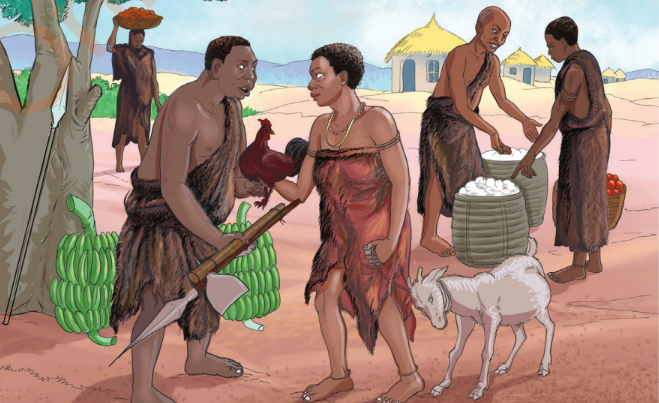
Trade conducted in pre-colonial period was in barter system, the trade network was based on the need to access what a community didn’t produce; Example pastoralists exchanged their animals’ products for vegetable and grains. The limbo clans among the Luo specialized in occupation such as iron working and pottery. Between 8th – 16th C. AD communities from the Sudanic belt engaged in trade with the communities from North Africa in the Trans – Sahara trade. Among the most important commodities of exchange were iron, gold, slaves and salts
The need to search new areas
Areas with fertile land and reliable rainfall were very attractive to the people within the regions or those coming from outside the regions. Agricultural societies kept on shifting from the area with infertile soil to areas with fertile soil; examples in the Interacustrine regions were densely populated compared to areas like Central Tanzania and Northern part of Kenya where population was low
Interaction in the Indian ocean island
Before colonialism the Indian ocean islands such as Zanzibar, Madagascar, the Comoros and the Seychelles were integral to a large trade and cultural exchange network that linked together Africa, the middle east , south Asia and the south east Asia. Phases of the interaction on the Indian ocean islands
The history of this early interaction between the people from Indian ocean islands and those from middle and far east can be divided into two phases
The first phase was the Ancient Period between the 1 century BCE and the 7th century CE. This phase involved early contacts among the Austronesian sailors, Chinese, Arabs and Indian traders.
The second phase was the Medieval Period between the 8th and15th centuries CE. This period was characterized by the expansion of Islamic influence and the rise of Swahili city-states as trading centers.
The third phase was the early modern period between the 15th century and early 19th century CE with increased trade under local sultanates and early European explorations. starting with the Portuguese, Arabs, the French, and English
Each phase saw evolving interaction patterns shaped by economic demands, technological advancements and shifting political dynamics.
Factors which influence the interactions on the Indian ocean
Several conditions facilitated the interactions on the Indian Ocean islands, including:-
1. The geographical position and maritime trade
For instance, the strategic location of the islands such as Zanzibar and Madagascar made them serve as crucial stopping points for the traders travelling between the East African coast, the Middle East, India and Southeast Asia.
2. Presence of monsoon winds
The seasonal monsoon winds played an important role in determining trade routes, thus enabling the making of consistent and predictable voyages.
3. Religious factor
Cultural and religious connections influenced the pre-colonial interactions on the Indian Ocean islands. The spread of Islam and indigenous beliefs and practices created a unique culture across the islands, Arab traders from Oman and Yemen played a central role in spreading Islam, which became famous in Zanzibar and the Comoros by the 12″ century.
4. The rise of political alliances and conflicts
This led to the emergence of interactions on the Indian Ocean islands. For example, local rulers formed alliance with foreign merchants to strengthen their economies and political power
5. Settlement, by the 9h century.
Arab traders had established permanent settlements in Zanzibar and the Comoros. They intermarried with the local Bantu-speaking people, thus giving rise to Swahili culture, which combines African, Arab a Persian influences. The construction of stone mosques and Swahili writing are key indicators of this cultural
combination.
6. Trade.
Trade was the main factor in the pre-colonial interactions, The Indian Ocean islands were rich in resources. For example, Madagascar supplied timber, iron and slaves to Arab and Indian traders. Likewise, Zanzibar and the Comoros were known for cloves, ivory and spices.
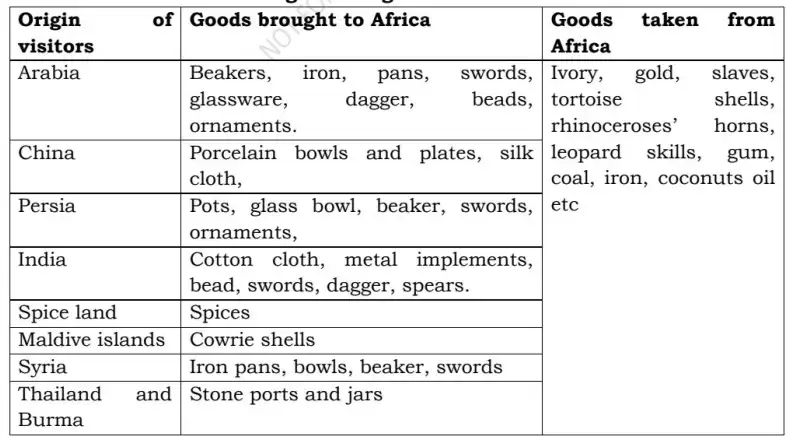
Commodities exchanged during the commercial interaction
EFFECTS OF ECONOMIC INTERACTIONS IN AFRICAN SOCIETIES
Early interactions between the African people by 19th c had many effects in their societies.
1. Availability of goods which the people of African societies had not produced in their region.
For example, the West African societies obtained dates and salt from Taghaza in the Saharan desert since lithe A.D. The I-la in Uvinza obtained copper from eastern Congo to produce ornaments, and bangle from copper.
2. Development of strong political organization
Several societies succeeded to be politically strong because of the trade item received during the contacts. The leaders such as Tunka Manan of Ghana Empire and Musa Mansa Kankan of Mali used to get firearms which were used to expand their empires between 5th c and 17th c A.D. in West African Savannah region. In Eastern Africa chiefs such as Mirambo and Machemba of the Yao in Tanganyika obtained tax in terms of clothes which were provided to the soldiers in order to avoid opposition to their rule.
3. Development of towns
Many areas were turned as trading centers with many buildings which were constructed to keep the items and accommodate the traders. In East Africa Bagamoyo, Kilwa, Mombasa, Tabora and Ujiji became towns while in West Africa Jenne, Gao Timbuktu, and Walata were famous towns during the interactions across the Saharan desert.
4. Development and growth of agriculture
Expansion of agricultural products to feed those who interacted other people grew during the economic contacts.
5. Inter-marriages occurred because some people decided to get married to the people they met outside their societies. Inter-marriage actually led to the rise of generations with mixed elements of ethnic groups. For instance the Haya in Karagwe were married to Baganda because of economic interactions during the 19th c.
6. Development of technical skills and new ideas
Interaction led people of Africa from different communities to share their skills and ideas for economic growth
7. Overexploitation of African resources
Interaction among African people resulted in overexploitation of African resources through trade which was unequal in nature.
8. Emergence of classes among the Africans
Classes emerged dividing poor Africans from rich Africans who accumulated wealth from different economic, social and political activities.
9. Exposure of Africa to the outside world
African country and its resources came to be exposed to the outside world due to interaction. Decrease of productive manpower due to slave trade; through interaction the outsiders started to take slaves from Africa to their mother countries as labor power.
10. Population increase
Areas that attracted large numbers of people became highly populated, especially productive areas. The increased population resulted into socio-economic development in the given areas which facilitated immigration.
11. Emergence of new languages
As different people interacted new languages emerged. For example, the Swahili language emerged due to interaction between Arabs, Africans and Europeans.
12. The interaction laid down foundations for the present social, economic and political activities which take place between different regions of Africa.
For example the presence of sports, formation of economic organizations like East African Community (EAC) and co-operation in solving conflicts in some nations like Burundi, Congo and Sudan in 2000’s have been important interactions being inherited from the days before colonial rule. The interactions seen to date were built up since the I9thc
Interactions among the People of Africa
INTERACTIONS IN SOUTHERN AFRICA
INTERACTIONS IN EASTERN AFRICA
INTERACTIONS IN WESTERN AFRICA
INTERACTIONS IN NORTHERN AFRICA
Interactions among the People of Africa – Full Notes
CLICK HERE TO GET PDF NOTES