Topic 4 The Relationship Between Weather and Production Activities-Geography STD 5
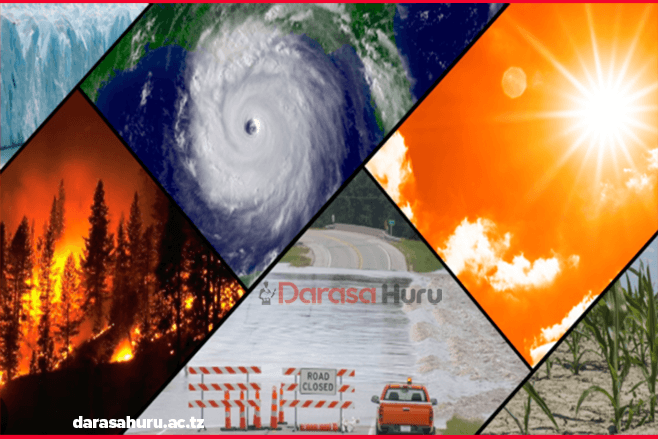
Production activities are important for the economic development as these activities supply goods and services that are used by people. For production activities to be carried out effectively, suitable weather is necessary.
In this chapter, you will learn the concept of production activities, the connection between weather and production activities, and ways to cope with the changing weather on production activities.
The competencies to be developed will enable you to plan production activities based on the weather.
MEANING OF PRODUCTION ACTIVITIES
In chapter one, you learned about natural resources. People use these resources to produce goods, enabling the, to earn income, obtain food and meet other needs.
Production activities include everything that is done to create items needed by people to meet their daily needs. These activities include the production of goods and the provision of services
Types of production activities
Production activities include
- Farming
- Livestock
- Fishing
- Mining
- Manufacturing
- Trade and
- Various service activities such as medical care, nursing, and teaching
These activities can be grouped into three main categories
- Primary activities
- Industrial activities
- Service activities
1. Primary activities
These are activities that involve the direct use of natural resources. Such activities include farming, livestock keeping, mining and harvesting from the forest for making timber furniture and paper production. These activities form the foundation of all other types of production activities
2. Industrial activities
These activities involve the production of goods using raw materials obtained from primary activities. They include the use of machines, such as grain-milling machines to produce flour, making clothes from cotton, making furniture like tables and chairs from wood, and construct houses and roads
3. Service activities
These activities focus on production related to providing services to people. These services support the production of goods and contribute to the overall quality of life.
Examples include: teachers educating students in schools, doctors treating patients in hospitals, drivers transporting passengers and goods and traders selling various products
Types of production activities
1. Farming
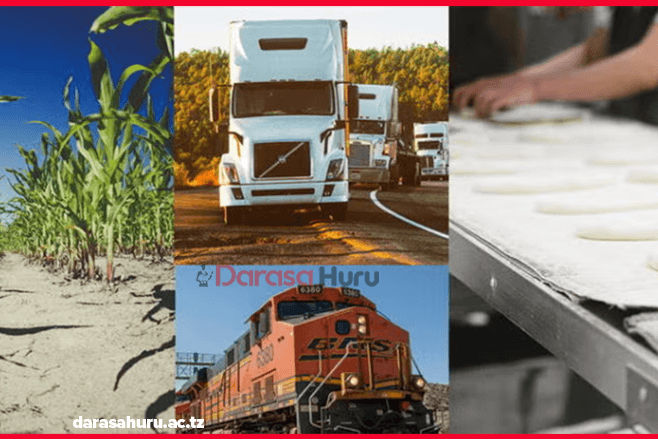
Weather determines what and when to plant. Rainfall provides water for crops, while temperature affects crop growth. Too much rain causes floods and little rain causes drought which reduces production
2. Livestock keeping
Weather affects animal health and pasture. Good rainfall supports grass growth for animals. Extreme heat or cold stresses animals and lowers milk and meat production
There are various types of animal husbandry including
i. Zero grazing (indoor rearing)
This is a type of animal husbandry that involves keeping a small number of animals in a designated area. The animals are kept in cages and are provide with food and water
ii. Traditional herding
Herders take their animals to grazing areas in the morning and return them to the sheds in the evening.
iii. Nomadic herding
Herders are forced to move with their livestock from one place to another in search of pasture and water
2. Fishing
Weather influences water conditions and safety. Calm weather allows fishing while storms and strong winds prevent fishing activities and reduce fish harvests
3. Industries
Weather affects transport and operations. Heavy rain can delay delivery of raw materials, while extreme heat may affect lowering production
4. Mining
Weather controls access to mining sites. Heavy rain can flood mines and stop work, while dry weather makes it easier to extract and transport minerals
5. Energy
Energy is the power used to perform work. Therefore, it is an important resource in the production of goods. We need energy to drive vehicles, turn on lights, cook food, or run machines.
Usually, energy production relies on various sources such as water, wind, and sunlight. Weather plays a major role in developing these energy sources. For example, to generate solar power, sunlight is needed to light on the solar panels.
6. Business
Business is the activity of buying and selling goods, assets, or items to make a profit. Weather has a significant impact on business activities, especially those related to agricultural products, tourism, fishing, and industry. Weather changes can affect the availability of goods, market demand, and operational costs of businesses.
Ways to address the effects of weather changes
Weather change is associated with conditions such as little or heavy rainfall, rising and falling temperature and normal or strong winds. These can cause major effects on production activities, health and environment. To cope with these effects, here are some simple strategies to follow
1. Sustainable farming
Farmers can use sustainable farming techniques such as irrigation farming and planting improved seeds that are resistant to bad weather, like drought or heavy rainfall. Farmers can also practice crop rotation, where a certain type of crop is grown in one season, for example, maize, and then grow beans or potatoes in the next season.
2. Tree planting
Planting trees is an important way to protect the environment and cope with bad weather. Trees help reduce wind speed in fields, clean the air, bring rainfall, and lower temperatures. In addition, tree roots hold the soil together and prevent soil erosion. To protect the environment, everyone is advised to plant and care for trees.
3. Conserving water resources
During times of low rainfall, it is important to use water carefully to ensure its availability for a long time. This can be done by harvesting rainwater and storing it in ponds, wells, and special water tanks so that it can be used during droughts.
4. Strengthening infrastructure
To address the effects of weather change, it is important to strengthen urban and rural infrastructure so that it can withstand bad weather such as heavy rainfall, flooding, and strong winds.
5. Building resilient structure
To address the impacts of weather change, it is essential to consider best construction practices. These practices can be designing buildings that are strong and durable enough to withstand flooding, strong winds, and other bad weather.
6. Education and awareness
Educating the community about the effects of weather change is important. People should be informed about how to protect themselves, for example, by avoiding environmental degradation, rainwater harvesting, properly disposing of waste, planting trees, and using clean energy sources like solar, wind, and gas.
Exercise
1. Explain the benefits of wind in crop production
2. Why is fishing mostly done at night, early morning or evening?
3. Describe how tourism activities can be affected by weather conditions
CLICK HERE TO GET PDF NOTES