Topic 2 Population Distribution and the Use of Natural Resources-Geography STD 5
The meaning of population distribution
Population distribution refers to how people spread across different geographical areas, such as countries, regions, districts, cities, words and villages.
Population distribution varies from one area to another
There are areas with many people, average number of people and areas with few people
Types of population distribution
The type of population distribution explain how people are spread across different areas.
There are three main types of population which are
1. Clustered population distribution
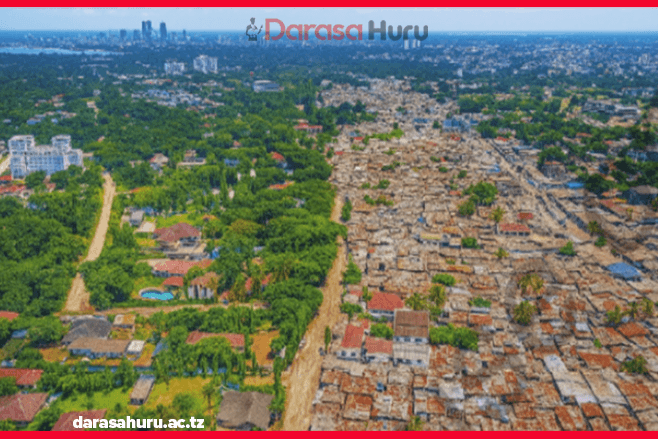
This refers to a situation where people concentrate in one area for settlement or engagement in various social and economics activities.
For example, the population in urban areas such as Dar es salaam, Mwanza and Arusha, or in areas rich in resources and economic opportunities. Figure 1 indicates clustered population distribution

Clustered population distribution
2. Uniform population distribution
This refers to situation where people are evenly spread across a large area.
The number of people is about the same in different places, with no area having more or fewer people. This type of distribution often happens in farming areas where people live based on resources like water or fertile land for growing crops. Figure 2 indicates uniform population distribution

uniform population distribution
3. Sparse population distribution
This refers to a situation where people live in scattered arrangements across large areas without a specific arrangement. It often occurs in rural or challenging environments, where resources availability is limited and people may live far from one another. Figure 3 indicates sparse population distribution

sparse population distribution
Factors affecting population distribution
Population distribution results from various factors. These can be
Geographical factors such as
- Climate
- Relief
- Soil fertility
- Availability of water resources
- Minerals
Human factors such as
- Infrastructure
- Social services
- Politics
- Business and
- The growth of technology and industries
I. Geographical factors Climate
Climate affects where people live. Areas with moderate rainfall and temperature attract more people because they are good for farming and living
1. Relief
Relief refers to the shape of the land. Flat and gentle lands are more populated because they are easy for building, transport and farming
2. Availability of water resources
People settle near rivers, lakes and wells because water is needed for drinking farming and industries
3. Soil fertility
Fertile soil support good crop production. Areas with fertile soil attract farmers and many settlers, while poor soils have low population
4. Minerals
Areas with minerals attract people because of mining jobs and business opportunities. Mining centers usually have high population
II. Human factors
Humana factors refer to social, economic, political, and cultural aspects that influence the distribution of people in various areas. Some of these factors include the following
1. Infrastructure
Good roads, railways, ports and communication systems attract people areas with good infrastructure are easy to reach and develop, so many people settle there
2. Social services
Places with schools, hospitals, water and electricity attract population. People prefer to live where services are available and accessible
3. Political decisions and government policies
Government policies such as land use, security and development plans influence settlement. When the government develops an area, people move there for safety and opportunities
4. Technological development
Technology improves farming, transport and communication. Developed areas become attractive for living and working, increasing population
5. Industrial development
Industrial provide employment and services. Areas with many factories attract workers, leading to high population concentration
The relationship between population distribution and the use of natural resources
Human life depends on resources to carry out various activities. The use of resources varies from on place to another. This is due to the distribution of people in those areas. Therefore, there is a significant relationship between population distribution and the use of natural resources as follows
1. The level of resources demand
Areas with high population have high demand for natural resources such as water, land, forests and minerals. Many people need more food, energy and housing, so resources are used faster than in sparsely populated areas
2. Access and distribution of resources
Where people live determine how easily resources are accessed and shared. Densely populated areas often develop roads and system to distribute water, electricity and food, while sparsely populated areas may have limited access to resources
3. Management and conservation of resources
Population distribution affects how resources are managed. Areas with many people need good planning to avoid overuse and population. Proper conservation is important to ensure resources last for future generations
The relationship between population distribution and environmental conservation
Environmental conservation is the act of using available resources in the environment sustainably.
1. Effects of population distribution on the environment Deforestation
In densely populated areas, people clear forests for farming, housing and fuel. This reduces tree cover, causes sol erosion and affects rainfall patterns
2. Population and shortage of water resources
High population increase the demand for water for drinking, farming and industries. This leads to overuse of rivers, lakes and groundwater, causing water shortage
3. Land degradation
When many people live in one area, land is overuse for farming, settlement and grazing. This reduces soil fertility and leads to erosion and desertification
Insufficiency of energy resources
Large populations need more energy for cooking, transport and industries. This causes pressure on firewood, fossil fuels and electricity, leading to shortage
4. Degradation of ecosystem and biodiversity
Population pressure destroys natural habitats through farming, mining and settlement. This reduces plant and animal species and disturbs the balance of ecosystems
Methods of environmental conservation
When the population increase in a particular area, it is important to use the available resources carefully to prevent negative impacts on the environment.
The following are the methods that promote sustainable environmental conservation
- Providing environmental conservation education
- Using sustainable agricultural practices
- Improving urban planning and infrastructure
- Encouraging urban tree planting and protecting green spaces
Exercises
1. Explain the effects resulting from a large population on the environment
2. How can communities conserve green spaces?
3. Explain how government can manage environmental conservation in large cities like Dar es salaam and Mwanza
CLICK HERE TO GET PDF NOTES